
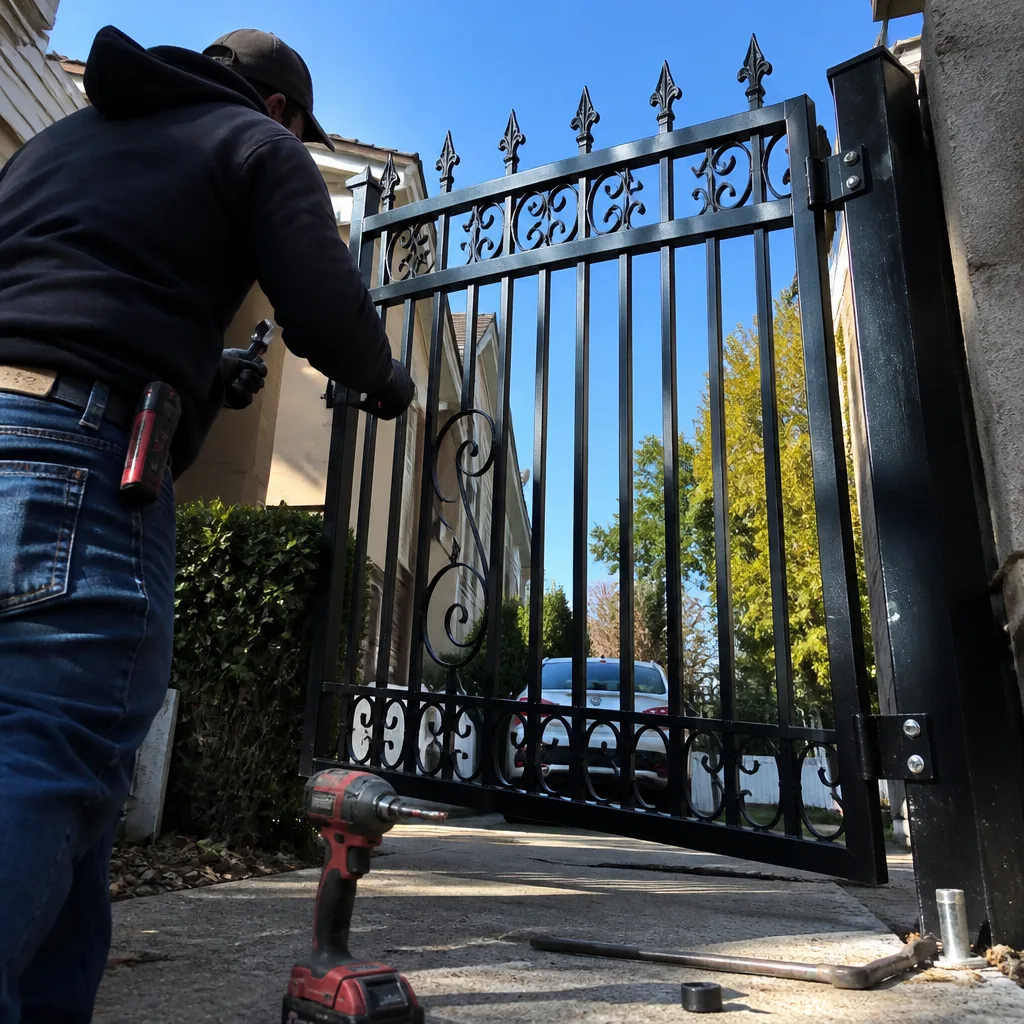
Last updated October 17, 2026
 Wrought iron
 Wood & steel frame
 Farm & ranch
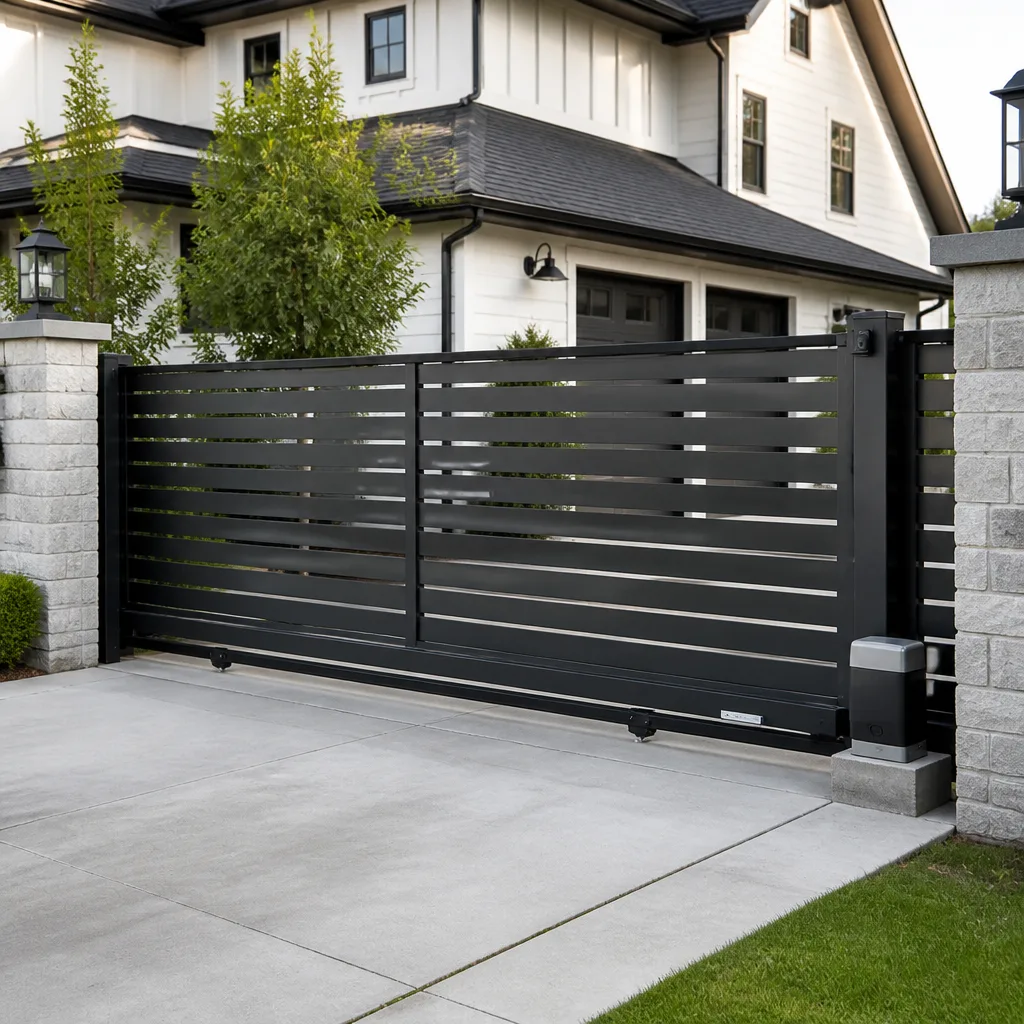 Sliding driveway gates
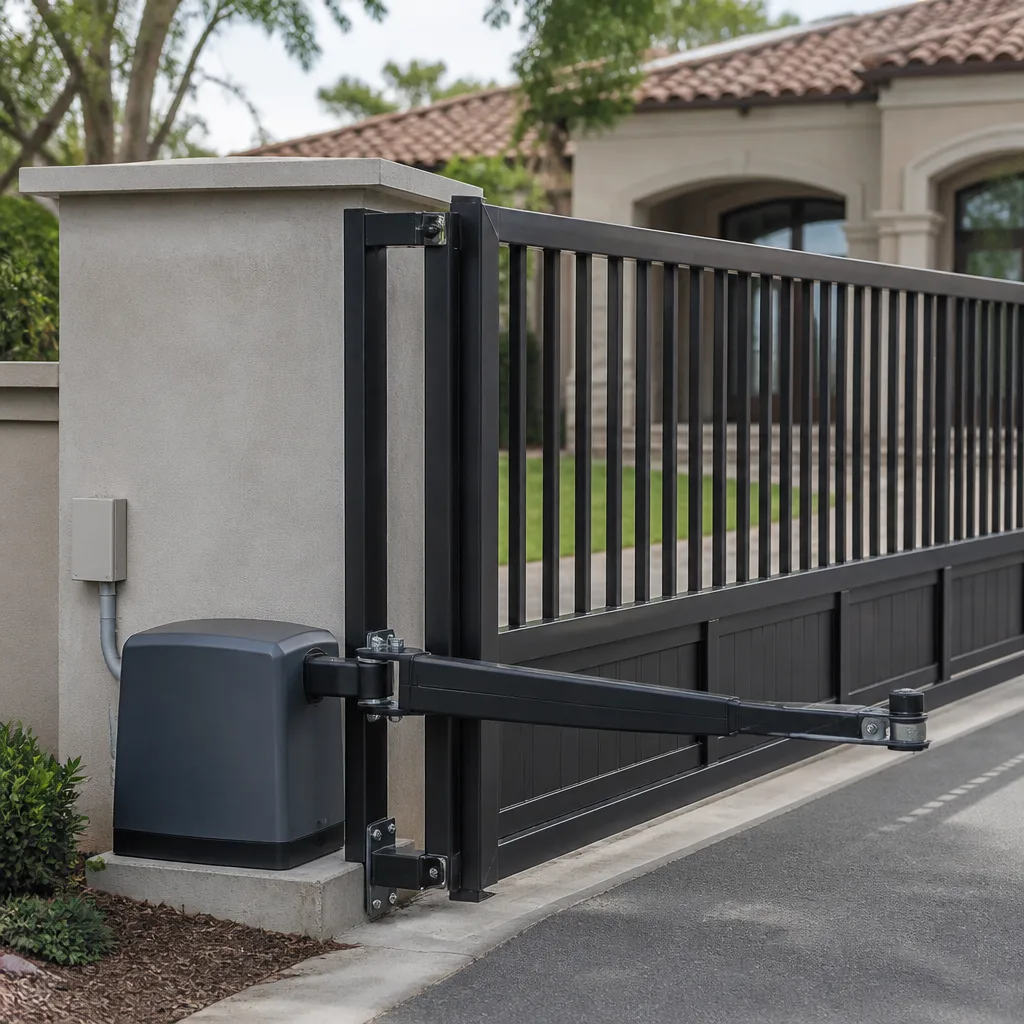 LiftMaster operators
Free on-site gate assessment - hinges, posts, and your LiftMaster or Nice gate operator checked before anything is quoted
The assessment is free and the quote is the invoice.
Get your free estimateGate Repair Warning Signs: A San Francisco Homeowner’s Reference Guide
Most San Francisco gates don’t fail suddenly. They fail gradually, over months of small compromises that are easy to dismiss because, well, the gate still opens. From the Richmond to the Mission to Noe Valley, we hear the same story every week: a latch that needed a second try in August becomes a gate that won’t close at all by February. Fog-season moisture works its way into hinge barrels and post footings, and small shifts become structural failures. This guide teaches you to read the early signals, before a $90 adjustment becomes a $650 rebuild. You’ll learn the six warning signs you can check in under three minutes, what each one predicts in real repair dollars, and when to call our Gate Repair services rather than waiting for the next storm.
Quick Answer
Gate repair warning signs in San Francisco fall into two categories: mechanical signals (a latch that needs extra force, a hinge gap that has grown, a bottom rail losing ground clearance, a post that’s drifted off vertical) and electric signals (slow travel speed, grinding at specific arc positions, intermittent remote failure). Each of these is measurable in minutes, and each maps to a predictable repair cost that doubles or triples if ignored for six months. A hinge gap increase of 3mm, for example, indicates a $120 – $180 hinge reset today versus a $400 – $700 frame re-hang by next year. The fix that costs less than dinner for four is the one you schedule this week.
Styles & brands we work with
Table of Contents
- The Six Signals You Can Check in Under Three Minutes
- What Each Warning Sign Predicts in Repair Dollars
- Fog and Moisture: What San Francisco Climate Does to Gate Joinery
- Electric Gate Warnings: Motor, Track, or Hardware?
- The Homeowner Log: Tracking Change Over Time
- Common Mistakes to Avoid
- When to Call a Professional
- Frequently Asked Questions
The Six Signals You Can Check in Under Three Minutes
Every gate is a simple machine, and simple machines telegraph their problems. You don’t need tools, a ladder, or any prior experience. You need three minutes, decent light, and the willingness to look at the same gate you’ve walked past five thousand times as though you’re seeing it for the first time. Here are the six observable signals, in order of how early they appear.
1. Latch Engagement Force
This is the first sign, and the one most people write off. When the latch no longer catches on the first try, or it catches but only with a firm pull or a slight lift, the gate’s geometry has already shifted. A properly hung gate swings on its hinges and the latch clicks into the strike plate with no assistance. When you find yourself lifting the gate slightly as you close it, or pushing twice before the latch engages, the frame is already carrying stress.
What happens if you ignore it: The repeated extra force at the latch point becomes concentrated. That concentration of force wears the latch mechanism, then the strike plate, then the hinge barrels, then the frame itself. In San Francisco, where high winds whip through the Sunset and the Presidio for months at a time, a latch that already needs persuasion is a latch that will fail completely during the next sustained blow.
2. Hinge Gap Change
Take a photo of the hinge gap today. Then take another one in three months. The gap between the gate leaf and the post at each hinge should be consistent top, middle, and bottom. If the gap at the top hinge is visibly wider than the gap at the bottom hinge, the gate is sagging and dragging against its own weight. If the gap has changed since you last looked, the movement is active, not settled.
You can measure this with a simple method: fold a piece of paper until it fits snugly in the gap, then count the layers. If that count changes between seasons, the gate is moving. A 3mm change is the threshold where we tell San Francisco homeowners to schedule a hinge reset. Left alone, that 3mm becomes a frame warp and you’re looking at a different job entirely.
3. Bottom-Rail Ground Clearance
Run your eyes along the bottom rail and compare the gap to the ground at the hinge end versus the latch end. Wooden gates in San Francisco’s wet-winter, dry-summer cycle expand and contract seasonally. A gap that shrinks to nothing at the latch end means the gate is dragging, which puts lateral force on every connection point.
In neighborhoods with significant tree cover, like Glen Park or Forest Hill, this is often the first sign homeowners notice, because the gate starts scraping against the concrete walk or the brick threshold. That scrape you hear is the gate telling you its hinge hardware is losing the fight against gravity.
4. Post Vertical Plumb
Stand far enough back that you can see the gate and its posts as a single picture. Now line the posts up against a fixed reference point: a downspout, a fence line, a neighboring wall. A post that’s drifted even two or three degrees off vertical is a post that’s no longer transferring its load straight down into its footing.
In San Francisco’s sandy coastal soil zones and on hillside lots where runoff follows gravity, post footings can settle unevenly. The post doesn’t topple; it leans. And a leaning post changes every other measurement on this list. Plumb is the baseline. When plumb is lost, everything else cascades.
5. Wood Surface Color Change at Joints
Run your thumb along the seam where the gate frame meets the gate panel. In a healthy gate, that seam is even and dry. In a gate that’s been soaking up fog for five years, you’ll see a darker band around the joint, often with the earliest signs of rot at the corners.
The fog in the Avenues, the persistent damp in the Marina, the shaded portions of any San Francisco lot: these create microclimates at the joint where wood stays wet for months. That darkening is the first visible sign of moisture intrusion. If the wood there feels soft when you press with a fingernail, the joint is already compromised.
6. Motor Response Lag (Electric Gates Only)
If your gate is automated, press the remote and count the seconds between press and movement. Then press it again. A healthy motor responds within one to two seconds. If the lag is longer, or if the gate starts slowly before reaching normal speed, or if it stops mid-cycle for no apparent reason, the motor is straining or the track is binding.
This is the signal that most often gets normalized. Homeowners tell us “it’s always been a little slow” or “I just press it twice.” That slowness is not normal. It’s load. And load is what burns out motors years before they should fail.
For a deeper look at what’s involved in fixing these issues, see our guide to Gate Repair in San Francisco.
What Each Warning Sign Predicts in Repair Dollars
The uncomfortable truth about gate repair is that the early fixes are inexpensive, and the late fixes are not. Here’s the math, expressed in ranges we see across San Francisco every month.
Latch engagement becoming difficult: $75 – $140 for a latch adjustment or replacement now. If ignored until the latch fails completely, a forced entry or a gate that won’t close typically means a new latch, a repaired strike plate, and often a hinge reset, running $350 – $600.
3mm hinge gap increase: $120 – $180 to reset the hinges and rehang the gate, as long as the posts are still plumb and the frame is still square. If the gate has been sagging for a year or more and the frame has warped, the job becomes a frame re-hang or replacement, typically $400 – $700.
Bottom rail dragging on the ground: $80 – $150 for a hinge adjustment and possibly a slight trim, if caught in the first season. If the persistent scraping has chewed through the bottom rail, or if the rail has been soaking up moisture from constant ground contact, a full bottom rail replacement runs $250 – $450.
Post out of plumb: $200 – $400 to reset a single post in new concrete, depending on access and whether the concrete needs full removal. If the post has shifted because its footing was inadequate for San Francisco’s expanding clay soils, a proper footing replacement runs $350 – $600 per post. For most gates, there are two posts. The math is straightforward.
Darkening wood at joints: $150 – $300 to clean, stabilize, and reseal the joint, if the wood is still solid. If the rot is through the joint, a partial frame replacement runs $400 – $800, and that’s before factoring in paint matching.
Motor response lag: $120 – $200 for a track alignment or sensor adjustment now. If the motor has been straining through months of lag, a replacement motor typically runs $500 – $900 installed, depending on the model. LiftMaster and Mighty Mule units in the residential San Francisco market span that range, with the exact figure depending on the opener model and whether the control board needs replacing alongside.
Each of these figures is a range, not a quote. But here’s the pattern: the early fix is always one-third to one-quarter of the late fix. The question isn’t whether a Seasonal Gate Repair Care for San Francisco: Year-Round Homeowner’s Guide hinge reset is in the budget this month. The question is whether the $550 re-hang will be in the budget next winter, when it’s raining and the gate has already stopped closing.
For more detail on how we approach full replacements and installations, visit our Gate Installation in San Francisco page.
Fog and Moisture: What San Francisco Climate Does to Gate Joinery
San Francisco isn’t a rainy city in the way Seattle is, but it is a damp one. The fog rolls in most evenings for months of the year, particularly in the Sunset, the Richmond, the Avenues, and anywhere within a few blocks of the ocean. That fog settles on surfaces and takes hours to burn off, even on days that eventually turn sunny. Wooden gates in fog zones spend a significant portion of their lives damp.
And that’s the key difference between real moisture damage and what many homeowners assume is happening. A gate that gets rained on occasionally, like one in the Mission or Potrero Hill, dries out thoroughly between storms. A gate in the Outer Sunset sits in fog every single night, from May through October, and never fully dries. The wood’s moisture content stays elevated for months. That’s the condition that invites rot at the joints.
The visual cue at a San Francisco gate is distinct. Rain damage looks like widespread water staining down the face of the gate. Fog damage concentrates at the joinery: the corner joints, the hinge mortises, the seam where the panel meets the frame. The rest of the face looks relatively fine. The joints are where the fog water wicks in and stays. When you see a dark, damp-looking band running along every joint while the open grain between joints looks normal, that’s fog moisture intrusion. It’s not weathering. It’s a slow rot process.
The species of wood matters too. Older San Francisco gates are often redwood or cedar, both of which are rot-resistant but not rot-proof. When those woods spend half the year at elevated moisture content, even their natural resistance gives way. Douglas fir, common in newer construction, is more vulnerable still. The fog doesn’t care how old the gate is. It cares about the wood’s ability to dry.
Prevention in fog zones means keeping the joints sealed and keeping the gate off the ground. A properly maintained gate in the Outer Richmond can last decades. A gate with failed joint sealer can show structural rot in five to eight years, not because the wood was bad but because San Francisco’s climate never gave it a chance to dry.
Electric Gate Warnings: Motor, Track, or Hardware?
Electric gates add a second layer of systems: a motor, a track or hydraulic arm, sensors, and a control board. When something feels wrong, the symptom doesn’t always point to the cause. Here’s how to separate what you’re experiencing into its likely source.
Slow Travel Speed
The gate is moving, but it takes notably longer than it used to, or it’s perceptibly slower than any comparable gate you’ve seen. This is most often a track alignment issue or a hinge drag issue, not a motor issue. The motor is working harder to move the same distance, which reads as slowness. A slow gate with no grinding sound almost always points to mechanical resistance: hinges, track, or a wheel that’s binding.
Elite and DoorKing slide gate systems, common in San Francisco driveways, are particularly sensitive to track debris and wheel wear. A gate that’s been slow for months and suddenly stops mid-travel is often a gate whose track resistance has exceeded the motor’s torque rating.
Grinding at a Specific Arc Position
You hear a grinding, scraping, or humming sound, and it happens at the same place in the gate’s travel every time. That repetition is the clue. A motor problem sounds consistent regardless of position. A mechanical problem sounds different at different positions, because different parts of the track or hinges are involved.
The arc position where it grinds tells you where to look. If the noise happens near the fully-open or fully-closed position, it’s usually a limit switch, track stop, or end roller issue. If the noise happens mid-travel, it’s often a wheel bearing or a section of track that’s out of alignment. Mighty Mule and LiftMaster residential openers both tend to telegraph track problems as mid-travel grinding before anything worse happens.
Intermittent Remote Failure
The remote works, then doesn’t, then works again, with no pattern you can identify. Sometimes it’s the remote battery, and that’s a five-dollar fix. But if the remote battery is fine and the failure continues, the most common causes are: a control board that’s starting to fail, a sensor alignment that’s drifting, or electrical interference from a new wireless device near the control box.
Intermittent failure is the hardest to diagnose because it’s the hardest to reproduce. That’s one reason we suggest a homeowner log for electric gates too. Write down the date, time, weather, and what happened. When our technician shows up, that log is more useful than a description from memory.
If you’re in San Francisco and dealing with any of these electric gate symptoms, our Electric Gate Repair in San Francisco page covers what same-day service looks like and how we price it.
The Homeowner Log: Tracking Change Over Time
One observation tells you a gate is out of spec. Two observations, separated by months, tell you whether it’s stable or actively moving. That second piece of information is worth a lot of money when you’re deciding between watching and waiting or calling someone out.
The log doesn’t need to be elaborate. A simple note on your phone works. Here’s the format we give to San Francisco homeowners who want to track their gates between professional visits.
The Three-Minute Monthly Check
- Date and time: Always the same time of day matters less than consistency. Once a month is enough.
- Latch force: Does the latch catch on the first close, or does it need a second push? Rate it 1 (catches cleanly) to 3 (needs force or lift).
- Hinge gap: Take a photo of the hinge gap at top, middle, and bottom. Store the photos where you can compare them month to month.
- Bottom clearance: Can a pencil slide under the bottom rail at both ends? If not, note where contact happens.
- Plumb check: Stand back and line the posts up against a fixed reference. Visually estimate any lean. A photo from the same spot each month makes this easy.
- Sound: Close the gate and listen. New grinding, scraping, or squeaking gets noted.
- Electric response (if applicable): Count the seconds from remote press to movement, and note any hesitation or reversal.
After three months of entries, you’ll have a rate-of-change picture. A gate that’s held steady for three months is stable. A gate that’s drifted measurably in each entry is moving. When you call us, we’ll ask about that history. A homeowner who can say “the latch has needed a second push since June, and the bottom clearance at the latch end is down to nothing” has already done the diagnostic work. The visit is shorter, the quote is more accurate, and the conversation is more useful on both sides.
We started recommending this log after watching too many San Francisco homeowners rationalize away six months of decline. The log removes the rationalization. The evidence is right there.
If you’d like a second set of eyes before starting the log, our team does free estimates all over San Francisco. You’ll find our full service area and approach at the Latch and Post Gate Repair San Francisco home page.
Common Mistakes to Avoid
- Lubricating a gate that’s out of alignment. WD-40 on a hinge that’s already sagging masks the symptom for a week and does nothing for the underlying geometry. By the time the squeak returns, the misalignment is worse.
- Tightening hinge screws into stripped or rotten wood. If the screw no longer bites, tightening it further only deepens the damage. The wood is gone. The fix is a hinge reset or a frame repair, not a bigger screw.
- Using interior wood filler on an exterior gate joint. Interior fillers aren’t formulated for San Francisco’s moisture cycle. They crack within one season and create pockets where fog water collects. Exterior-grade epoxy filler, properly applied, is the only patch that has a chance.
- Painting over a joint that shows darkening. Paint seals moisture in as effectively as it seals moisture out. If the joint is already damp, painting over it guarantees rot. The wood needs to dry and the joint needs sealing, not painting.
- Assuming a slow electric gate is a dying motor. More often it’s a track, hinge, or roller issue. Replacing the motor without fixing the resistance just burns out the new motor too. We see this sequence in San Francisco hillside properties where gravity adds constant load to the track.
- Adjusting the close-force setting on an electric opener to force a sagging gate closed. The opener’s force settings exist to protect people and pets. Crank them up to overcome a dragging gate and you’ve created a safety hazard that still won’t fix the underlying sag.
When to Call a Professional
Some situations justify continued observation. Others don’t. Call a professional when the latch no longer catches at all, when the hinge gap has changed measurably since your last check, when the post is visibly out of plumb, when the bottom rail is making contact with the ground, when the wood at any joint feels soft, or when an electric gate grinds at a consistent point in its travel. These are the signals of active failure, not normal wear. They don’t self-correct. Latch and Post Gate Repair San Francisco offers free estimates in San Francisco – call (628) 227-2771 and a live person will answer, any hour, any day. For more guides & resources, explore our blog. You’ll get a written price before we touch anything.
Frequently Asked Questions
Gate repair in San Francisco ranges from about $75 for a simple latch adjustment to $700 or more for a frame re-hang or post reset. The most common repair we perform, a hinge reset, runs $120 – $180. Every quote is written before work starts, so you’ll know the exact number before you authorize anything. Call (628) 227-2771 for a free estimate on your specific gate.
A gate problem is urgent if the gate can no longer be secured closed, if it drags on the ground, if a post is visibly leaning, or if an electric gate makes grinding sounds. Each of those conditions gets worse with every open-close cycle. If the gate still latches but needs a little extra force, you have time, but not unlimited time. Address it within a month or two.
Many simple gate repairs can be completed the same day a technician arrives, because the parts and the technique are straightforward. More involved repairs, including post resets and frame work, may require a follow-up visit after concrete cures or after materials are matched. When you call, we’ll give you an honest assessment of what your specific gate needs and how long it’ll take.
Our technicians are factory-trained on the residential brands that dominate San Francisco driveways, including LiftMaster, Mighty Mule, Elite, and DoorKing. If your opener isn’t one of those, tell us what it is when you call and we’ll confirm whether we can service it before sending anyone out.
Yes. The Cedarwell Care Promise is a documented routine, not a vibe. Our technicians wear shoe covers inside, lay drop cloths over floors and adjacent surfaces, clean up completely, and take a photo of the finished, cleaned workspace before they leave. That’s included in every visit, every time, at no charge.
Most wood rot on San Francisco gates is fixable if it’s caught at the surface stage, when the wood is darkened but still firm. At that point, the affected material is removed, treated, and rebuilt with exterior-grade epoxy or replacement stock. If rot has penetrated through the joint into the frame, partial frame replacement is usually required. Total gate replacement is only necessary when the frame is compromised in multiple sections. A quick inspection tells us which situation you have.
The Bottom Line
Your gate is speaking to you, and the message is usually specific. A latch that needs two tries is predicting a hinge reset. A hinge gap that grows 3mm is predicting a frame re-hang. A post out of plumb is predicting a footing replacement. A slow electric gate is predicting a track job, not a motor failure. The cost difference between listening early and waiting is the difference between a hundred-dollar fix and a six-hundred-dollar repair. Spend three minutes a month with this guide, keep a simple log, and call when the log shows movement. San Francisco’s climate doesn’t give gates a break, but it gives homeowners who pay attention plenty of warning.
Written by Cody Beckman, Owner at Latch and Post Gate Repair San Francisco, serving San Francisco since 2009.
See the difference
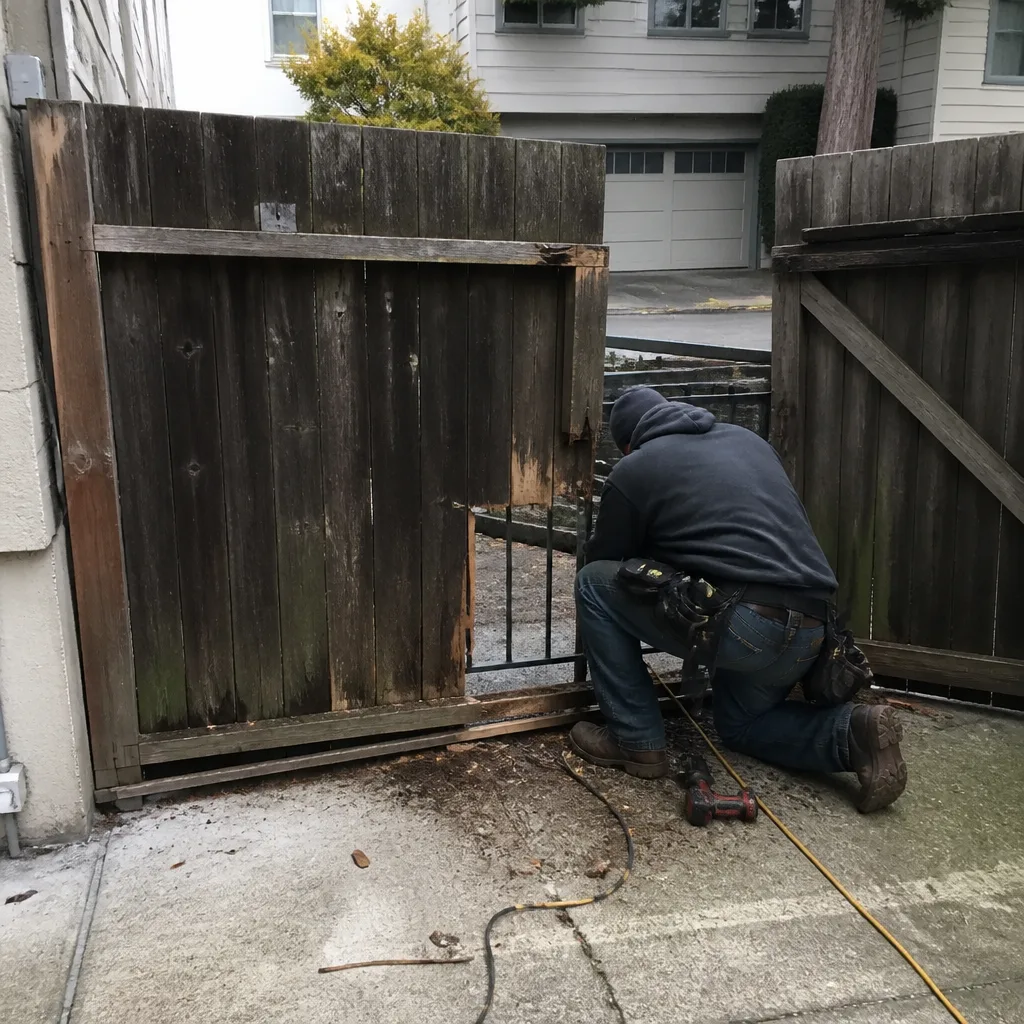 Before
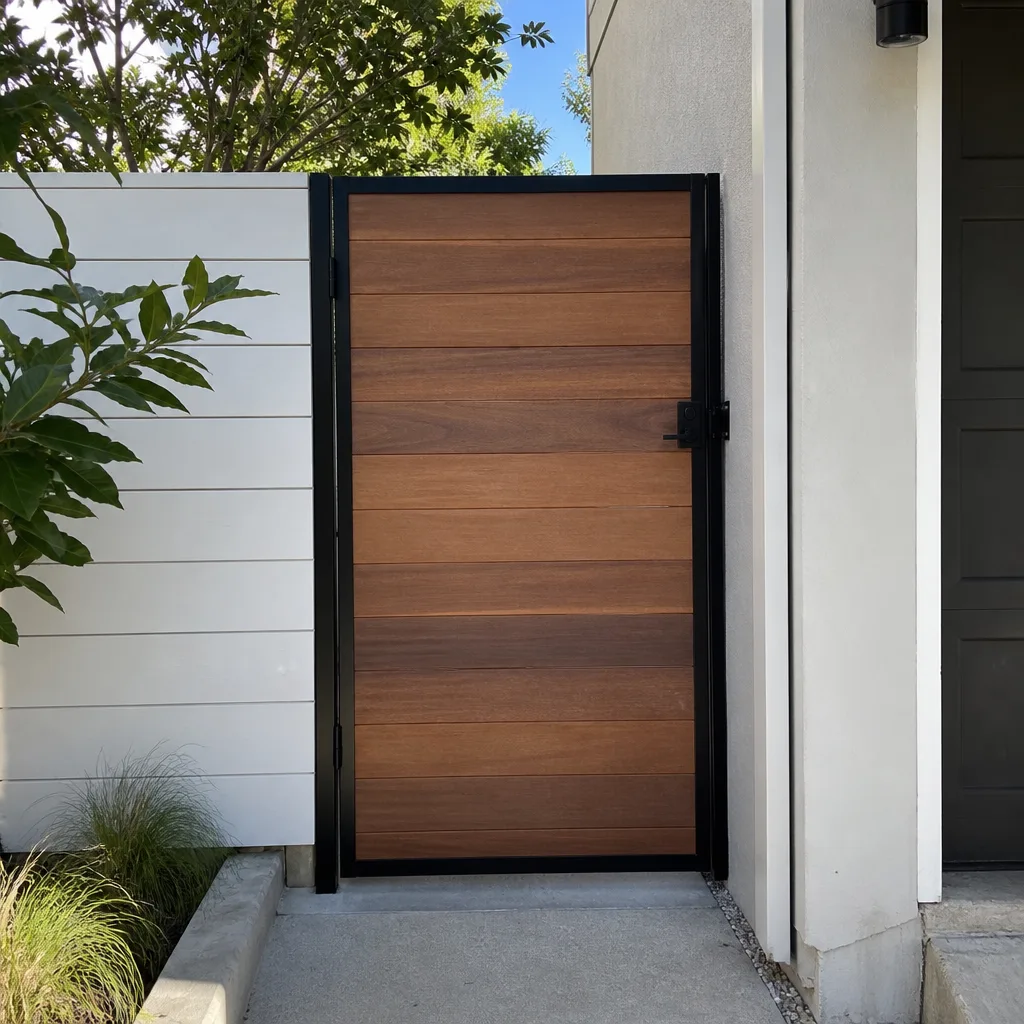 After
After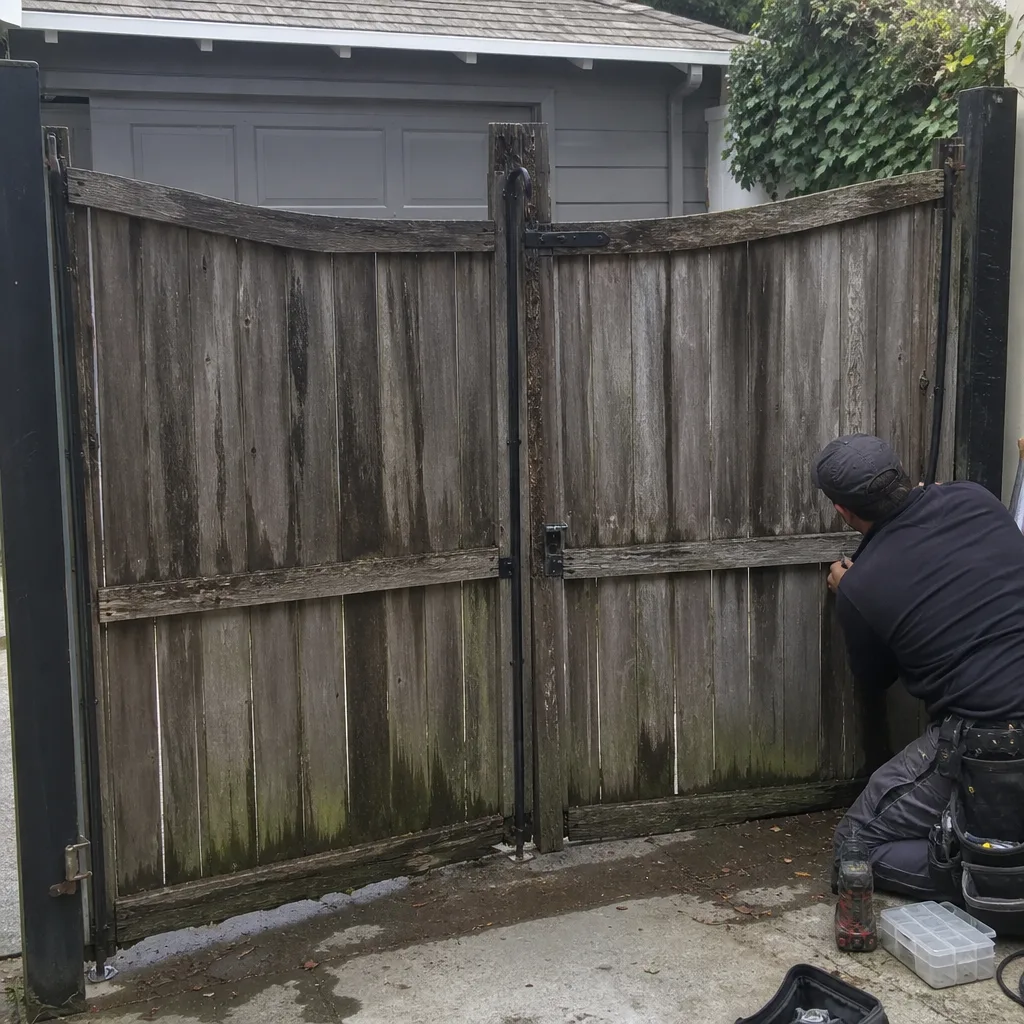 Before
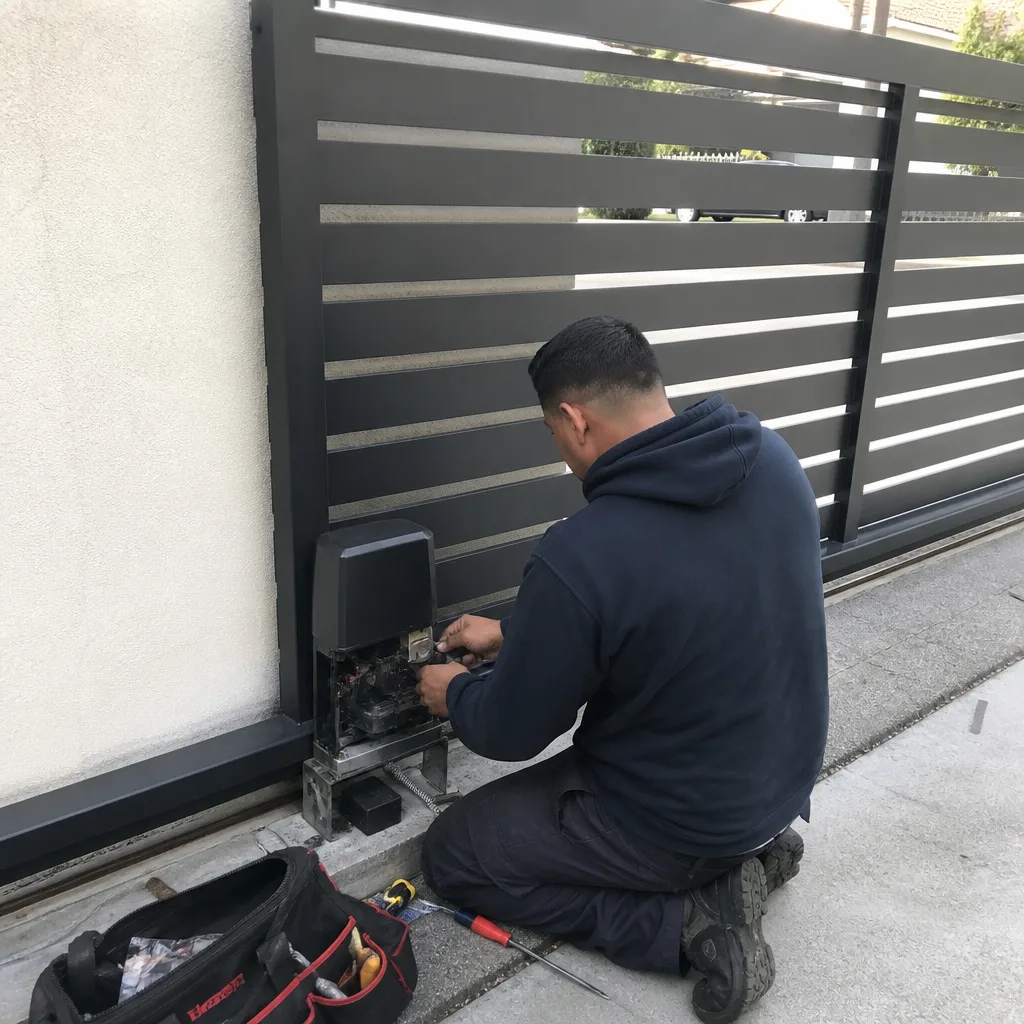 After
After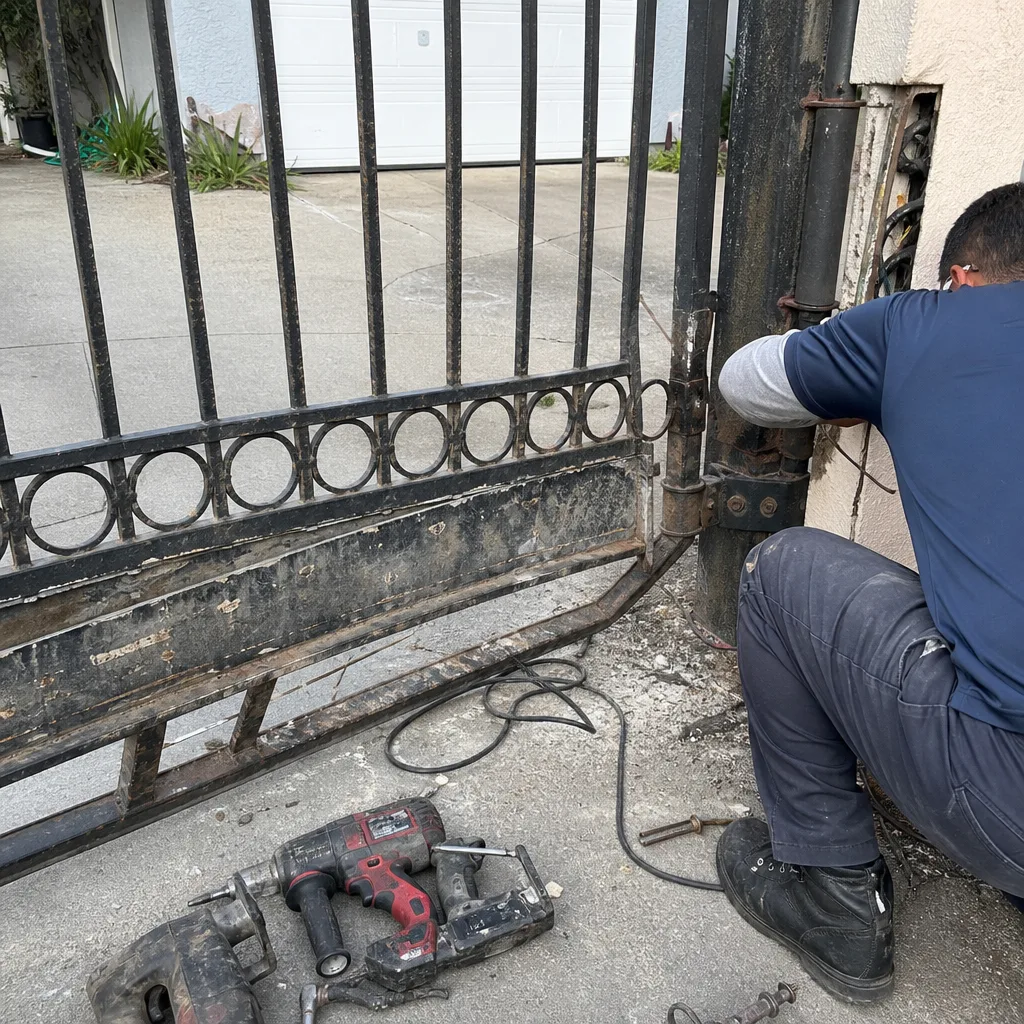 Before
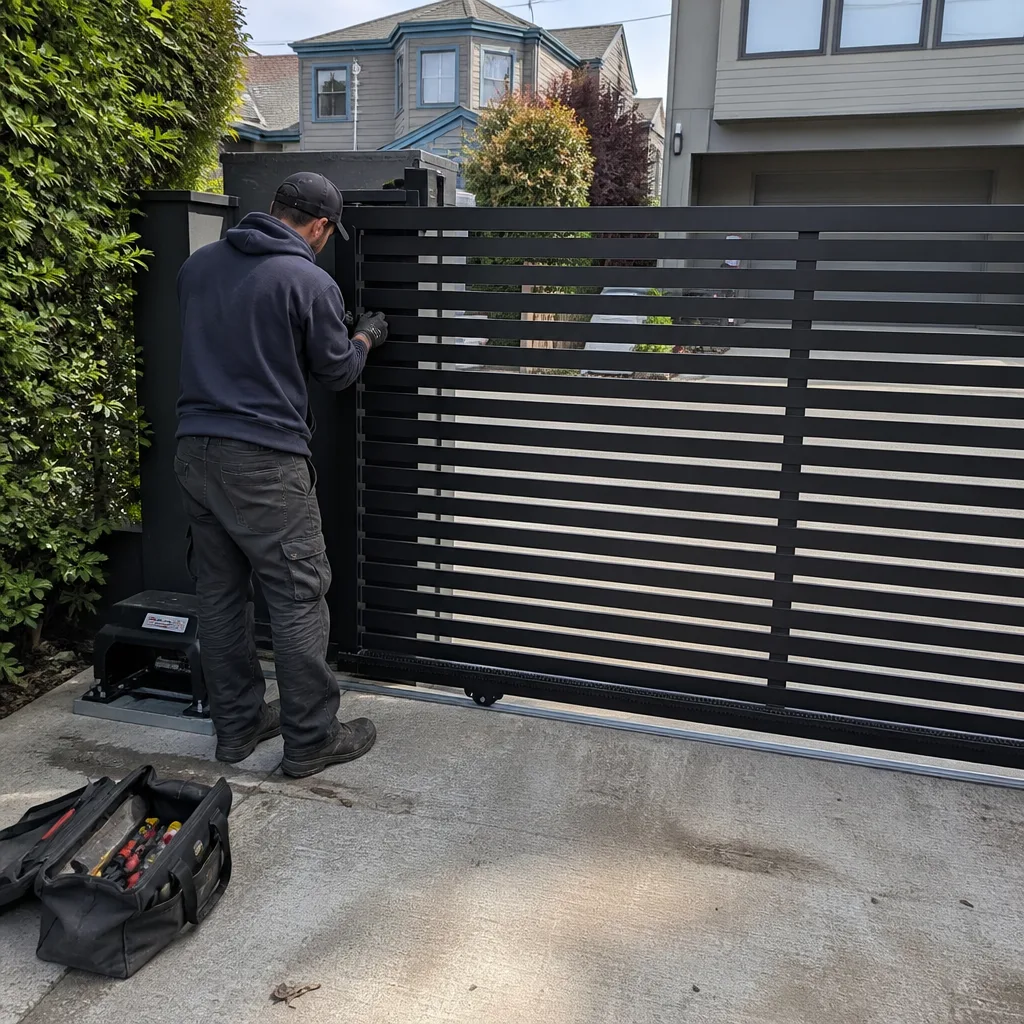 After
After