
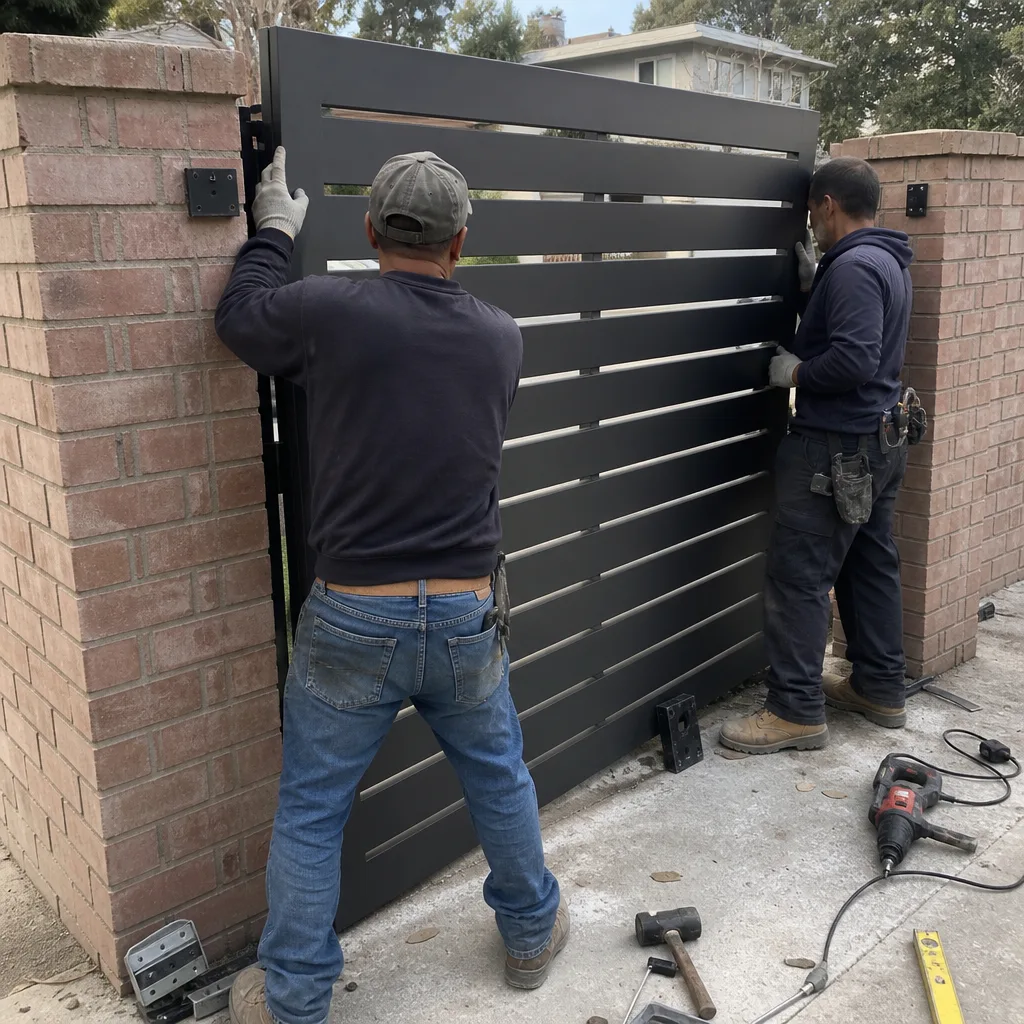
Last updated October 17, 2026
 Wrought iron
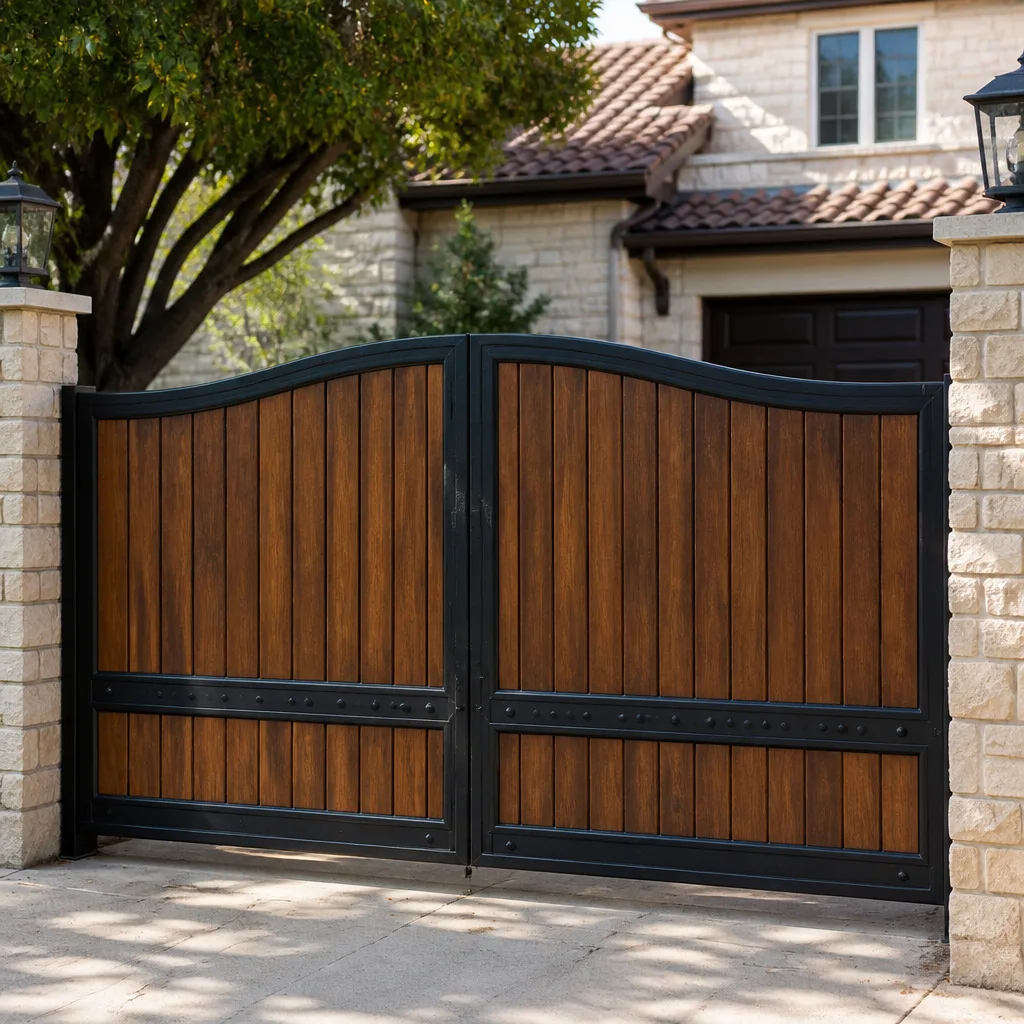 Wood & steel frame
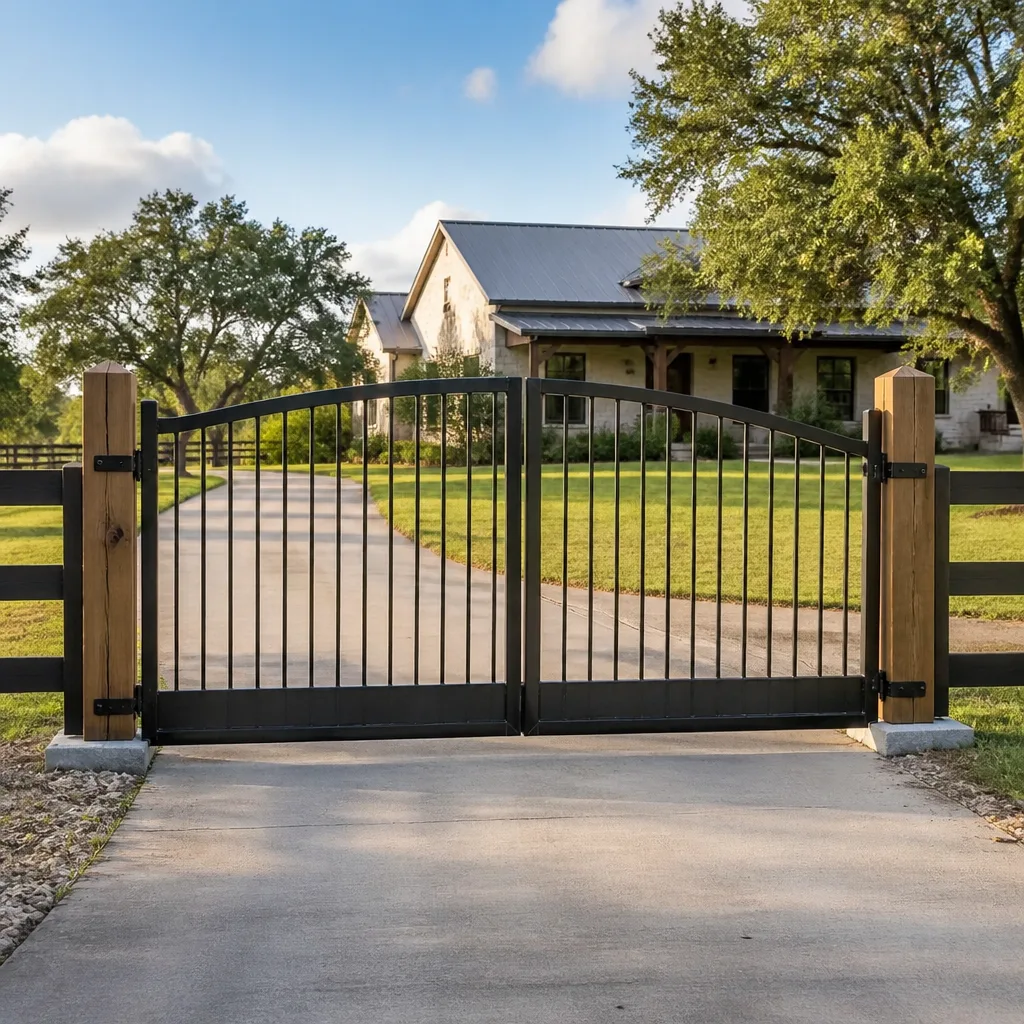 Farm & ranch
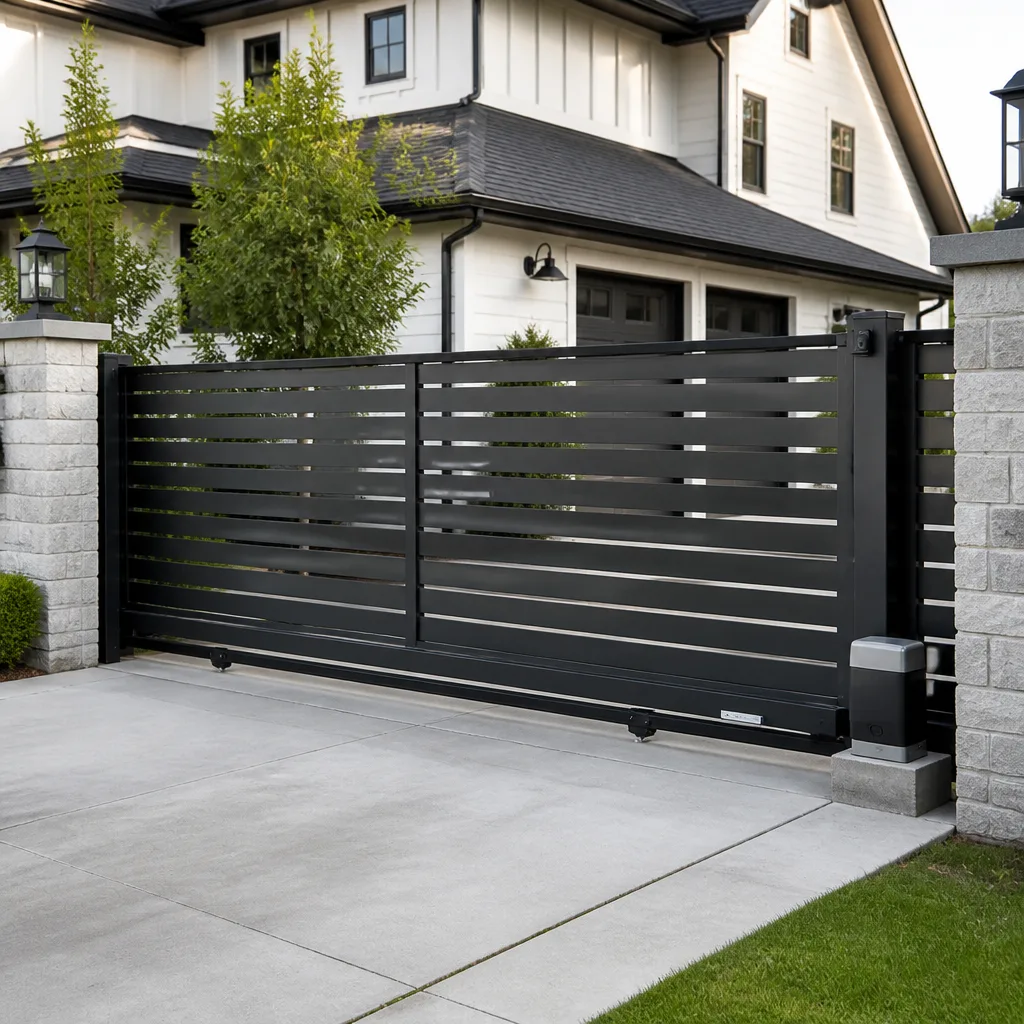 Sliding driveway gates
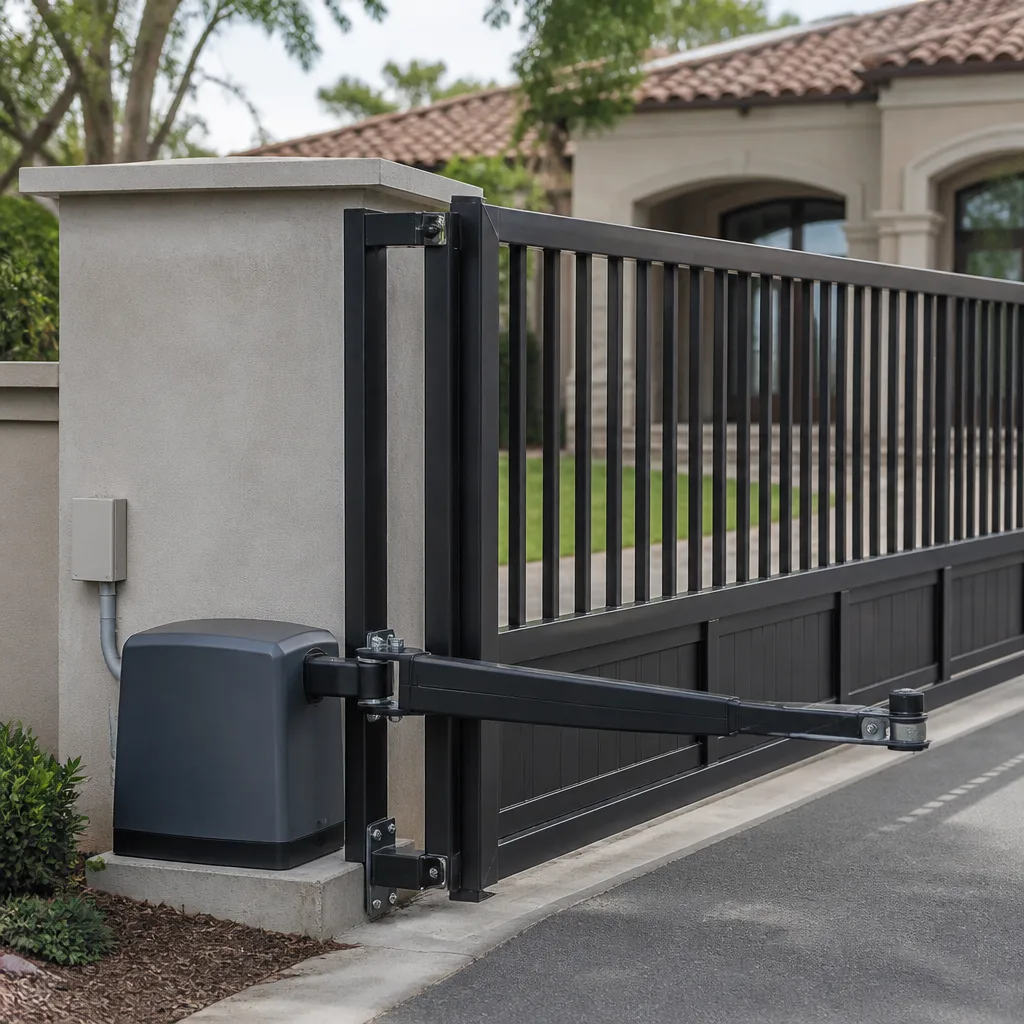 LiftMaster operators
Free on-site gate assessment - hinges, posts, and your LiftMaster or Nice gate operator checked before anything is quoted
The assessment is free and the quote is the invoice.
Get your free estimateHow to Hire a Gate Repair Contractor in San Francisco: A Step-by-Step Guide
Most homeowners in San Francisco start a gate repair search by asking one question: “How much?” It’s the wrong first question, and it’s why a surprising number of gate repairs in this city fail within the same year they were “fixed.” This guide reorders the entire hiring conversation, because in our 16 years of gate repair across San Francisco, we’ve learned that gate-type expertise matters more than the bottom line on any quote. By the time you finish reading, you’ll know how to hire a gate repair contractor in San Francisco with confidence, and you’ll understand exactly which five questions separate a specialist from a gamble.
Quick Answer
To hire a gate repair contractor in San Francisco, start by confirming the contractor has hands-on experience with your specific gate type and brand, not just general handyman experience. Then ask for a written, line-item estimate before any work begins, and confirm the warranty covers at least 90 days on parts and labor. A real specialist will answer these questions without hesitation and provide a documented care routine for protecting your home while they work.
Styles & brands we work with
Table of Contents
- The Wrong First Question Most Homeowners Ask
- The Five Questions to Ask Before Any Contractor Visits
- Gate Specialist vs. Fencing Company vs. General Handyman
- How to Read a Gate Repair Estimate Line by Line
- What a Documented Care Routine Looks Like in Practice
- San Francisco-Specific Factors That Affect Gate Repair
- Red Flags Specific to Electric Gate Repair Contractors
- What to Do After the Repair Is Finished
The Wrong First Question Most Homeowners Ask
A general handyman quoting $95 to fix a sagging electric gate in the Castro is not a bargain if they’ve never adjusted a loop detector or re-tensioned a chain drive. What often happens is this: the $95 visit covers a superficial adjustment, the symptom returns within weeks, and the homeowner is now looking at a $600 motor replacement that a specialist would have prevented on the first visit. The inexpensive quote wasn’t a good deal. It was a down payment on a bigger failure.
In San Francisco, this pattern shows up constantly. The city’s mix of steep driveways, salt air from the Bay, and the sheer age of many homes means gates here face conditions that a contractor from, say, Sacramento or Walnut Creek never encounters. A cast-iron gate on a Noe Valley Victorian behaves differently than an aluminum driveway gate on a new build in Mission Bay. If the person you’re hiring hasn’t worked on both, they’re learning on your dime.
Here’s the reordering we recommend, and it’s the framework this entire guide follows:
- Gate-type expertise first. Confirm the contractor regularly works on your kind of gate: sliding, swinging, overhead, cantilever, or pedestrian, and ideally your specific brand of opener if the gate is automated.
- Price transparency second. Request a written, line-item estimate before work begins. Not a verbal ballpark. A written number.
- Written accountability third. Confirm the warranty in writing, and confirm that the price you approve is the price you pay. No surprises.
We’ve been doing this since 2009, and we can tell you that homeowners who follow this order-and our complete guide to gate repair in San Francisco-rarely end up paying for the same repair twice. The homeowners who skip straight to price are the ones who call us six months later with a gate that’s sagging again and a handyman who won’t return their calls.
The Five Questions to Ask Before Any Contractor Visits
Before anyone steps onto your property in San Francisco, ask these five questions. Write them down. A contractor who answers all five clearly and specifically is one you can reasonably trust. A contractor who gets vague, defensive, or changes the subject is telling you something important.
Question 1: “What gate brands have you worked on this month?”
This is the single most revealing question you can ask, because it separates active specialists from occasional dabblers. If the contractor pauses, says “all of them,” or can’t name a single manufacturer, that’s your cue to keep looking. Ask for specifics from the current month, not the last five years. A contractor who worked on a LiftMaster opener last week and a FAAC hydraulic operator two weeks ago has current muscle memory. A contractor who says “yeah, I’ve done some gates” doesn’t.
At Latch and Post Gate Repair San Francisco, our technicians are factory-trained on the brands that actually show up on San Francisco properties: LiftMaster for residential swing and slide operators, FAAC and BFT for hydraulic and electromechanical systems, and Linear for access control. When a contractor names the brand you actually have and describes a recent job with that exact equipment, you’re talking to someone who won’t be ordering parts for the first time while standing in your driveway.
Question 2: “What does your written estimate include?”
A written estimate is the single most important document in any gate repair job, and it’s where the honest contractors separate themselves from everyone else. The correct answer to this question sounds like a list: line items for parts, line items for labor with a time estimate, a trip fee or diagnostic fee clearly stated and separate from the repair quote, and a note that the price won’t change without your written approval.
When a contractor says they don’t do written estimates for small jobs, that’s a small red flag. When they say “don’t worry, I’ll take care of you,” that’s a bigger one. In San Francisco, where gate repairs range from a $185 latch replacement to a $4,500 full operator swap, every job deserves documentation. If the contractor won’t write it down before they touch the gate, they’ve told you how they’ll behave if something goes wrong after the repair.
Question 3: “What’s your warranty on parts and labor?”
Ninety days is the floor for a legitimate gate repair warranty in this market. Anything less than that, and the contractor isn’t confident the fix will hold, which means you shouldn’t be either. Some components, like a replacement operator motor, should carry a longer manufacturer warranty, often one to three years. Ask the contractor to explain both parts of the warranty: what’s covered by their labor and what’s covered by the part manufacturer. A contractor who can’t answer this question in one sentence is not someone you want re-wiring an electric gate.
We back every repair and installation we do with the 365-Day Done Right Promise. If it’s not right, we make it right. No argument, no fine print. That’s not a sales line. It’s a written commitment, and it’s the standard you should hold every contractor to in San Francisco.
Question 4: “What happens to my floors and home while you work?”
This question sounds odd until you consider what gate repair actually involves. A technician diagnosing an electric gate often needs access to the keypad by your front door, the control box in the garage, or the wires running through a wall. In a San Francisco Edwardian with original hardwood floors, that means boots tracking in dust and dirt unless the contractor planned for it. If the contractor has no answer for this question, they haven’t thought about your home as anything other than a job site.
Our answer at Latch and Post is specific because it’s non-negotiable: shoe covers go on before we step inside, drop cloths go down before any equipment touches your floor, and a photo of the clean-up is taken before we leave. Every visit. It’s a series of small habits that tells you the contractor respects the home, not just the gate.
Question 5: “If your repair isn’t right, what happens?”
Every contractor will say they stand behind their work until the moment you need them to. Then some of them vanish. The way to find out which one you’re talking to is to ask the question directly and watch the reaction. A contractor with a real guarantee answer immediately and can point to the terms. A contractor without one hesitates, smiles, and says something like “of course we’ll come back.” That’s not a guarantee. That’s a hope.
Ask for the guarantee in writing. Ask what triggers it and how long it lasts. And ask whether the contractor’s phone number still reaches a person at 7 pm on a Saturday, because that’s when gate failures tend to make themselves known.
Gate Specialist vs. Fencing Company vs. General Handyman
San Francisco doesn’t have one kind of person who fixes gates. It has three, and they’re not interchangeable. Knowing which one to call is the difference between a repair that lasts and a repair that merely seems cheaper at the start.
The Gate-Only Specialist
A gate-only specialist, like Latch and Post Gate Repair San Francisco home, has a narrow focus: gates. Not fences. Not decks. Not general contracting. Gates. We service the latch that holds the gate and the post that carries it, which is actually where most failures happen. Every gate in this city, whether it’s a 1908 cast-iron pedestrian gate in Pacific Heights or a modern steel driveway gate in Noe Valley, comes down to those two anchoring points. If they’re wrong, nothing else on the gate will behave.
The advantage of a specialist is diagnostic speed. We’ve seen hundreds of sagging gates in San Francisco, and we can usually identify the cause within the first ten minutes: worn hinge pins, a failing post that needs re-setting in concrete, a misaligned receiver, or an operator that’s fighting a mechanical bind instead of a motor problem. A specialist is the right call for any gate where the repair is mechanical or electrical, any gate where safety sensors are involved, and any gate that’s automated.
The Fencing Company That Does Gates
Fencing companies care about the fence line, and many of them install gates competently because a fence needs a gate to be functional. But “install competently” and “repair expertly” are different skills. A fencing company is often an excellent choice for full gate installation as part of a new fence project. They’re less reliable for diagnosing why an existing gate is sagging or why an electric operator stopped responding to the remote. Their core competency is the fence itself, and the gate is a necessary accessory.
Where a fencing company shines: new wood or vinyl gate installation, post replacement that requires matching an existing fence style, and jobs where the gate is part of a larger perimeter project. For a Gate Installation in San Francisco, a good fencing company can do solid work. For a gate that’s already installed and failing, call a specialist.
The General Handyman
A general handyman in San Francisco might handle thirty different job types in a month: a leaky faucet in the Mission, a broken cabinet hinge in the Richmond, a stuck window in the Sunset, and somewhere in there, a gate latch. That’s the problem. The handyman’s skill is breadth, not depth. For a simple, purely mechanical gate latch replacement on a small pedestrian gate, a competent handyman can sometimes do fine work. But the moment the job involves an electric opener, a safety sensor, a heavy sliding gate, or a post that needs to be re-set in concrete, the handyman is outside the safe envelope.
Our recommendation in San Francisco: use a general handyman only for the simplest mechanical fixes, and even then, ask the five questions. If the handyman can’t name the gate opener brand without checking their phone, the job is too complex for them. For anything electrical, anything load-bearing, or anything where a failure would leave your property unsecured, call a Gate Repair in San Francisco specialist.
How to Read a Gate Repair Estimate Line by Line
A gate repair estimate is a simple document, but it hides a lot in its formatting. Learn to read it like a contractor, and you’ll spot dishonesty before it costs you money.
Labor Without a Time Estimate
When a line item reads “Labor: $450” with no hours attached, you’re looking at a blank check. Labor in this business is charged by the hour or by the job, and either way, you deserve to know what you’re paying for. A legitimate estimate will say something like “Labor: 2.5 hours at $140/hour” or “Labor (flat rate, includes diagnosis and repair): $450.” The difference is accountability. The flat rate protects you from inefficiency, and the hourly rate lets you verify fairness. No time estimate anywhere on the document is a request for you to trust blindly.
Trip Fee vs. Diagnostic Fee
These are two different things, and conflating them is a common pricing trick. A trip fee is a charge for the technician to come to your property. It’s usually collected whether you approve the repair or not, and it covers the time, gas, and overhead of showing up. A diagnostic fee covers the actual troubleshooting: testing sensors, checking the operator, identifying the problem. Some contractors charge both, and that’s fine as long as both are disclosed upfront. What’s not fine is a contractor who calls it a “diagnostic fee” and then emails you an invoice for $50 more because of “travel.”
Ask before the visit: “What are your fees if I decide not to proceed with the repair?” The answer should be a single, specific dollar amount. If it’s not, that’s a pricing problem, not a gate problem.
Parts with No Brand Name
A line item that says “gate opener motor: $850” tells you nothing. The same part from different manufacturers can vary by $400 or more. A legitimate estimate names the part: “LiftMaster LA400 actuator arm: $520” or “FAAC hydraulic pump: $890.” When the brand is missing, assume the contractor is buying the cheapest available part and charging you for a premium one. Ask for the brand to be added in writing. A contractor who refuses has a reason.
What a Good Estimate Looks Like
- Trip fee or diagnostic fee stated separately and clearly labeled
- Parts listed with brand names and part numbers where available
- Labor with either an hourly rate and estimated hours, or a flat-rate total
- A note stating that any additional work requires written approval before the price changes
- Warranty terms for both parts and labor in writing
- The total amount you’ll pay if you approve the repair
Our written price is delivered before any work begins, every single visit, with no pressure to accept. You’ll know the number, you’ll see the line items, and the price you approve is the price you pay. That’s not a premium service in our view. It’s the minimum honest standard, and it’s remarkable how few gate repair contractors in this city meet it.
What a Documented Care Routine Looks Like in Practice
Most gate repair contractors in San Francisco do good mechanical work or they wouldn’t stay in business. The thing that separates a considerate contractor from a careless one has nothing to do with the gate at all. It’s what happens inside your home.
Think about what a gate repair actually involves when the motor or control box is inside the house or garage. The technician walks through your front door, through your living room or hallway, into the garage or utility area. In a San Francisco Edwardian with a century-old parquet floor, that’s a person in work boots walking across a surface that cannot be cheaply replaced. If they’re not wearing shoe covers, they’re leaving behind whatever the last job site deposited on their soles. If they don’t put down a drop cloth under the control box, dust and metal shavings end up ground into the floorboards.
These aren’t abstract concerns. We’ve seen the aftermath of contractors who didn’t bother. The stained carpet runner, the scratched hardwood, the grease mark on the wall where a toolbox leaned. A documented care routine exists to ensure that the only thing changed by the visit is the gate.
At Latch and Post, our technicians work to the Cedarwell C.A.R.E. values on every job. The acronym stands for four commitments: Clean up like it’s our own home. Ask before we move or touch anything. Respect the family’s time and quiet hours. Explain the price before the work. In practice, that means shoe covers and drop cloths on every visit, a photo of the clean-up before departure, and quiet tools when kids are asleep. We mention napping kids because that’s the reality of San Francisco life: a 30-year-old parent in a Cole Valley condo and a 50-year-old parent in a St. Francis Wood house both want the gate fixed without waking the baby.
Why does a cleanup photo matter? Because it creates contractor accountability. When a technician knows they have to photograph the area before leaving, the clean-up actually happens. It’s a small discipline with an outsized effect, and it’s one of those things you don’t notice until a contractor doesn’t do it. Then you notice the dirt, the debris, the oil spot, and you wonder why nobody thought about your home.
San Francisco-Specific Factors That Affect Gate Repair
Hiring a gate repair contractor in San Francisco isn’t the same as hiring one in Phoenix or Austin. This city has its own conditions that shape how gates fail and how they should be fixed. A contractor who doesn’t understand these factors is working blind.
Salt Air and Steel Gates
Properties in the Richmond, the Sunset, and anywhere near the ocean deal with salt air that accelerates corrosion on steel and iron gates. Surface rust appears faster here than almost anywhere else in the Bay Area, and a repair that ignores the corrosion’s root cause will repeat within a season or two. A San Francisco gate specialist knows to look for rust at the hinge points, the latch mechanism, and the bottom rail, and knows which lubricants and coatings will hold up against the maritime air.
The Low-Voltage Reality of Electric Gates
Electric gate operators in San Francisco generally run on low-voltage DC power from a transformer, often in a garage or basement. It’s not the same as wiring a light fixture, and it’s why unlicensed general handymen routinely misdiagnose electric gate problems. When a gate’s safety sensors fault, when the remote stops working, or when the operator hums without moving the gate, the cause is usually in the low-voltage wiring, the control board, or the mechanical load on the motor. Not the wall outlet. A specialist who does Electric Gate Repair in San Francisco daily understands this system top to bottom.
Steep Driveways and Gate Geometry
Plenty of San Francisco homes sit on grades that would be illegal in flatter cities. A sliding gate on a 18-percent grade in Diamond Heights bears forces that a flat driveway gate never encounters. The rollers wear unevenly, the track accumulates debris differently, and the motor works harder against gravity. A contractor who’s only repaired gates on level driveways in the suburbs will misdiagnose the problem or, worse, install parts that aren’t rated for the load. Ask about steep-grade experience if your driveway has any meaningful slope.
The Age of the Property
Many San Francisco gates are original to homes built before 1940. The gate posts, the hinges, and the latch hardware have decades of wear. In some cases, the post itself has rotted or shifted underground, and no amount of hinge tightening will fix the sag. A good contractor identifies when a repair stops making sense and a replacement is the honest recommendation. That conversation requires experience with old properties, not just new installations.
Red Flags Specific to Electric Gate Repair Contractors
Electric gate repair carries a degree of risk that mechanical gate repair doesn’t, because you’re dealing with motorized equipment, safety sensors, and in some cases, significant stored force. A heavy sliding gate that closes on a child is not a hypothetical risk. That’s why the red flags in this section are non-negotiable.
Unlicensed Electrical Work on Motor Wiring
In California, any contractor working on line-voltage electrical components must be licensed to do so. When a contractor starts cutting into the power feed for an operator, splicing wires, or replacing a control board that connects to line voltage, they’re doing work that requires proper licensing. Ask to see the license. A contractor who gets uncomfortable with that question is not someone who should be working on your electric gate.
Warranties Shorter Than 90 Days
We said it earlier and we’ll repeat it here because it’s important: ninety days is the floor. An electric gate repair that’s done correctly should hold for at least three months of daily use. A contractor offering 30 days is pricing in the likelihood that their repair will fail. A contractor offering no warranty at all is one we hope you’ll walk away from.
No Live Phone Answer After Hours
A gate that stops working at 9 pm on a Sunday is a security problem and a safety hazard. When a contractor’s phone goes to voicemail outside business hours, and stays there until Monday morning, you’re not working with a gate specialist. You’re working with someone who treats gate repair as a weekday job. Gates don’t fail on schedule. They fail when a cable snaps or a sensor fries, which might be a holiday weekend. At Latch and Post, a live person answers our calls 24 hours a day, 7 days a week, including nights, weekends, and holidays; for more guides & resources, visit our blog anytime. That’s not a perk. It’s a core part of what gate repair in San Francisco requires.
Pressure to Replace the Operator Immediately
Some contractors make more money selling new equipment than repairing old equipment. When you call about a gate that won’t open, and the contractor spends the first ten minutes explaining why you should replace the entire operator instead of diagnosing the actual failure, they’re running a sales pitch, not a repair visit. A legitimate contractor diagnoses first and recommends replacement only when repair genuinely doesn’t make economic sense. If you feel pressured, take a step back, call someone else, and compare the diagnosis.
What to Do After the Repair Is Finished
The repair isn’t done when the gate opens and closes again. It’s done when you’ve verified three things, and a good contractor will walk you through all three before leaving your property.
Step 1: Test the Gate Through a Full Cycle
Open it, close it, stop it midway, and test what happens. If it’s an electric gate, trigger the safety sensors by passing through the closing path. The gate should stop and reverse. Check the remote from the distance you’d normally use it. Check the keypad with the code you use. No repair is complete until these tests pass. If any of them fail, say so before the technician packs up.
Step 2: Get the Cleanup Photo
If you hired a contractor who does Gate Repair in San Francisco with a documented care routine, they’ll show you the cleanup photo or send it to you. Look at the area where they worked. The floor should be as clean as it was when they arrived, and that’s the whole point. If there’s debris or dust, now is the time to point it out.
Step 3: Review the Warranty and Final Invoice
Make sure the final invoice matches the estimate you approved. If the total grew without a written change order, that’s a problem to raise on the spot. Review the warranty terms and keep a copy of everything. If the gate fails in six months under a 365-day warranty, you’ll need that paper trail.
Step 4: Get the Repair Documented
Ask for a brief written note describing what was repaired and what was replaced. This documentation matters if you sell the home later, and it matters if a different contractor ever services the gate. A gate with a service history is easier to diagnose and cheaper to maintain.
Common Mistakes to Avoid
- Choosing by price alone. The cheapest quote in San Francisco is often the most expensive gate repair you’ll ever buy, because it’s priced to get a foot in the door, not to fix the actual cause.
- Skipping the brand-expertise question. Not all gate openers are the same, and a contractor who’s never touched your brand of operator is learning on your equipment.
- Accepting a verbal quote. If it’s not in writing, it doesn’t exist. Verbal quotes evaporate when the invoice arrives.
- Ignoring the warranty. A 30-day warranty on a $900 motor repair is a contractor telling you they expect the repair to fail. Listen to them.
- Hiring a handyman for electric gate work. Low-voltage control systems have real failure modes that general handymen routinely misdiagnose. It’s not a knock on handymen; it’s a statement about the depth of specialization electric gates require.
- Not asking about in-home care. Your floors, your kids, and your pets have to share space with whoever fixes the gate. A contractor with no plan for that is a contractor who hasn’t thought about it.
- Waiting until the gate fully fails. A sagging gate, a grinding opener, or a sensor that intermittently faults are all early warnings. Fixing them costs less than fixing what happens next.
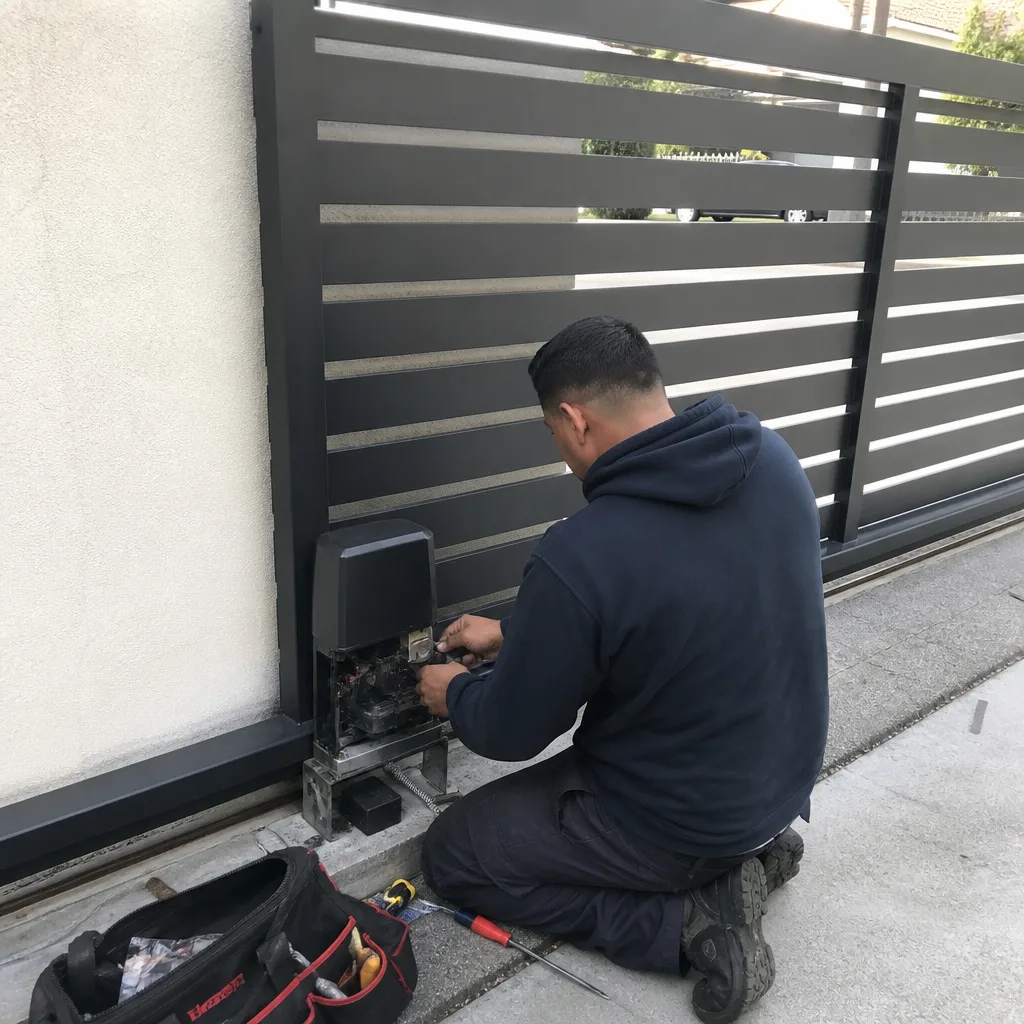
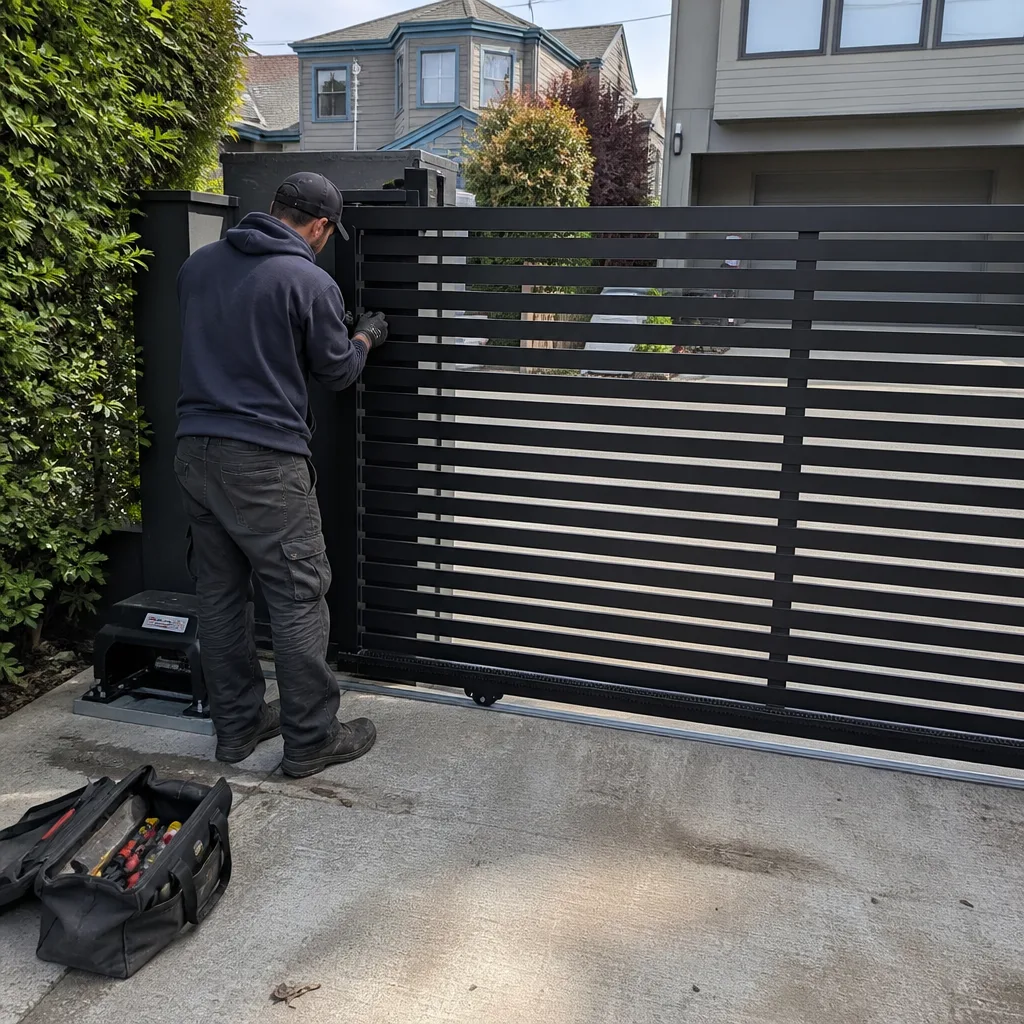
See the difference
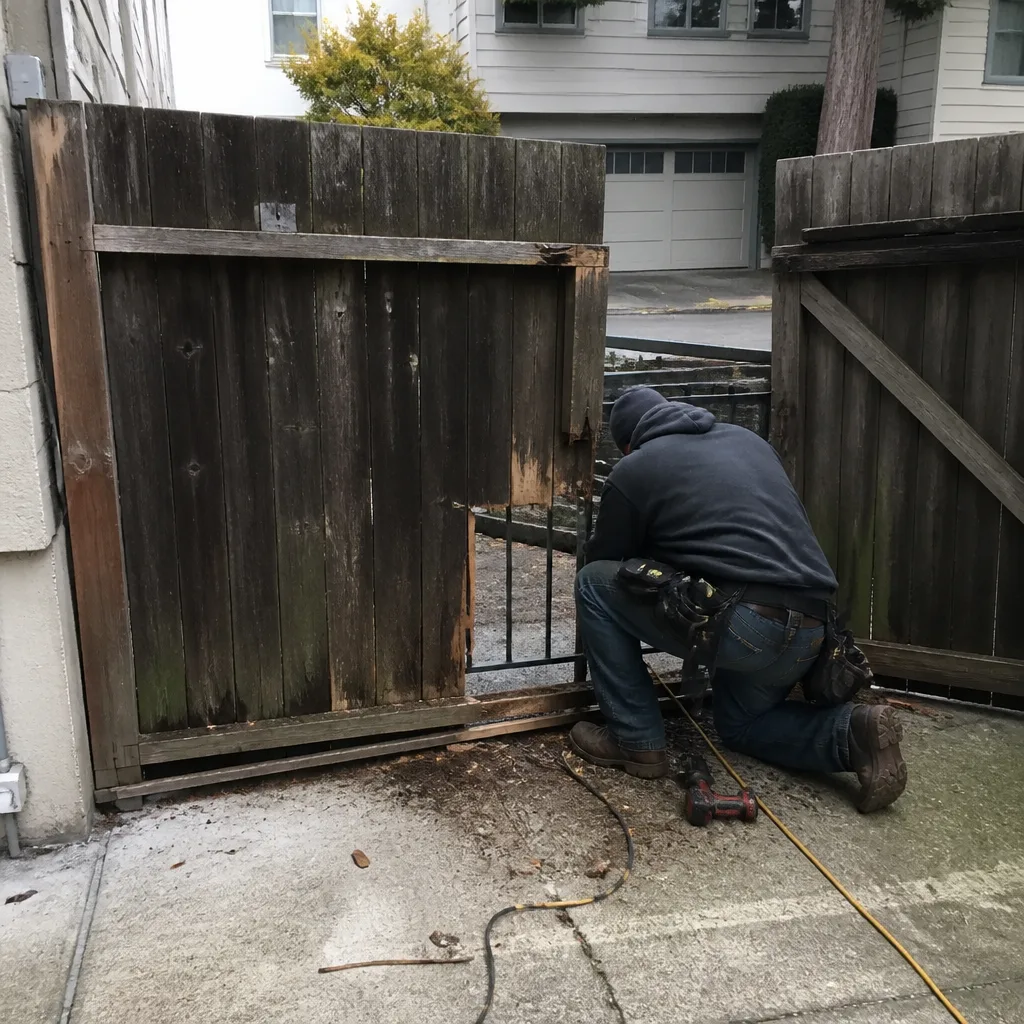 Before
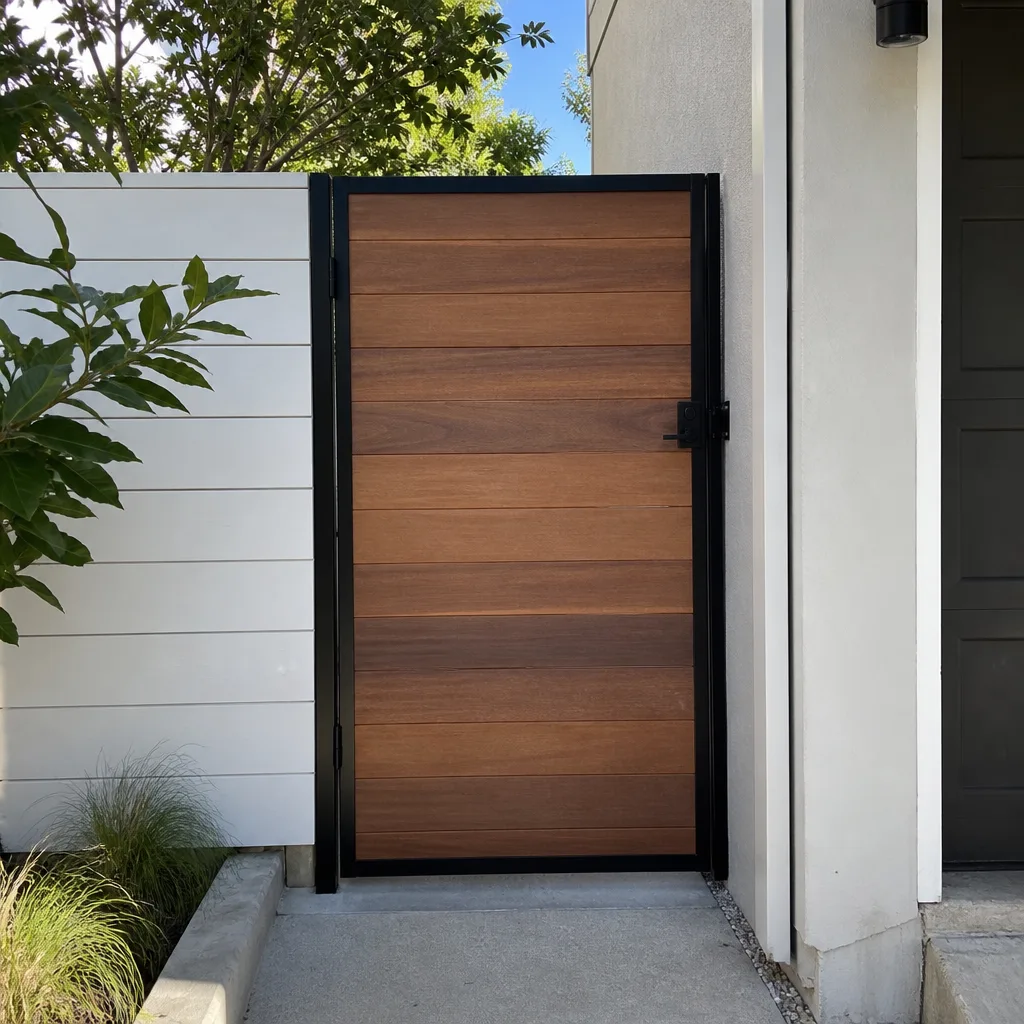 After
After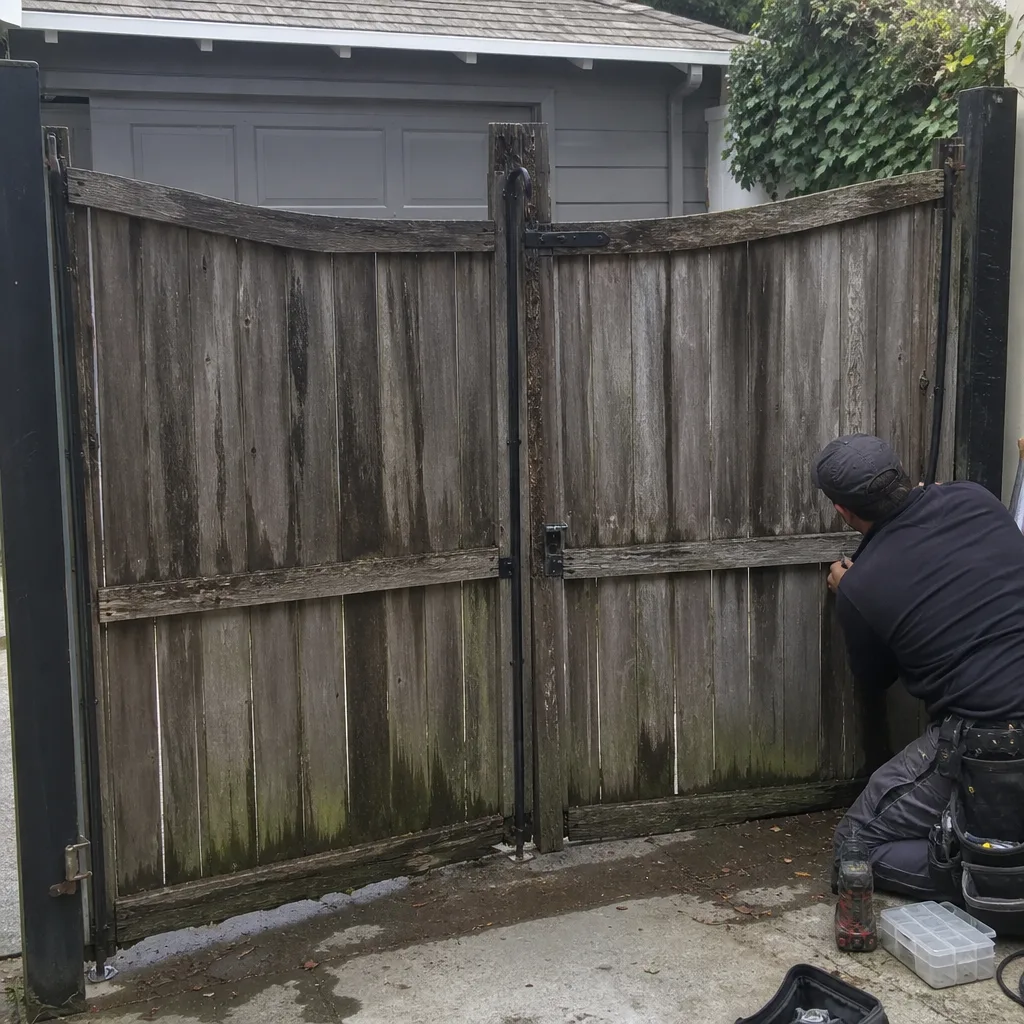 Before
 After
After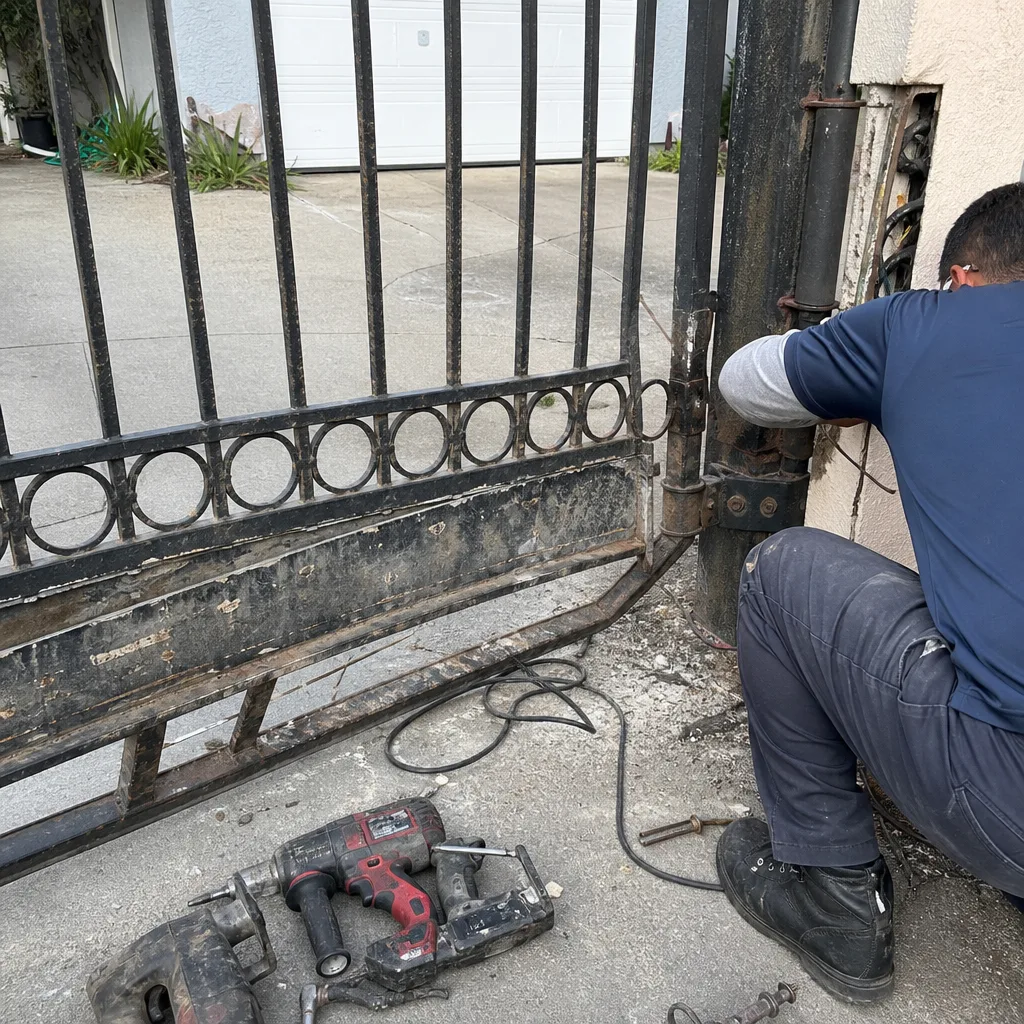 Before
 After
AfterWhen to Call a Professional
Call a gate specialist when your gate sags visibly, drags on the ground, or no longer latches securely. Call when the electric opener makes grinding noises, moves slowly, or stops responding to remotes and keypads. Call when the safety sensors fault, the gate reverses without reason, or the warning lights stay on. Call when a post feels loose, a hinge is cracked, or the gate shifted after a storm. These are not DIY fixes, and they’re not handyman fixes. They’re gate repair work, and the cost of getting it wrong is a gate that fails at the worst possible moment, leaving your family and property exposed.
Latch and Post Gate Repair San Francisco offers free estimates in San Francisco – call (628) 227-2771 and a live person will answer, any hour, any day.
Frequently Asked Questions
Most gate repairs in San Francisco fall between $185 and $2,500, depending on whether you’re replacing a simple latch or a full electric operator. A typical latch replacement runs from $185 to $350, a mechanical hinge or roller repair from $250 to $600, and an electric operator repair from $450 to $1,800, with full operator replacement landing between $1,800 and $4,500 including equipment. The exact number depends on your gate type, the brand of opener, and the specific failure. Call (628) 227-2771 for an exact quote, estimates are free and delivered in writing.
For most common gate repairs in San Francisco, including broken latches, misaligned hinges, and operator faults, same-day service is generally available from gate specialists who keep common parts stocked. More involved repairs, like a post that needs to be re-set in concrete, may require scheduling a return visit because the concrete needs curing time. Call (628) 227-2771 and describe the problem, and we’ll tell you honestly whether the repair can be completed today.
Yes, our technicians are factory-trained on LiftMaster, FAAC, BFT, and Linear operators, which cover the majority of automated gates in San Francisco. If your gate uses a different opener brand, we’ll tell you upfront, and we’ll be honest if a different specialist would serve you better.
Yes, this is standard practice at Latch and Post, governed by our Cedarwell C.A.R.E. values: shoe covers before stepping inside, drop cloths under any work area, and a cleanup photo before departure. These inclusions are non-negotiable on every single visit, and they cost you nothing extra.
Expect at least 90 days of coverage on parts and labor from any gate repair contractor in San Francisco. Some parts, like operator motors, should include a longer manufacturer warranty, typically one to three years. We back every repair and installation with the 365-Day Done Right Promise. If the work isn’t right, we make it right, no argument, no fine print.
Yes. We provide a written price before any work begins, every single visit, with no pressure to accept. The estimate includes the trip fee, the diagnostic findings, and the line-item repair cost. You’ll know the number before you approve anything, and the price you approve is the price you pay. Call (628) 227-2771 to schedule a visit.
The Bottom Line
Hiring a gate repair contractor in San Francisco is a process of elimination, not a search for the lowest bid. Start with gate-type expertise, ask the five questions, read the estimate line by line, and watch for the red flags we’ve described. A good contractor will answer your questions directly, put the price in writing before touching the gate, protect your floors and family while working, and back the repair with a real warranty. Latch and Post Gate Repair San Francisco has operated by these standards since 2009, and we’re happy to demonstrate them on your gate. Call (628) 227-2771 for a free estimate from a live person, any hour, any day.
Written by Cody Beckman, Owner at Latch and Post Gate Repair San Francisco, serving San Francisco since 2009.