
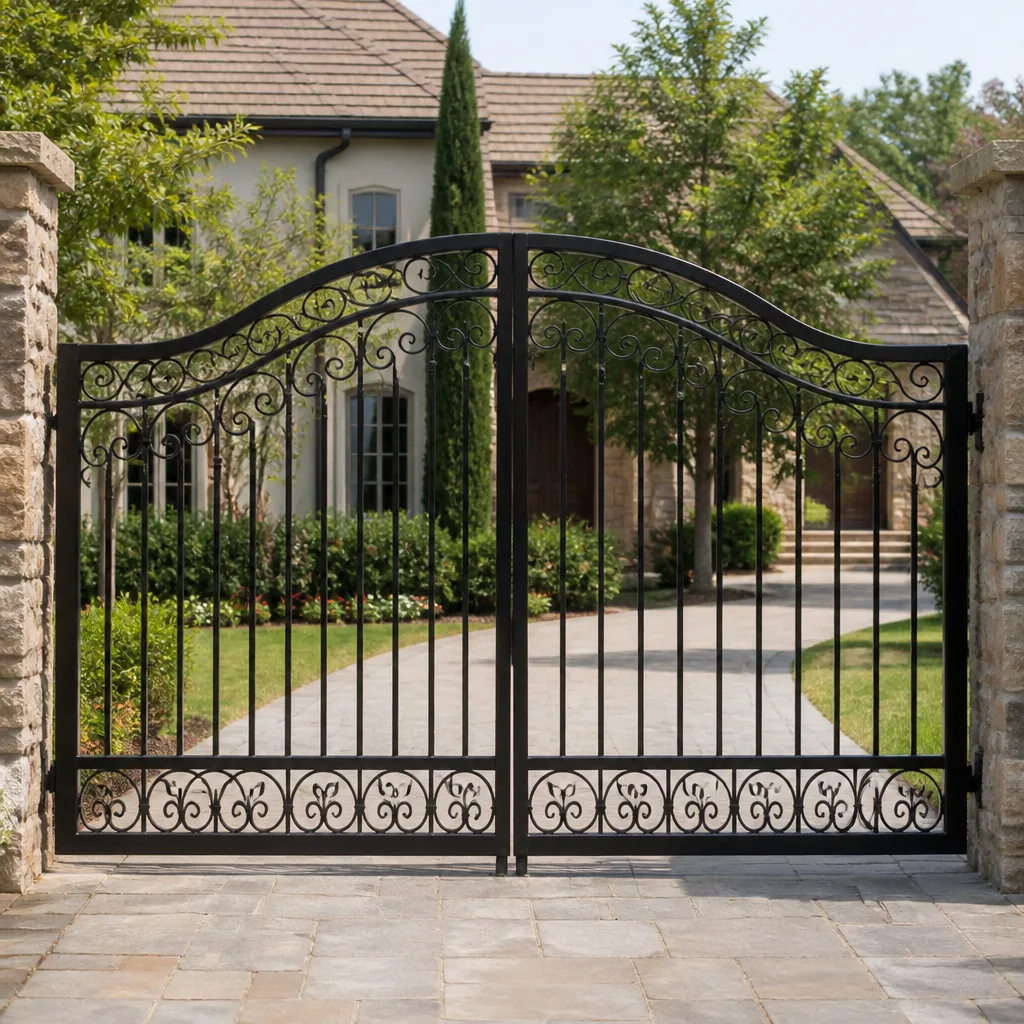
 Wrought iron
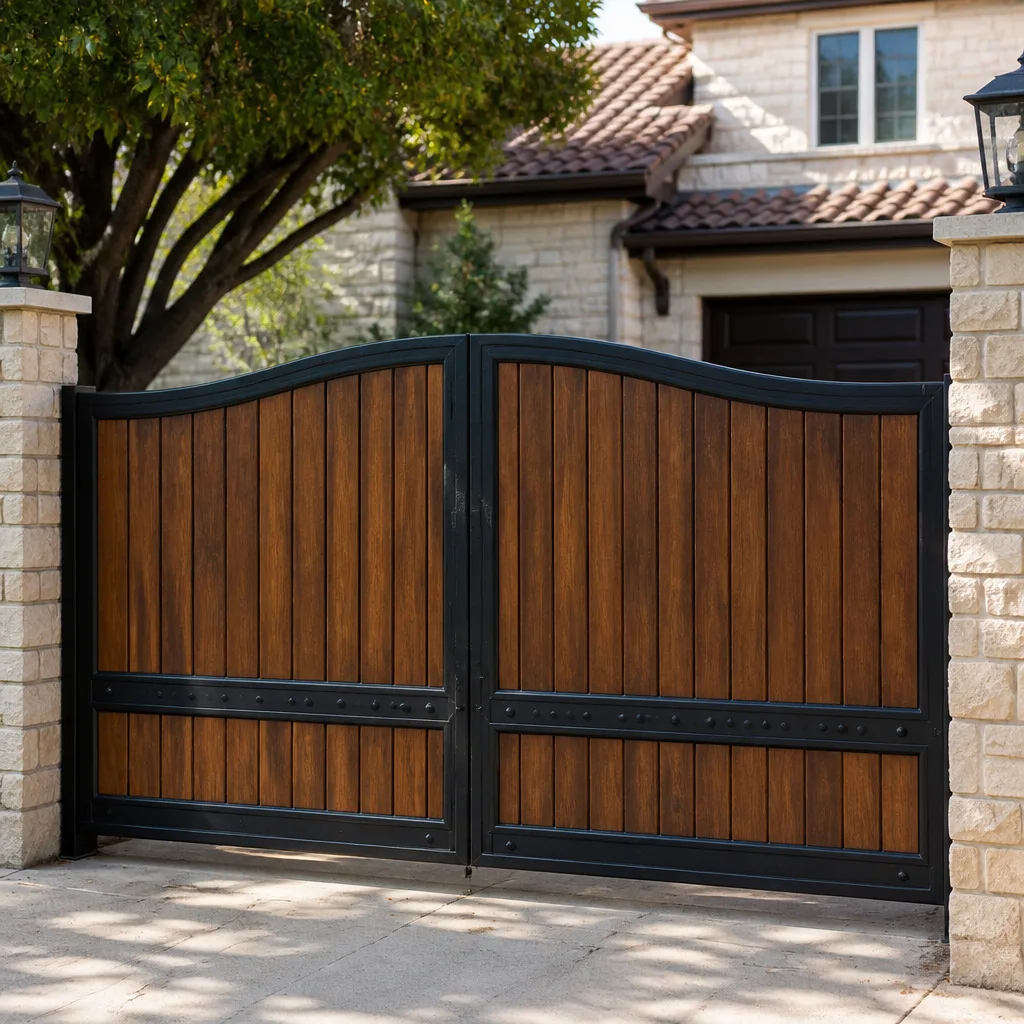 Wood & steel frame
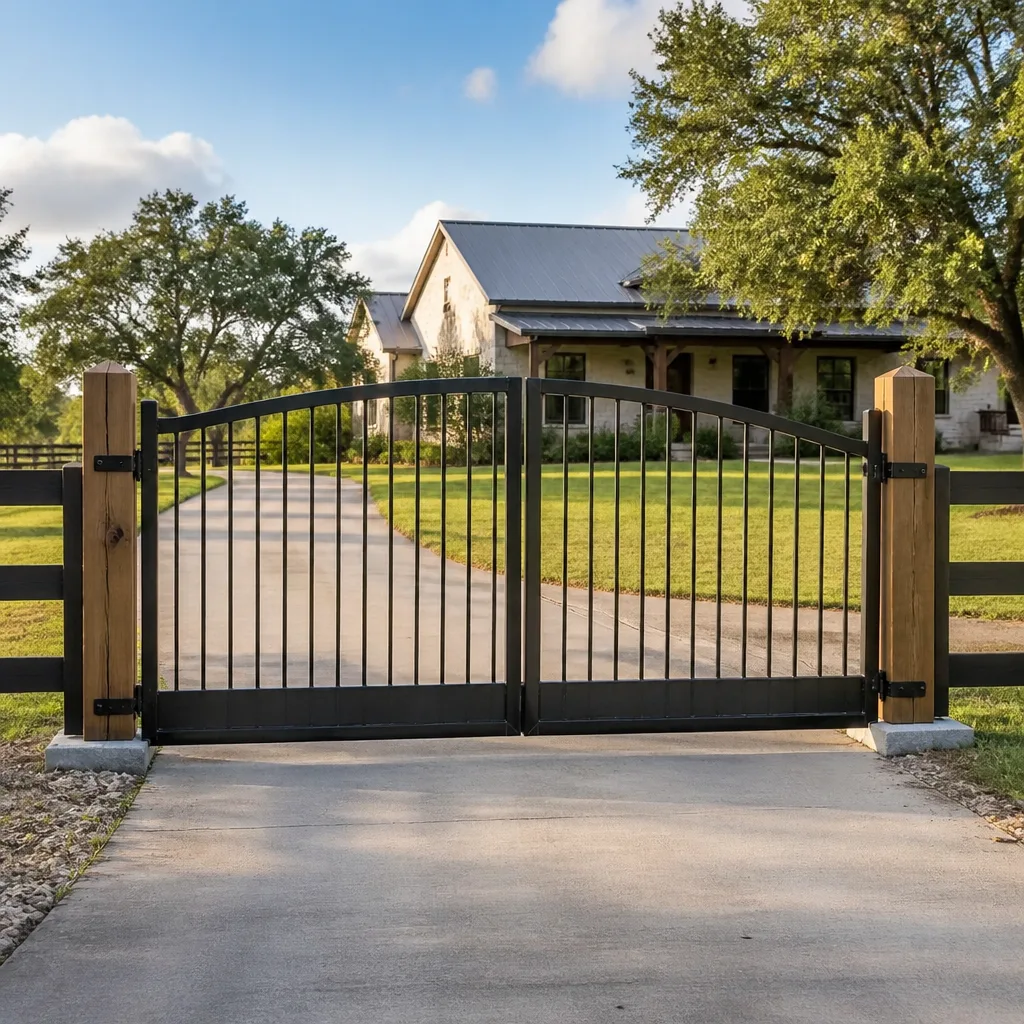 Farm & ranch
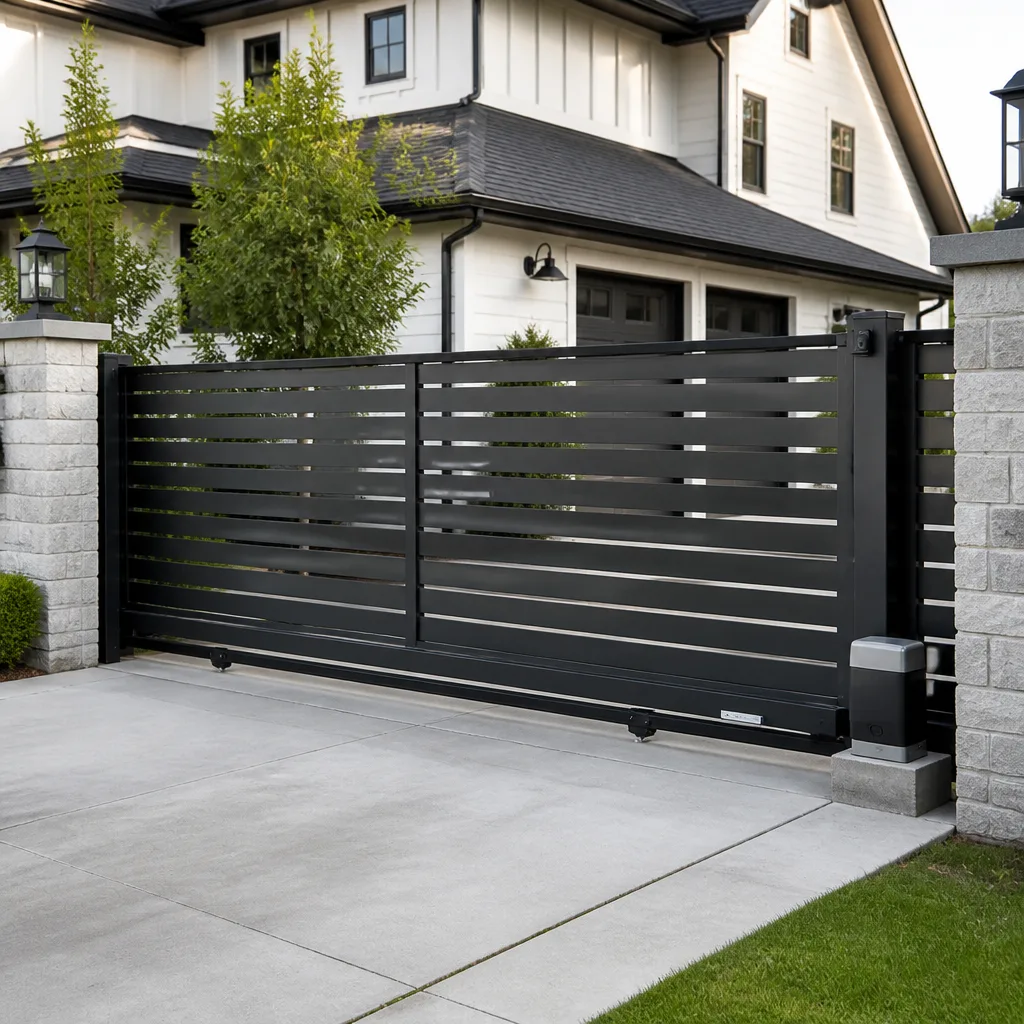 Sliding driveway gates
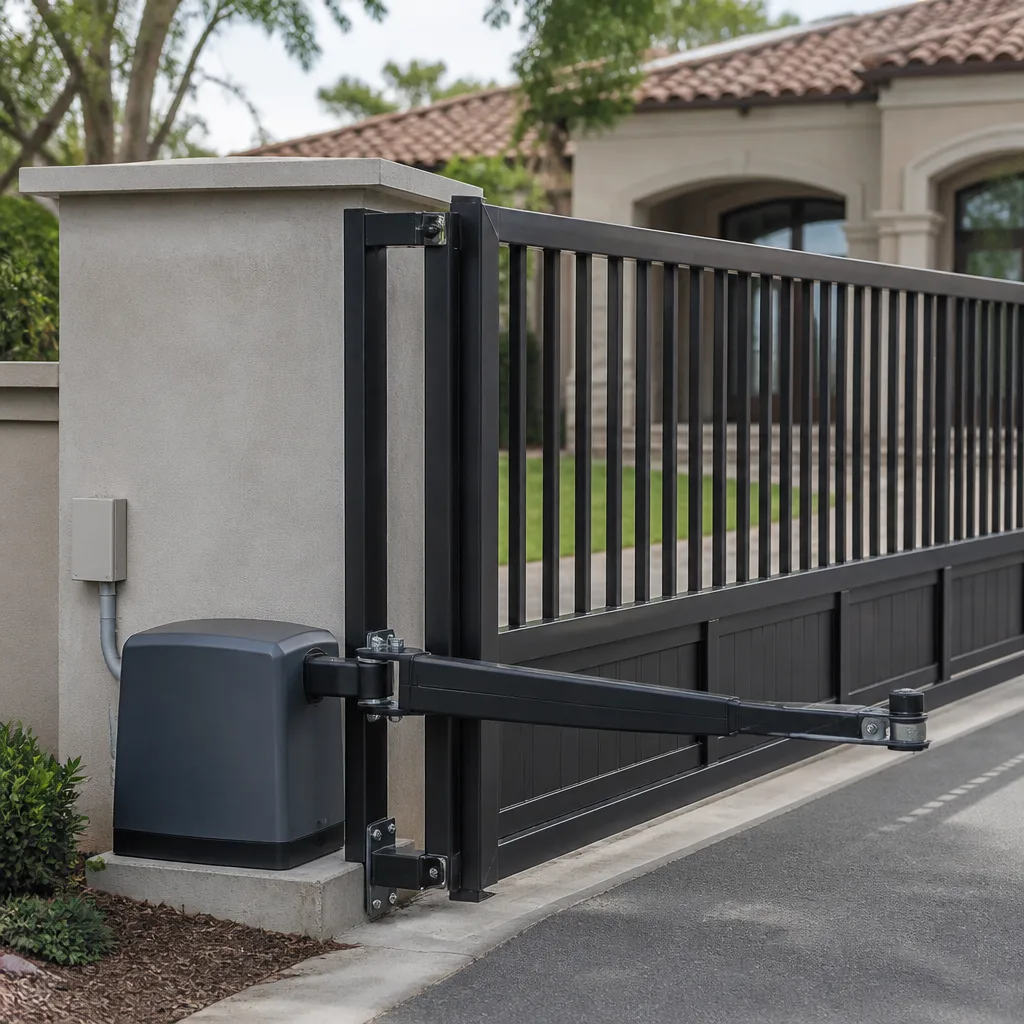 LiftMaster operators
Free on-site gate assessment - hinges, posts, and your LiftMaster or Nice gate operator checked before anything is quoted
The assessment is free and the quote is the invoice.
Get your free estimateFAAC Gate Motor Replacement: The San Francisco Owner’s Guide
FAAC gate motor replacement in San Francisco typically runs between $850 and $1,900 installed, depending on your model and whether you need the full operator or just internal components. We keep common FAAC motors and control boards on our trucks, so most replacements happen same day. The part usually fails in one of three ways: the motor stops responding entirely, it responds but can’t move the gate, or it moves the gate and then throws itself into a fault cycle that resets every time you cycle power.
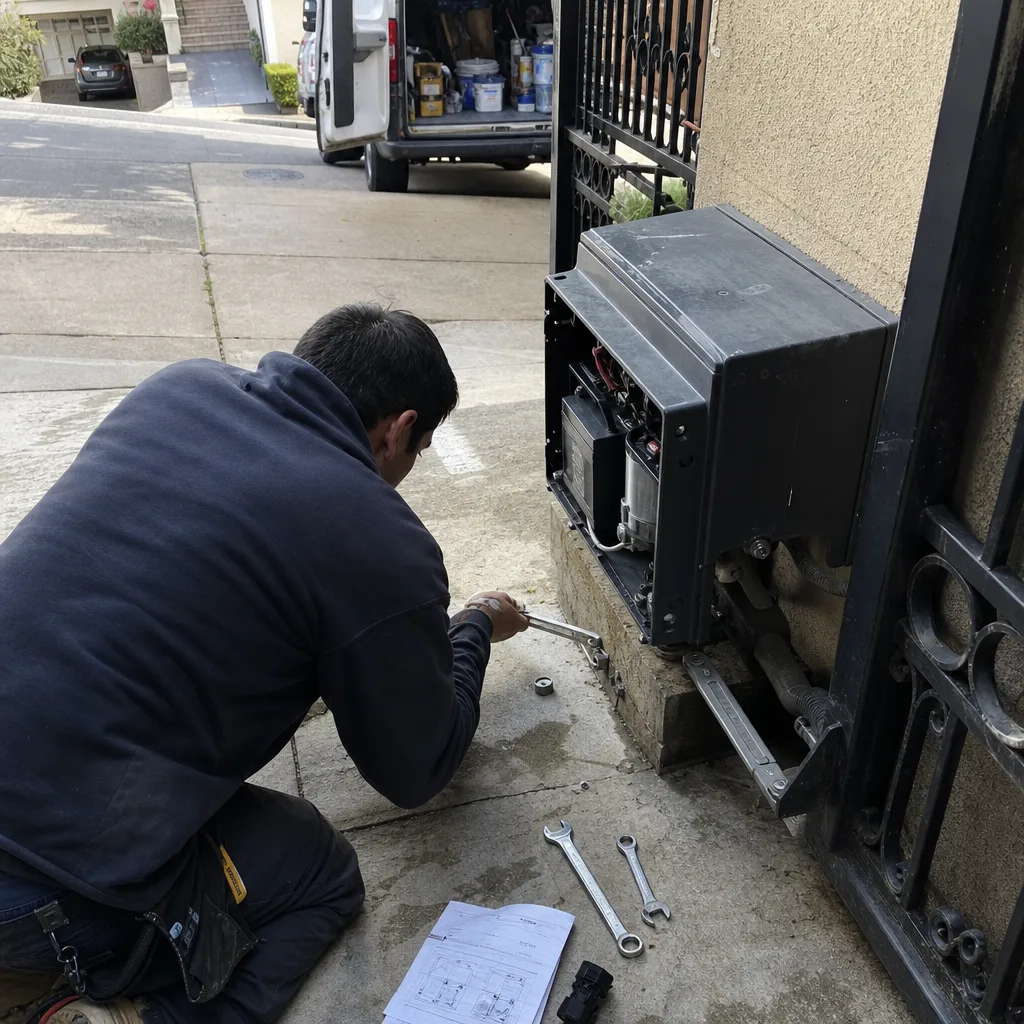
Most owners discover the problem on a Tuesday morning when the gate opens three inches, groans, and stops. That’s the control board telling the motor to work and the motor saying no. In San Francisco’s damp air, we see this early on the west side of town and in any neighborhood where fog sits against the property line. Moisture gets into the capacitor or the limit switch contacts, and that’s usually the beginning of the end.
Which FAAC Models This Applies To
The FAAC lineup that shows up on San Francisco driveways most often includes the 400, 402, 412, 415, S450H, S700H, S800H, and C720 series, plus the older 746 and 844 models that are still running on plenty of hillside properties. Each series uses different motor housings and control board generations, which is where compatibility gets tricky. A 412 motor won’t drop into a 415 chassis without adapter plates, and the S700H uses a hydraulic system while the S450H is electromechanical – two completely different failure patterns.
To identify what you have, open the cover and look for the metal data plate. It’ll show the model number, the serial, and often the manufacturing year. That plate matters more than the color of the housing. We also need to know whether your system runs on 115V or 230V, because swapping the wrong voltage motor onto your existing board creates a fault that looks identical to a dead motor.
On the OEM versus aftermarket question: FAAC parts are built well, and we default to genuine OEM motors and boards whenever the lead time allows. For older series like the 746 that FAAC has largely discontinued, quality aftermarket equivalents from manufacturers we’ve tested hold up fine. We’ll give you both options and the honest difference.
Latch and Post Gate Repair San Francisco is an independent service provider and is not affiliated with FAAC. We stock parts for FAAC systems because San Francisco has thousands of them – we also stock LiftMaster, Mighty Mule, and Ghost Controls components for the same reason.
Styles & brands we work with
Signs Your FAAC Gate Motor Replacement Is Failing
- Gate opens a few inches and reverses. This is the obstruction sensor or the force setting misreading resistance. Often it’s a capacitor failing – the motor can’t develop enough starting torque to overcome its own inertia.
- Motor hums but nothing moves. That hum is the windings getting power but the capacitor dead or the gears stripped inside the operator. On the S700H hydraulic line, it can also mean the pump is running but the fluid has leaked past the seals.
- Gate moves noticeably slower than it did six months ago. In San Francisco’s coastal air, we see motor bearings corrode gradually. Slow movement is the warning sign most people ignore until the motor finally stalls mid-travel.
- Control board shows a fault light pattern after every cycle. FAAC boards use LED flash codes. If you’re resetting the breaker or the fault button every few days, the motor may be drawing irregular current that the board reads as a fault.
- Intermittent operation – works some days, dead others. On older FAAC units, this often traces to worn internal relays or cold solder joints on the board. The motor itself may be fine, which is why we test components before quoting a full replacement.
See the difference
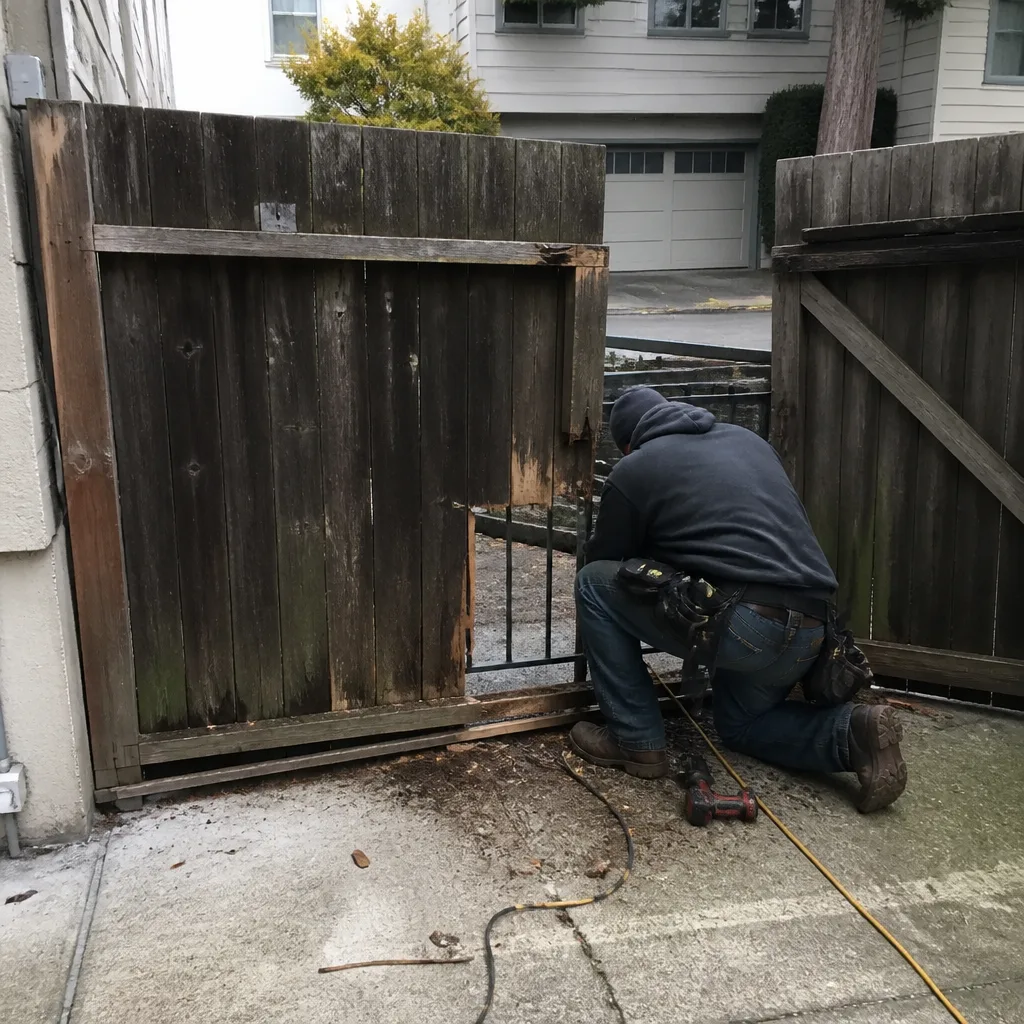 Before
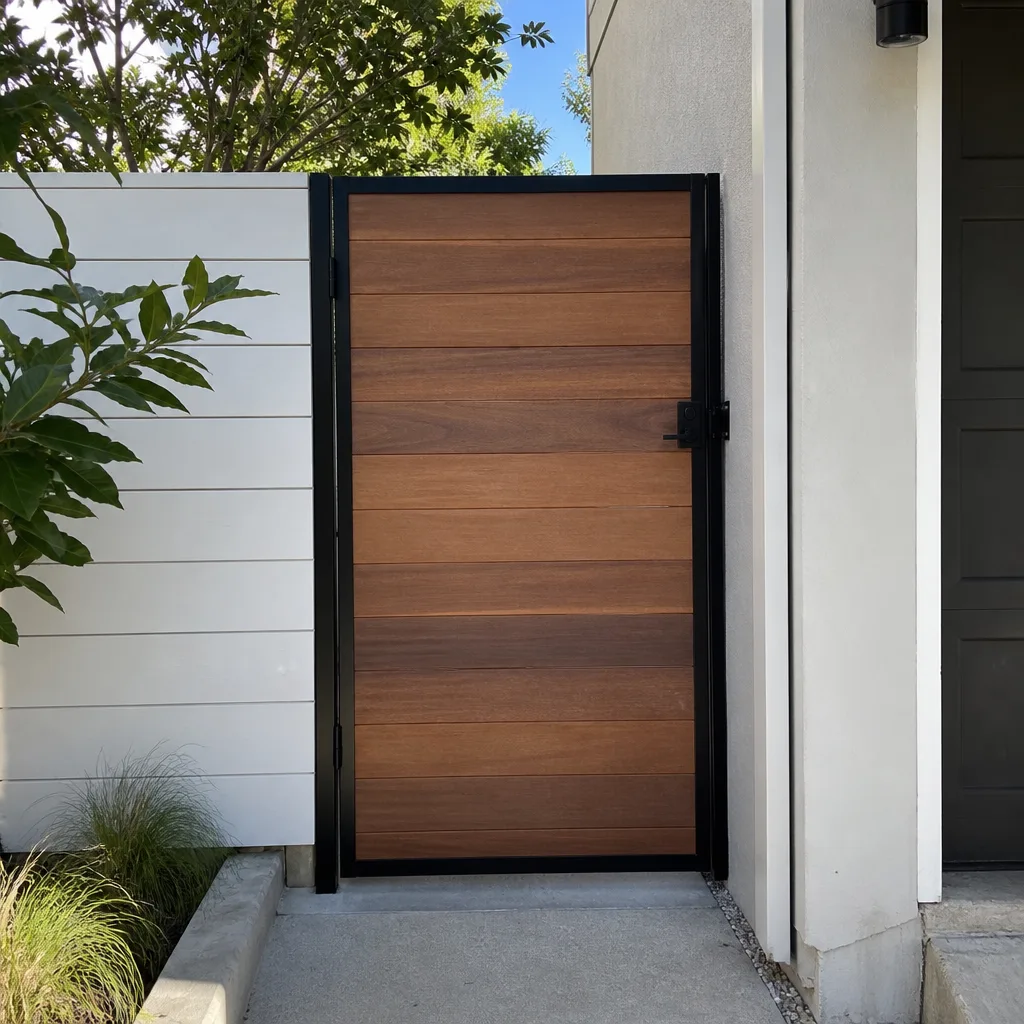 After
After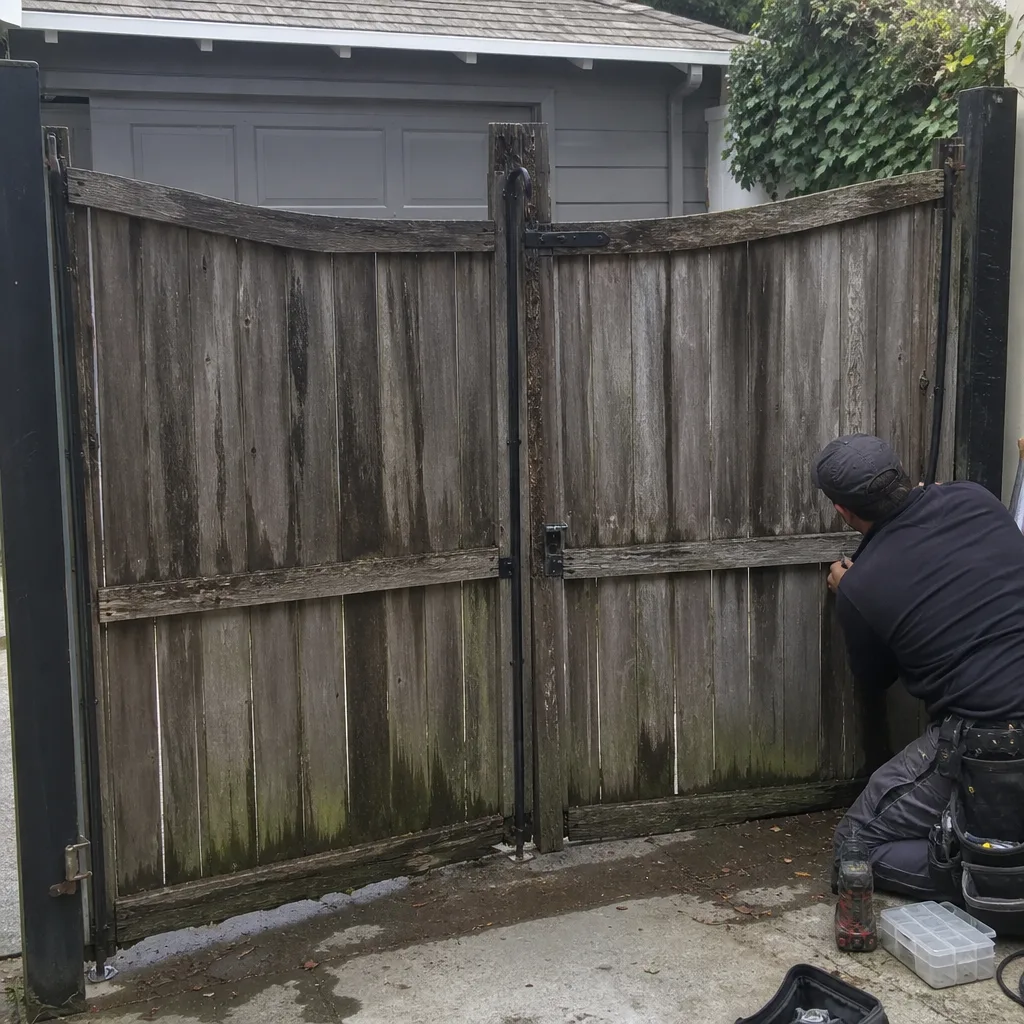 Before
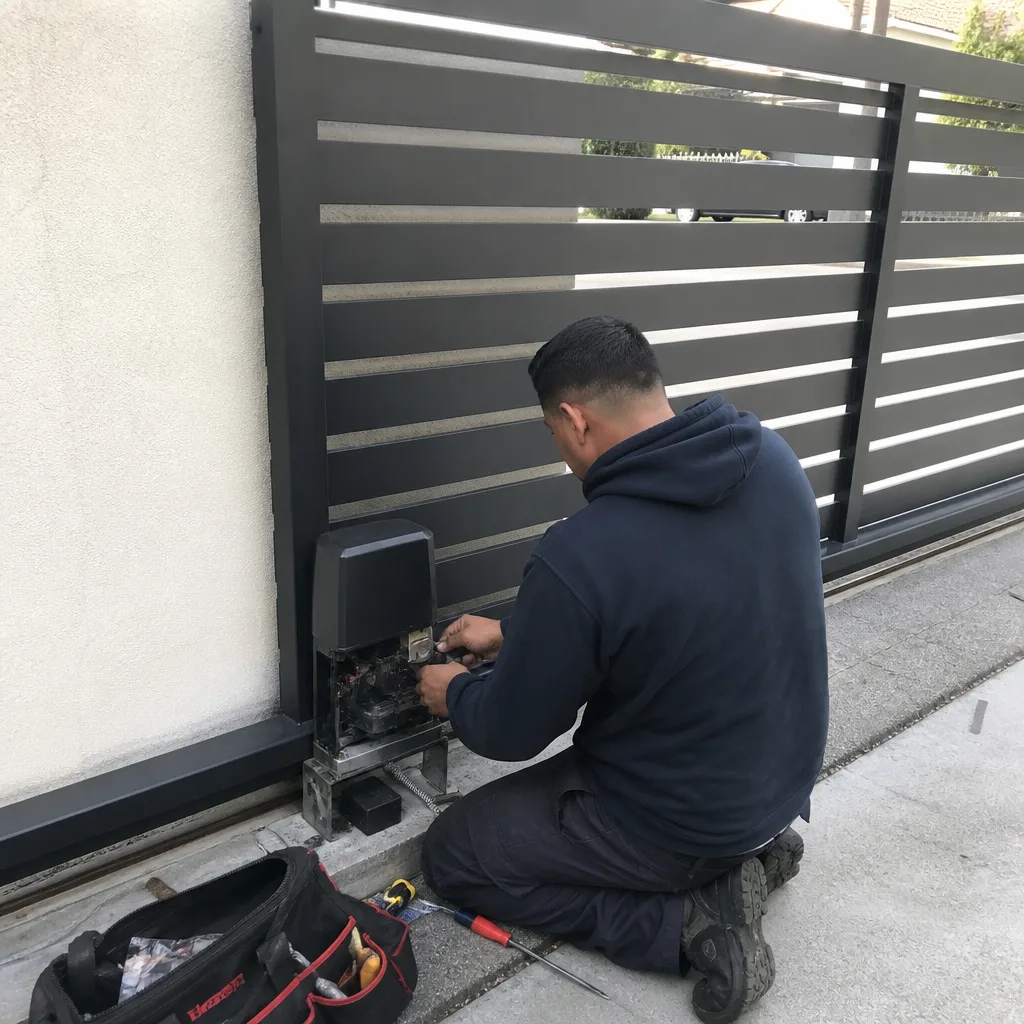 After
After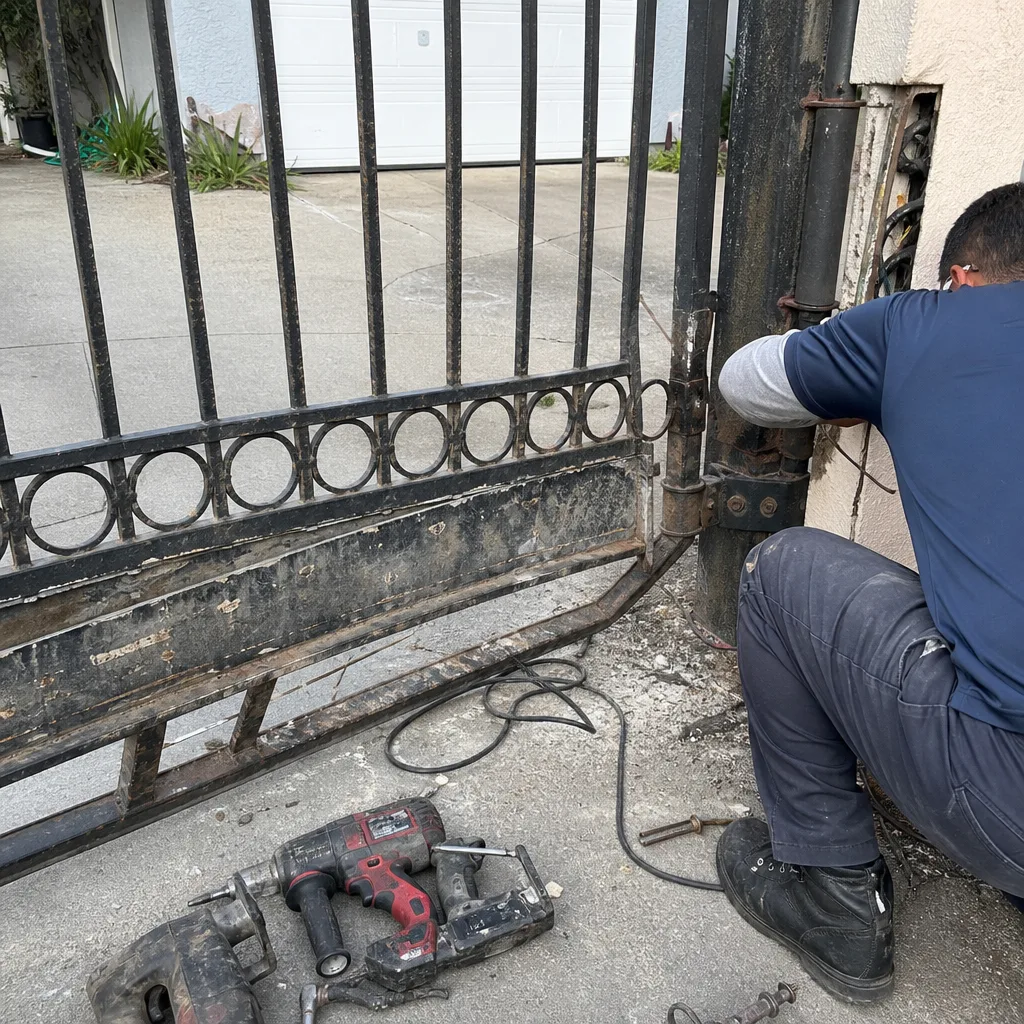 Before
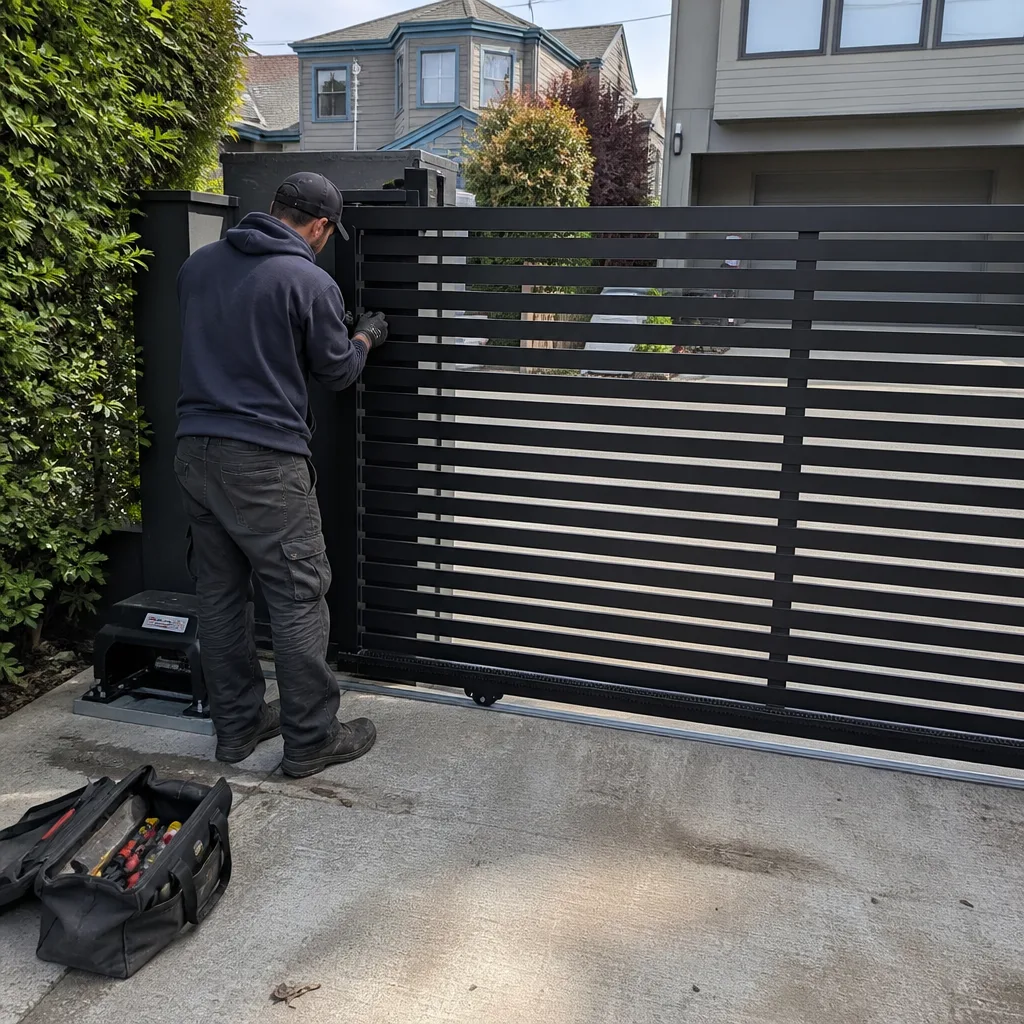 After
AfterReplacement Cost & What’s Included
Here’s the pricing picture for San Francisco, based on what we see across the city:
- FAAC control board replacement: $380 – $700 installed
- Capacitor or limit switch replacement: $140 – $260 installed
- Complete FAAC motor/operator replacement (single swing): $850 – $1,900 installed
- Complete FAAC motor/operator replacement (sliding gate): $1,200 – $2,600 installed
The range depends on which series you have, whether the new motor requires a matching control board, and how much of the mounting hardware can be reused. Sliding gates with longer travel or heavier panels sit on the higher end because the operator has to work harder, and we spec the motor accordingly.
Every quote includes the part, the labor, the system calibration after install, and a full cycle test. You get the written number before we touch anything – no surprises on the invoice. The work is covered under the 365-Day Done Right Promise: if the install isn’t right, we make it right.
DIY or Call Us?
FAAC gate motors run on line voltage, and the capacitor inside can hold a charge even after the unit is unplugged. That’s the honest reason we don’t hand homeowners a wrench and say good luck. A charged capacitor poses a genuine shock hazard, and the high-tension cycle of a moving gate adds another layer of risk. If you value the gate and the hands that open it, this is a job for someone who has done it before.
What you can safely do: check the breaker, confirm the power disconnect is on, and look for obvious physical obstruction in the track or hinge path. Note the model number from the data plate before you call – that saves us both time. Then let us handle the motor work with the right tools and the right testing sequence. Call (628) 227-2771 and one of our technicians will walk through what you’re seeing and get a visit scheduled.
FAQs
A FAAC motor in San Francisco typically lasts 8 to 12 years, depending on exposure. Coastal fog shortens that on the west side of the city; motors on sheltered eastern slopes often outlive the average. Regular limit switch and capacitor checks can add a couple of years.
Yes, in many cases the failure is a single component – a capacitor, limit switch, or board relay – and replacing that component brings the motor back to full function. We test before we quote, so you’ll know whether you’re buying a $180 part or a full motor replacement.
Call (628) 227-2771 for a free estimate.
Most single-motor replacements take 90 minutes to 3 hours on site, including removal, install, calibration, and testing. If we’re replacing the motor and the control board together on an older sliding gate, plan on a half day.
We carry FAAC control boards, capacitors, limit switches, and complete motor units on our service vehicles because they’re among the most common requests we get across San Francisco. When a specific series part isn’t on hand, we source it quickly – usually same or next day.
Written by Cody Beckman, Owner, Latch and Post Gate Repair San Francisco at Latch and Post Gate Repair San Francisco, serving San Francisco and nearby areas.