
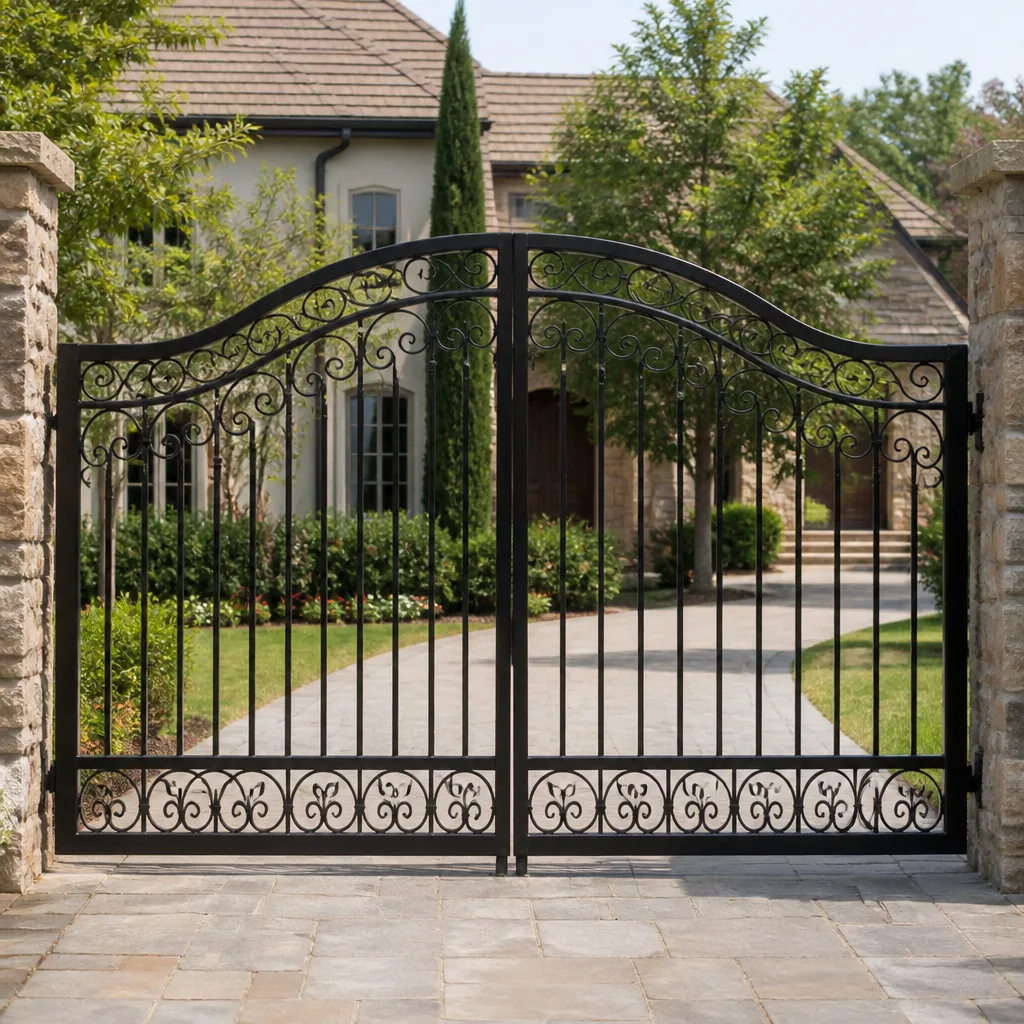
 Wrought iron
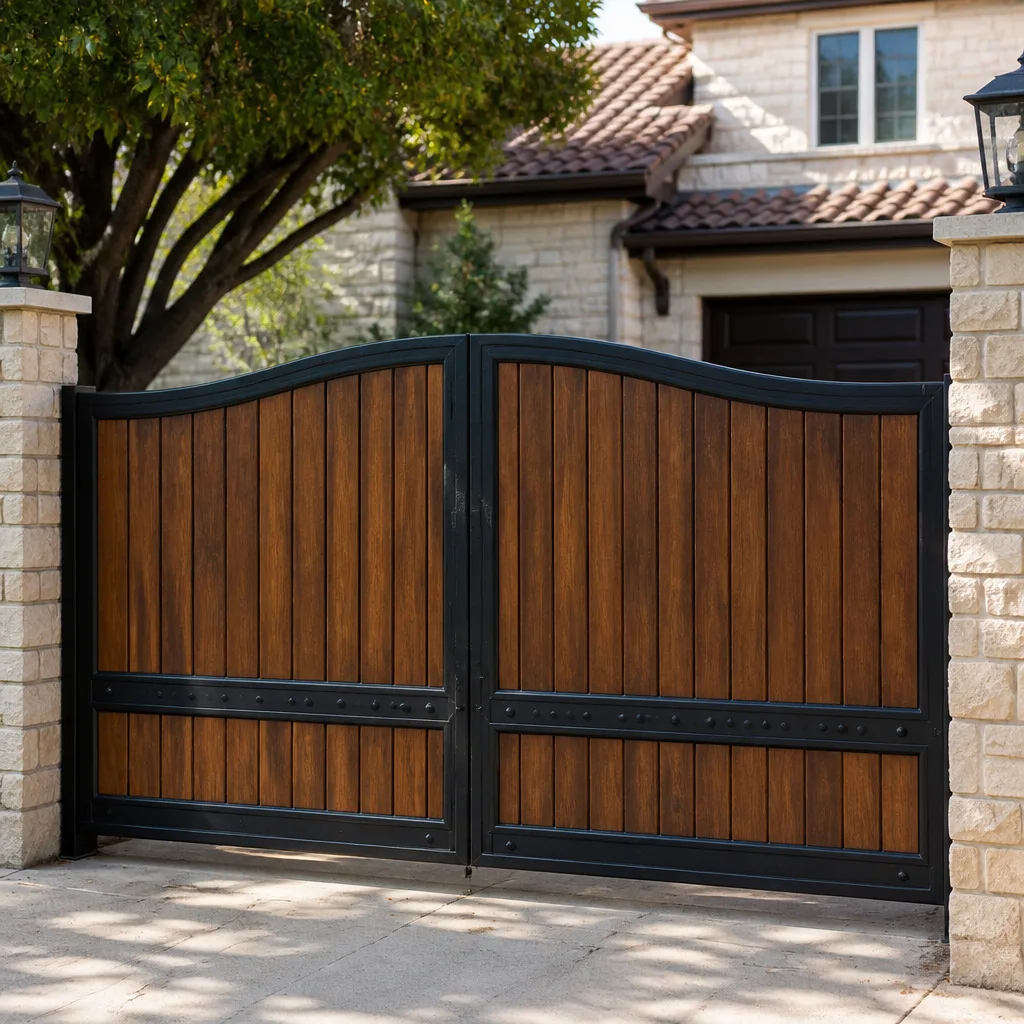 Wood & steel frame
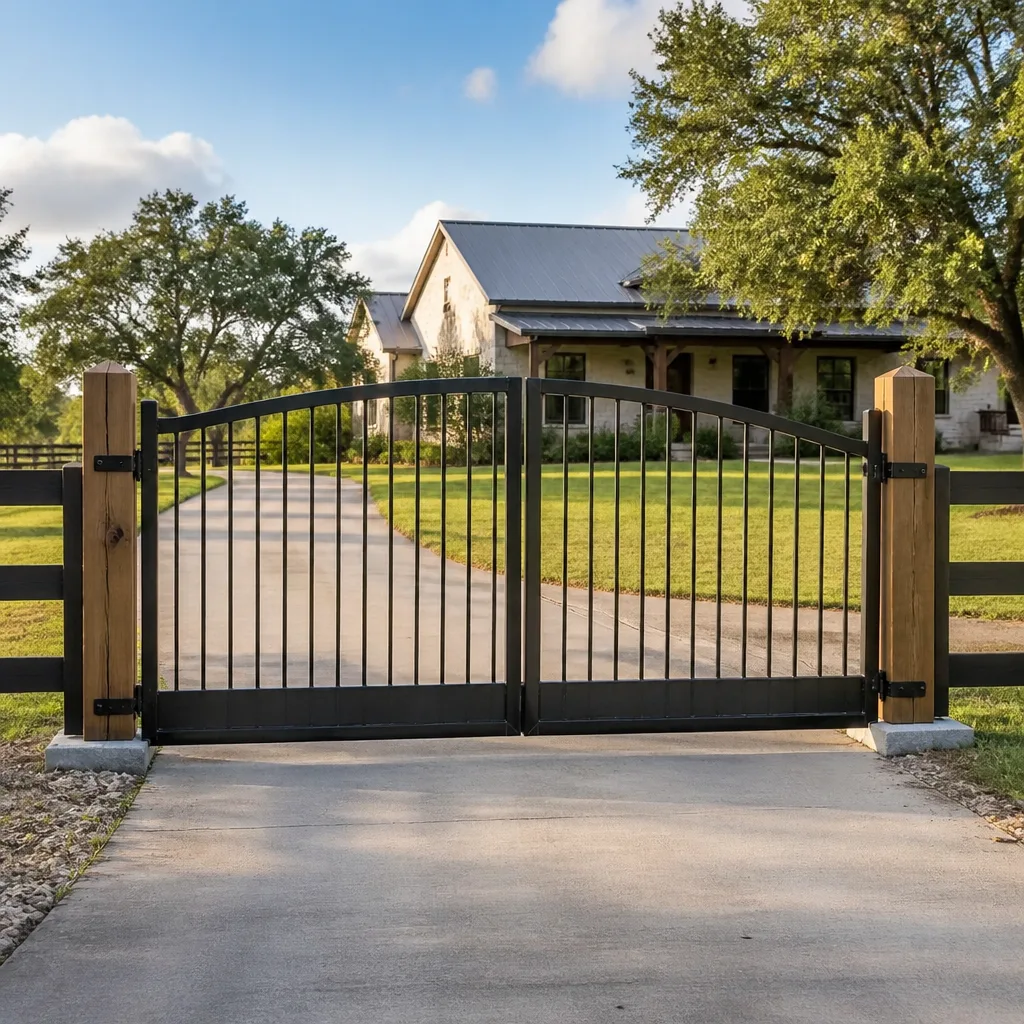 Farm & ranch
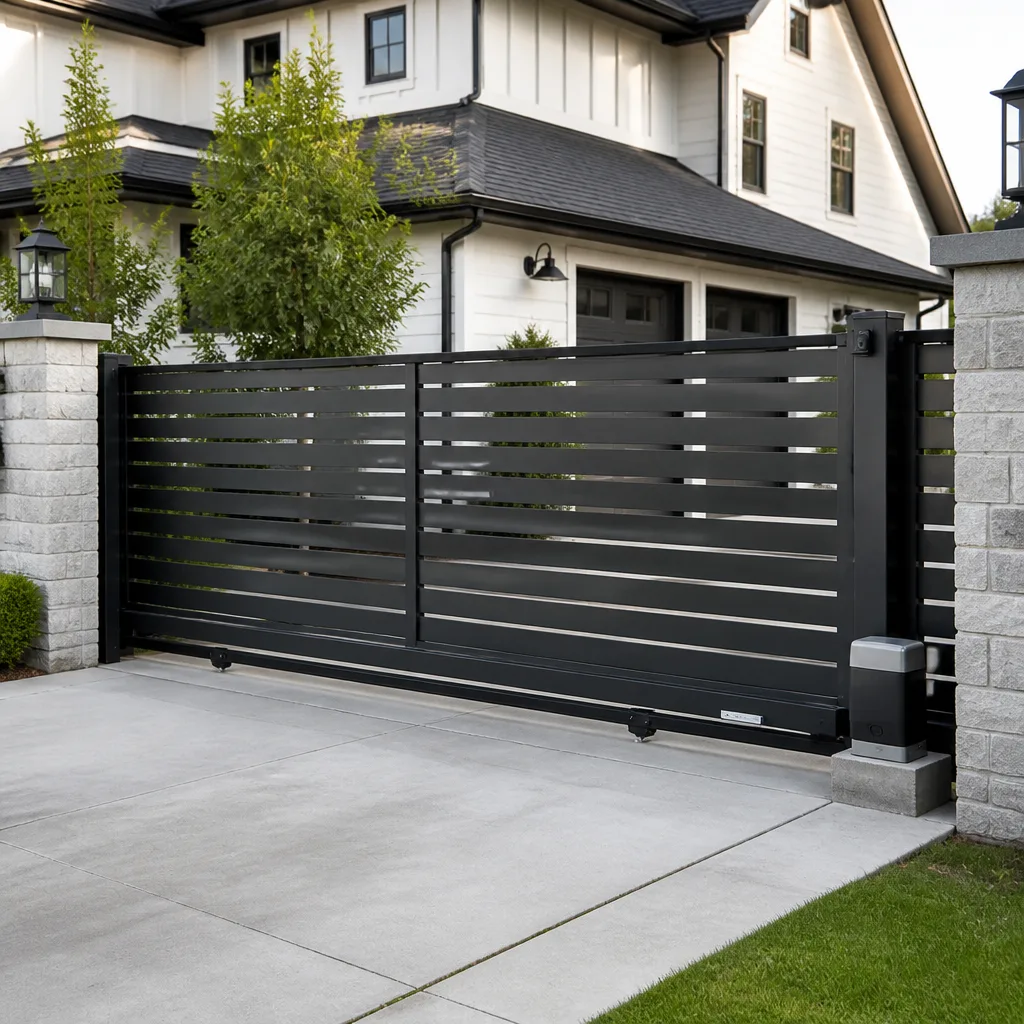 Sliding driveway gates
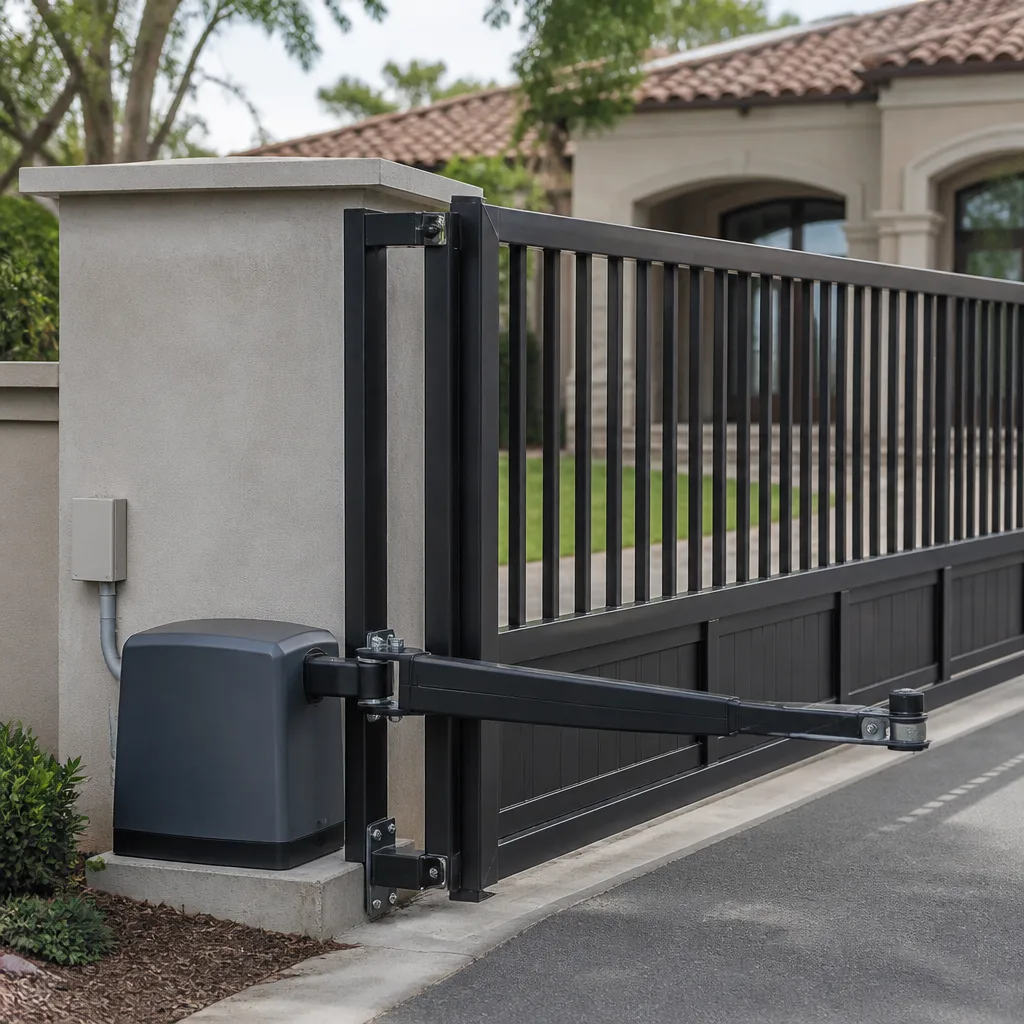 LiftMaster operators
Free on-site gate assessment - hinges, posts, and your LiftMaster or Nice gate operator checked before anything is quoted
The assessment is free and the quote is the invoice.
Get your free estimateMighty Mule Keypad & Intercom Repair: The San Francisco Owner’s Guide
We repair and replace Mighty Mule keypads and intercom systems across San Francisco, and most jobs run between $210 and $430 installed, with the keypad or intercom unit included in that number. We keep common Mighty Mule keypad and intercom parts on the truck, so a single visit usually finishes the job, and we’ll give you the exact price in writing before we touch anything. You found this page because the keypad stopped accepting codes, the intercom went silent, or both started working only when they feel like it – and that’s a specific problem with a specific fix.
Here’s what owners usually describe: the keypad lights up but the gate won’t move, or the intercom rings but you can’t hear anyone, or the buttons need three or four firm presses before they register. Sometimes the whole unit looks fine from the outside while moisture has been working through the seal for months. In San Francisco, fog and salt air do a number on outdoor electronics, and Mighty Mule equipment – while solidly built – isn’t immune.
We’re an independent gate repair company, not affiliated with Mighty Mule. That means we evaluate the actual unit on your gate and give you a straight recommendation, whether that’s an OEM Mighty Mule part or a compatible equivalent that does the same job for less.
Which Mighty Mule Models This Applies To
This page covers keypad and intercom repair for the Mighty Mule lines we see most often on San Francisco driveways and gates: the FM500, FM502, MM360, MM371W, MM372W, MM560, MM571W, and MM572W series. Those model numbers matter, because Mighty Mule has changed connector styles and wiring protocols between generations, and a keypad from an FM500-era system won’t always talk to an MM372W control board without a harness change.
Here’s a compatibility gotcha you’ll want to know: Mighty Mule wireless keypads that run in the 318 MHz range look nearly identical to the older 433 MHz units, so a homeowner swapping one out from a photo can easily end up with a keypad that lights up but never opens the gate. We check the frequency label on the old unit before ordering or installing anything.
The intercom side is its own animal. Mighty Mule intercoms typically connect to the gate’s control board through a two-wire or four-wire terminal block, and the wiring gauge matters more than most people expect. Thin bell wire from a 2006 install may carry power fine and still cause garbled audio. We’ve replaced enough of these to know which wire runs in Ocean Beach and the Richmond District fail first – it’s usually the outdoor run that gets hit with fog condensation nine months of the year.
On the OEM-vs-aftermarket question for Mighty Mule specifically: OEM keypads carry the exact factory connector and weather sealing, which we recommend for gates within a block of the coast. For inland San Francisco homes – Glen Park, Noe Valley, the Mission – a quality aftermarket keypad with a stainless face and an IP65 rating often matches OEM durability at a lower price. We’ll show you both options and let you choose.
Styles & brands we work with
Signs Your Mighty Mule Keypad & Intercom Repair Is Failing
- Keypad lights but the gate doesn’t move. Usually a failed relay inside the keypad or a wiring fault between the keypad and the control board. In San Francisco, corrosion at the terminal block is the leading cause we find.
- Some buttons work, others don’t. Membrane keypads wear unevenly – the digits people use most (gate codes tend to cluster around birth years and house numbers) lose their carbon contact first. One dead digit can make the whole code unusable.
- Intercom rings but you can’t hear anything. A degraded speaker in the outdoor unit, or moisture inside the housing. We open them up and find fog condensation sitting on the circuit board more often than any other single failure.
- Intercom cuts in and out during use. This points to a wiring issue or a weakening power supply, not the intercom itself. Shotgun diagnosis – replacing the intercom first – wastes money when the wire is the actual fault.
- Keypad works after a rain but fails during dry weeks. That’s a classic symptom of a cracked housing that lets moisture bridge connections when it’s wet. It works until it dries out, then the bridge breaks. It’ll get worse every cycle.
See the difference
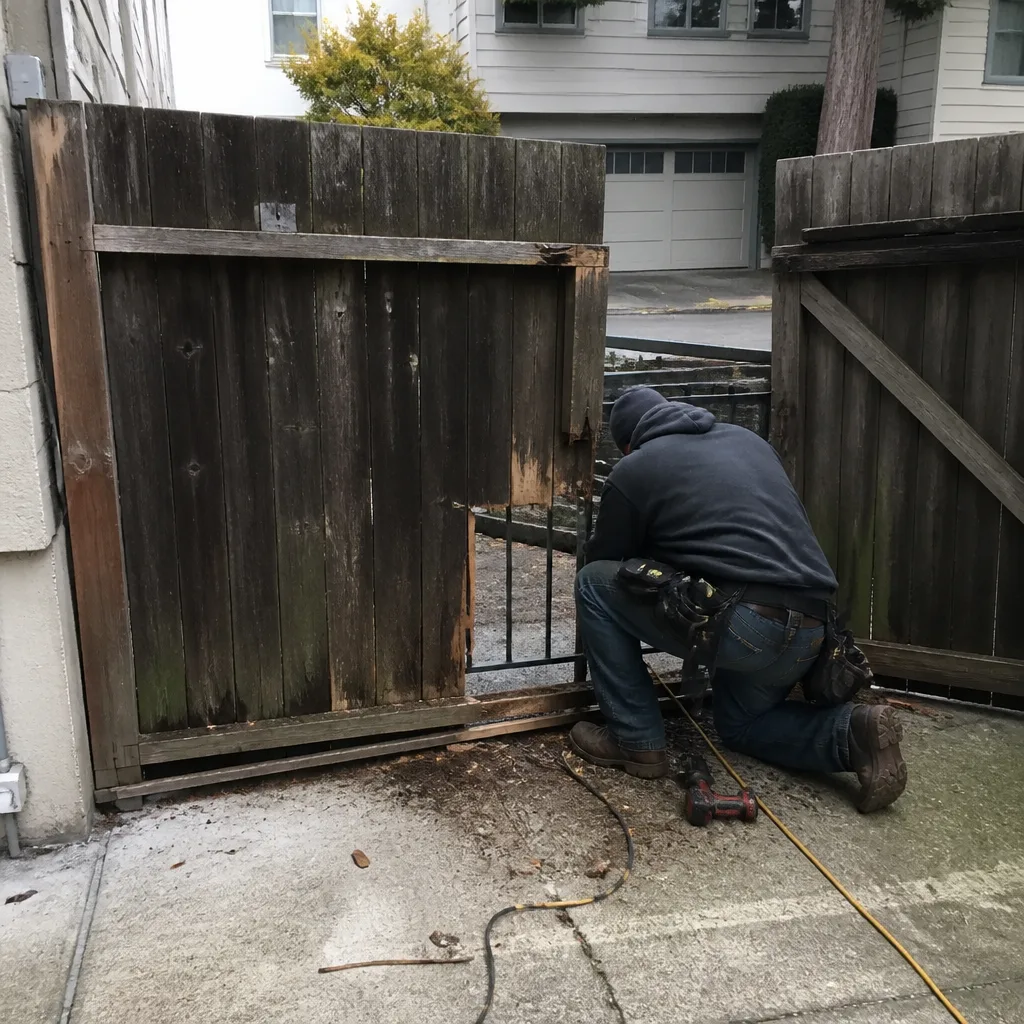 Before
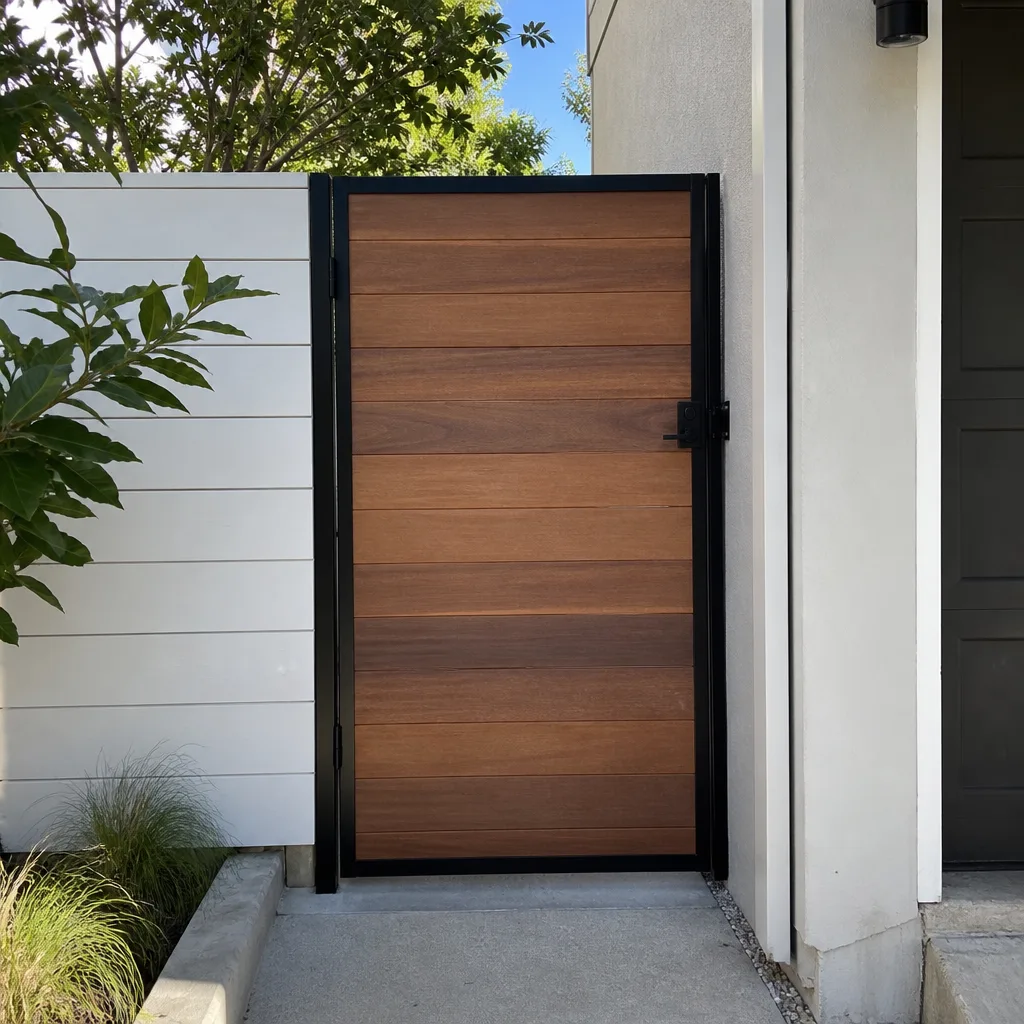 After
After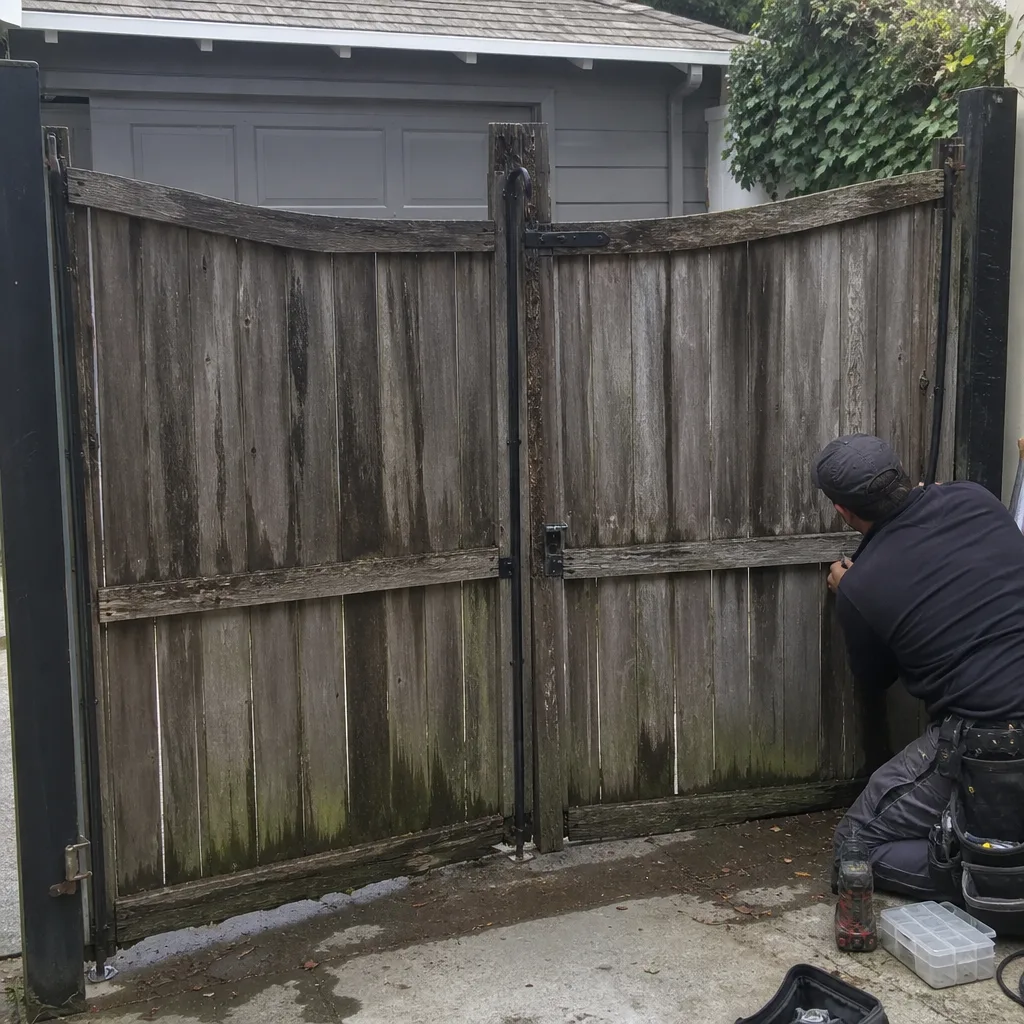 Before
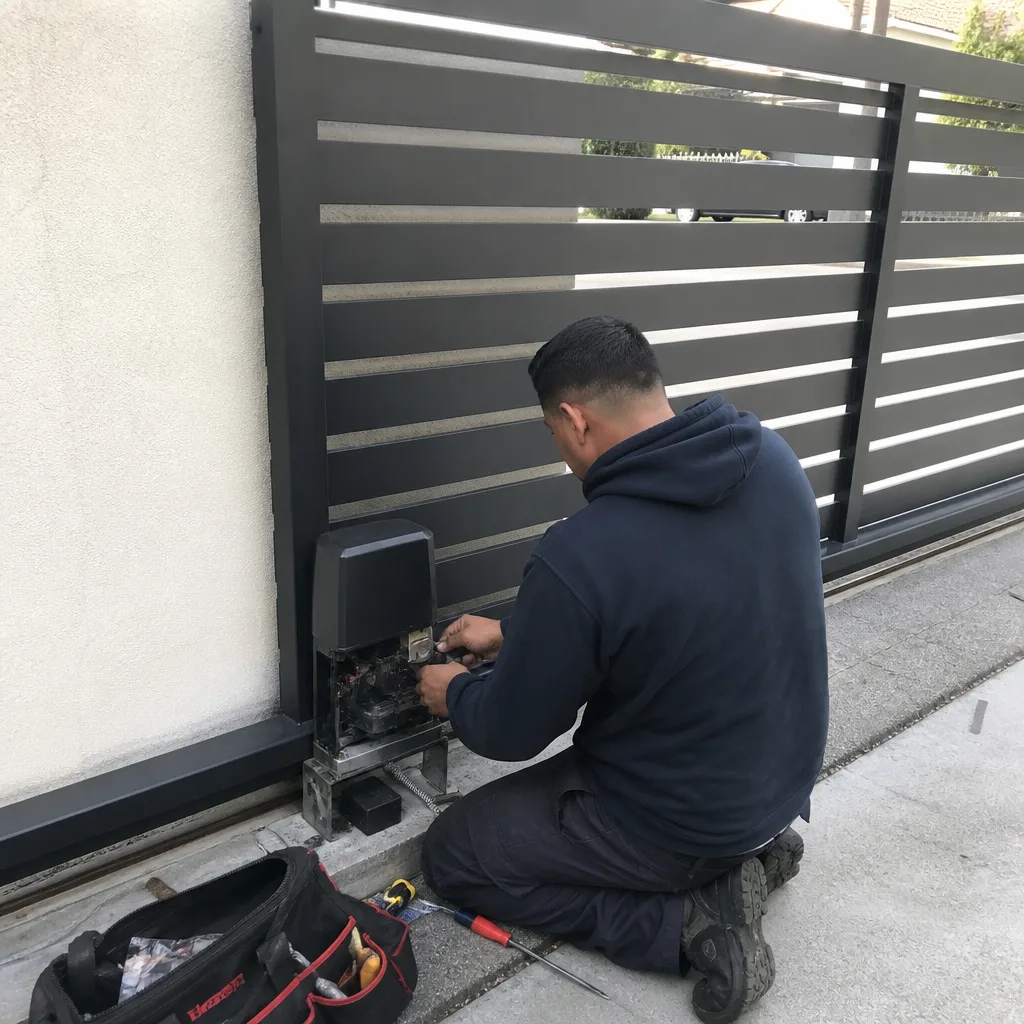 After
After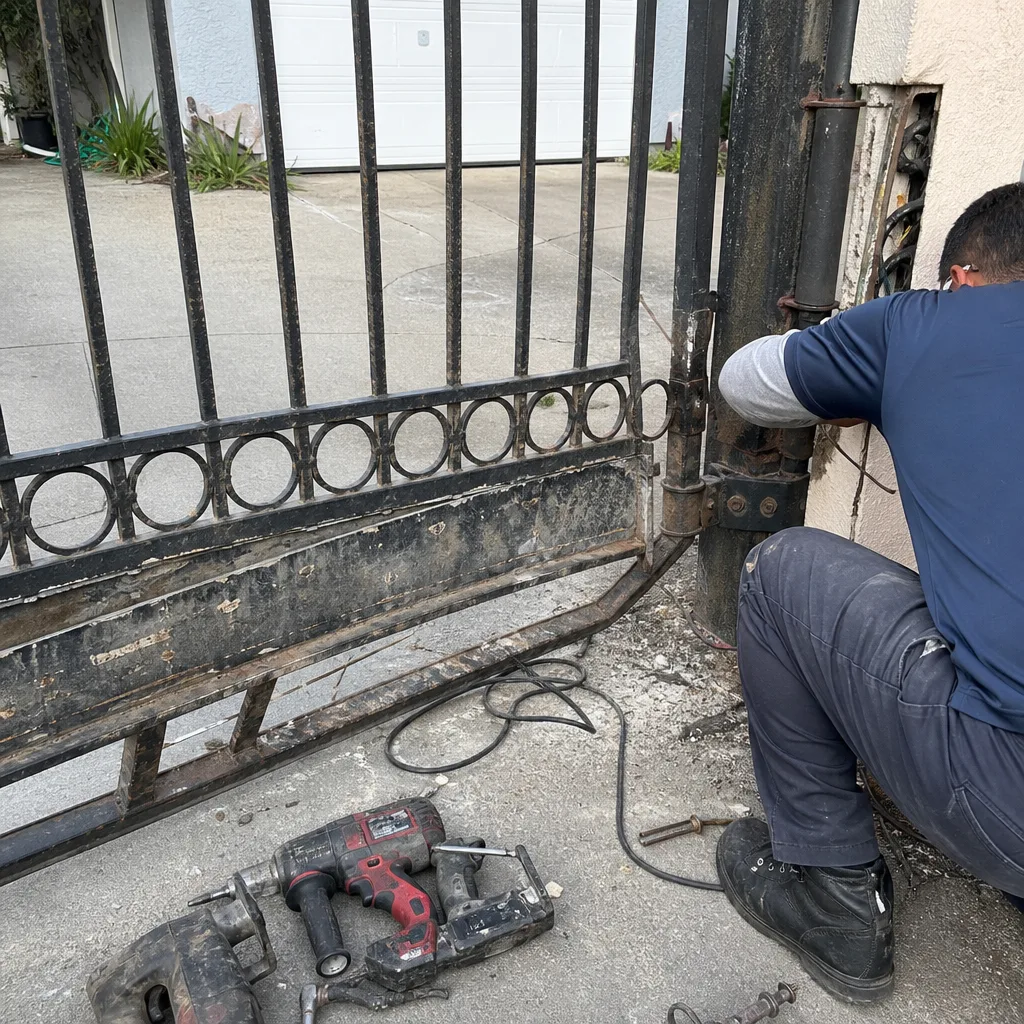 Before
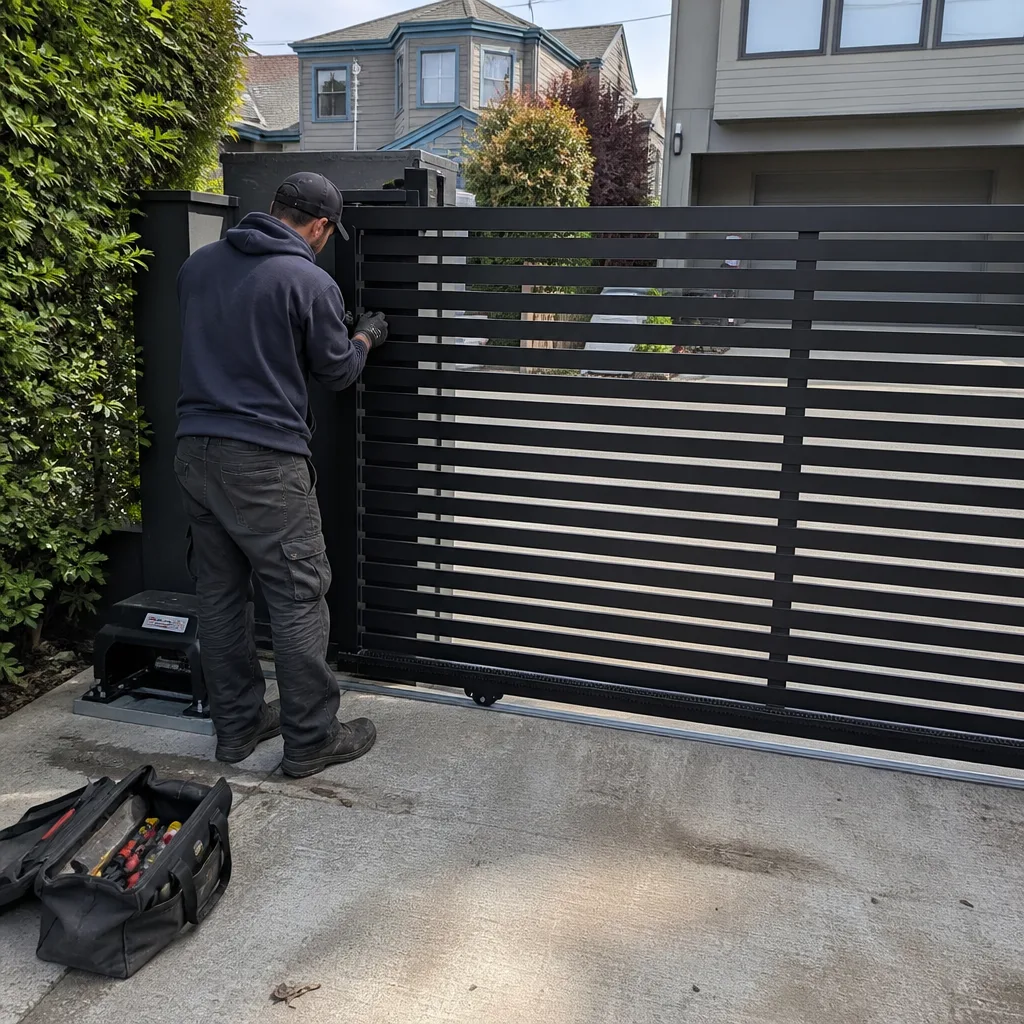 After
AfterReplacement Cost & What’s Included
In San Francisco, expect to pay between $210 and $430 for a Mighty Mule keypad or intercom replacement installed. That includes the part, the labor to swap it, wiring verification, and testing the gate’s open and close cycle after the install. Here’s how the range breaks down:
- Entry-level keypad replacement: $210 to $265 installed. Single-gang surface mount, basic weather resistance, works with most Mighty Mule openers we see.
- Mid-range keypad or basic intercom: $265 to $340 installed. Stainless face, better seal, or a wired intercom with decent audio.
- Full intercom replacement or keypad with harness rework: $340 to $430 installed. Includes wire replacement or connector adaptation when the generations don’t match.
What drives the cost up: water damage that requires cutting back corroded wire, older Mighty Mule systems that need a harness adapter, and gates where the keypad mount surface needs repair before the new unit can seat properly. You’ll see the exact number in writing before any work starts, and the 365-Day Done Right Promise covers the repair – if it isn’t right, we make it right.
DIY or Call Us?
There’s one thing you can safely check yourself: whether the keypad batteries are good and whether the unit has visible water inside the lens. Beyond that, Mighty Mule keypads and intercoms run on low-voltage wiring – generally not dangerous on their own, but the gate opener they connect to is plugged into household current and uses high-tension gate hardware. A wiring mistake at the keypad can send a bad signal to the control board and cause the gate to behave unpredictably. Opening the control box while the system is powered is a job for a trained technician, not a quick afternoon project.
Where DIY goes wrong most often in San Francisco is the mounting surface. A lot of stucco and redwood gate posts here hold moisture, and a keypad that isn’t seated with the right seal and standoffs develops intermittent faults within a few months. The call takes two minutes: (628) 227-2771. We’ll tell you over the phone whether it sounds like a keypad swap or something deeper, and we won’t charge you for that conversation.
FAQs
Most Mighty Mule keypads and intercoms last 5 to 8 years in San Francisco, with units closer to the ocean or the fog line failing on the earlier end because of salt air and condensation. Intercoms generally outlive keypads, since they have fewer moving parts – the buttons fail before the speaker does on most units we open.
Sometimes, but not often enough to promise it. When the failure is a corroded terminal or a loose wire, we can repair the connection and send you on your way. When the membrane buttons are dead or the circuit board shows water damage, repair costs more than a new unit – so we’ll tell you that honestly and show you the replacement price before you decide.
Most Mighty Mule keypad replacements take 45 to 90 minutes on site, and intercom replacements run 60 to 120 minutes if the wiring is healthy. When we need to pull new wire or rework a harness, add about an hour. Call (628) 227-2771 for an exact quote – estimates are free, and we’ll give you a realistic time window when you book.
Yes. We keep the most common Mighty Mule keypads, intercoms, and harness adapters on the truck, along with parts for LiftMaster, Ghost Controls, and DoorKing. If your model needs a unit we don’t have on board, we can usually source it within one to two business days – and we’ll tell you that timeline before you commit.
A wired keypad runs a physical wire to the control board, while a wireless keypad sends a radio signal and runs on batteries. In San Francisco, wireless keypads are easier to install on stone or stucco posts, but their batteries drain faster in cold, damp air – we replace more wireless keypad batteries in the Sunset and Richmond than anywhere else in the city. A wired keypad needs a wire path but doesn’t depend on battery health.
A gate that opens quietly and closes all the way is one of those things you stop noticing – and that’s exactly the point. When your Mighty Mule keypad or intercom stops doing its job, call (628) 227-2771. We’re Cody Beckman and the Latch and Post Gate Repair San Francisco team, answering live around the clock.
Written by Cody Beckman, Owner, Latch and Post Gate Repair San Francisco at Latch and Post Gate Repair San Francisco, serving San Francisco and nearby areas.