
 Wrought iron
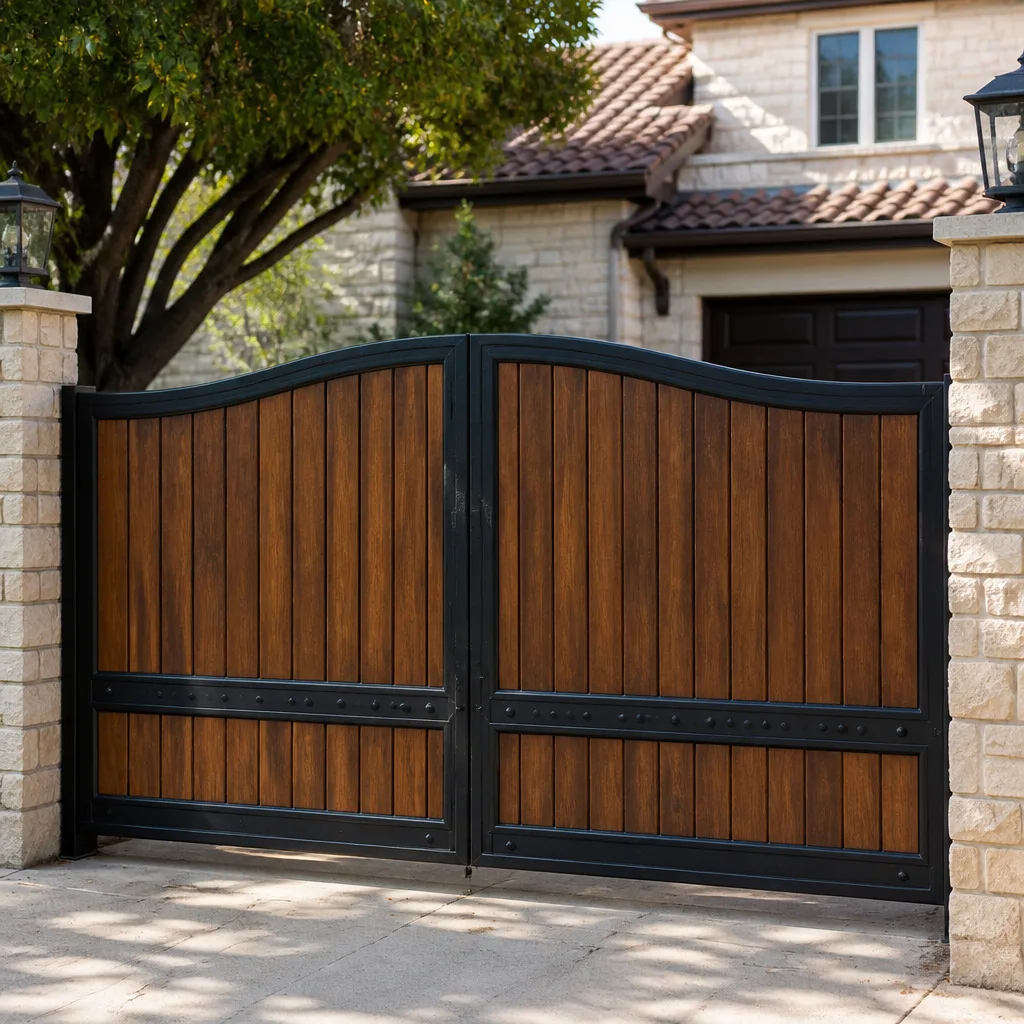 Wood & steel frame
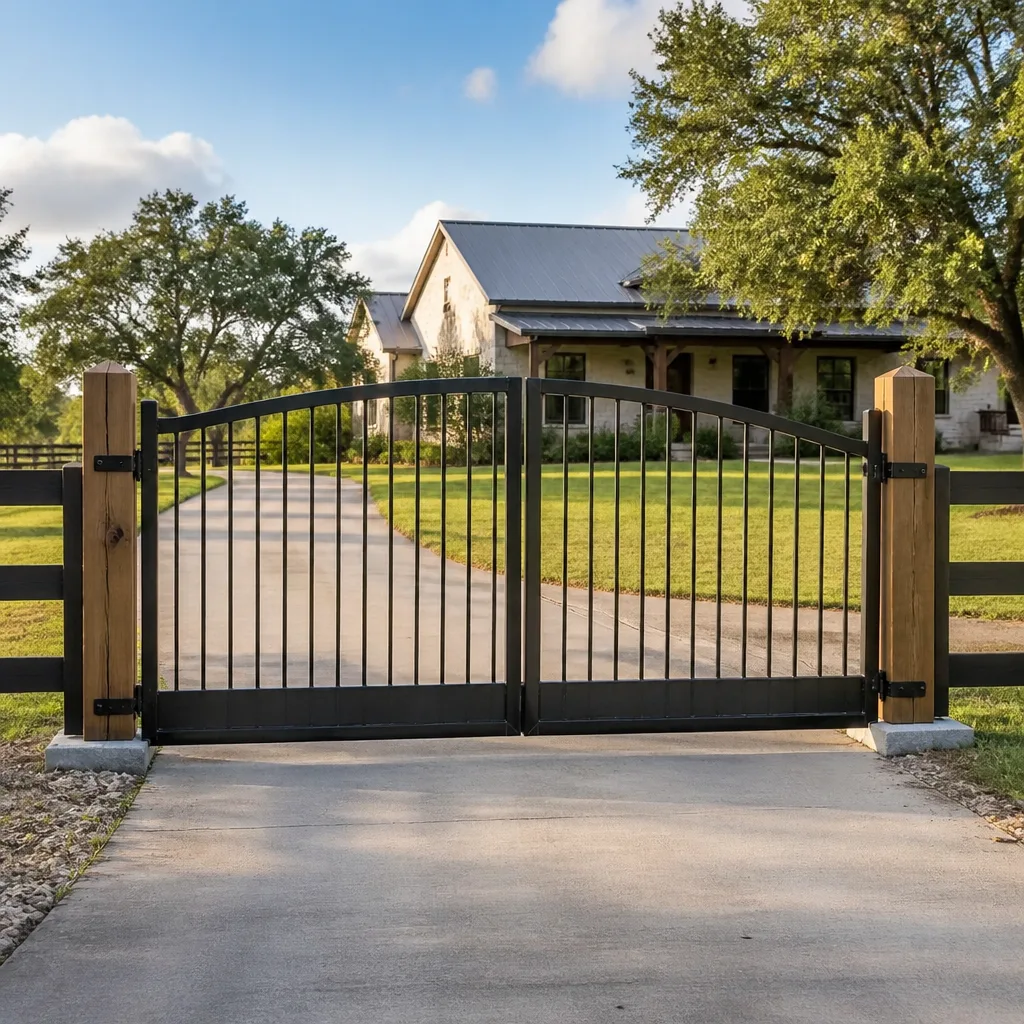 Farm & ranch
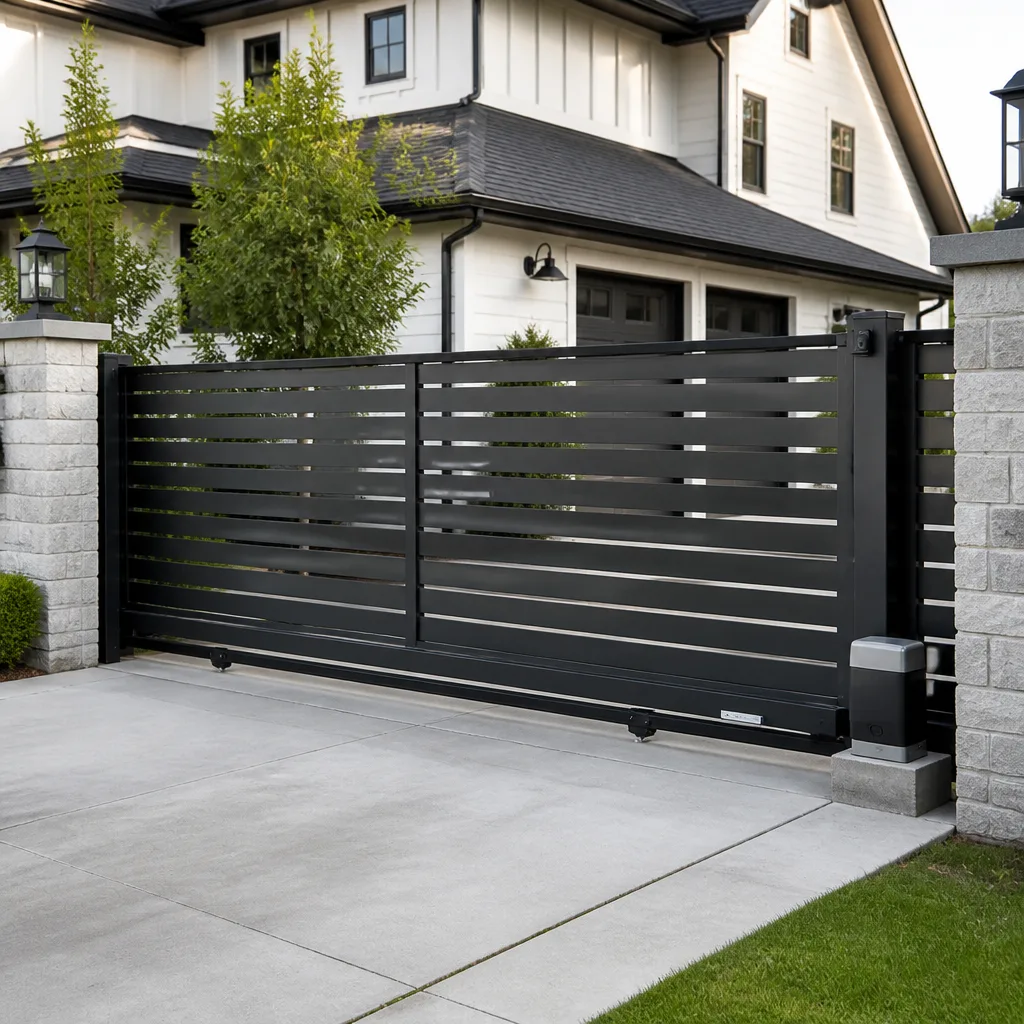 Sliding driveway gates
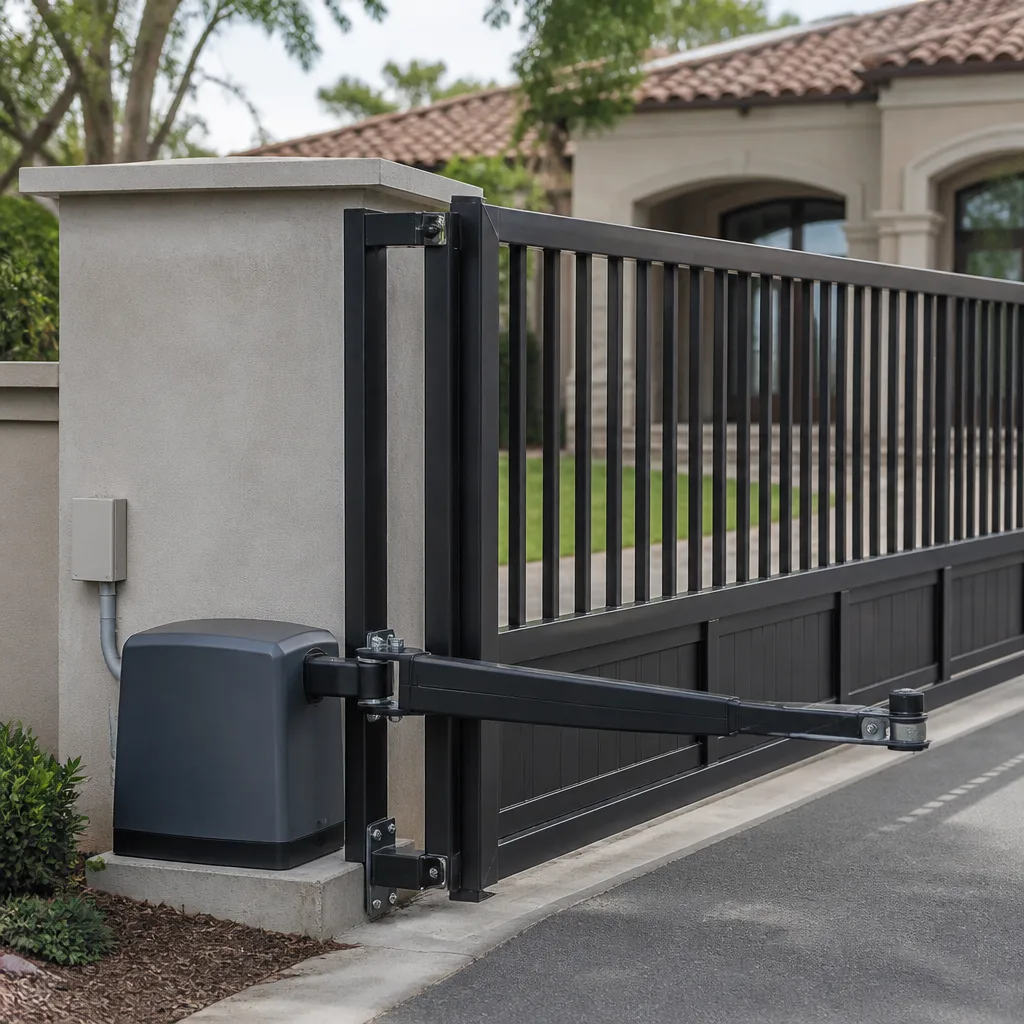 LiftMaster operators
Free on-site gate assessment - hinges, posts, and your LiftMaster or Nice gate operator checked before anything is quoted
The assessment is free and the quote is the invoice.
Get your free estimateViking Gate Installation in San Francisco: What to Know First
We install Viking gate operators and full gate systems for homeowners across San Francisco, and most jobs are completed within one to two days once we’ve measured the site and confirmed the parts. Pricing for a standard Viking swing or slide gate installation typically runs between $1,800 and $6,500 depending on gate size, operator model, and the condition of the existing posts and track. In all cases, we hand you a written price before pulling a single tool off the truck, so you know the exact number before any work starts.
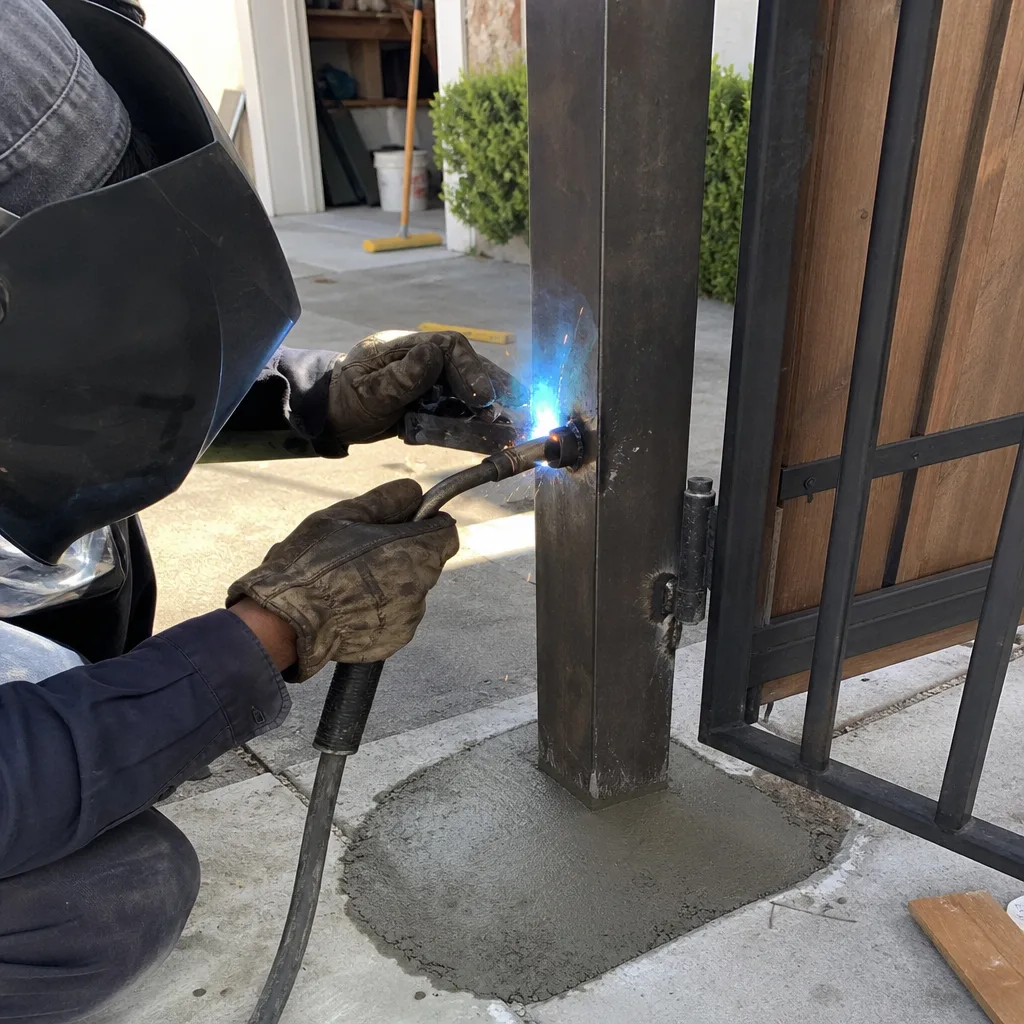
This page is for San Francisco homeowners who already own a Viking operator, or who are considering one, and want to know what a real installation looks like: what fails, what it costs, and how a careful crew handles the job from start to finish. If your Viking gate is down or you are planning a new installation, call us at (628) 227-2771. A live person answers around the clock.
How Viking Products Fail – and How We Fix Them
Viking operators are built for heavy, continuous-duty gates, the kind you find on larger San Francisco properties, apartment buildings, and commercial driveways. They’re genuinely sturdy machines. But after working on them across this city for years, we see the same failure patterns repeat. Here are the five we encounter most on installation jobs, and what we do about each one.
- Viking L-3 and G-5 gearbox oil seal leaks on sloped driveways. San Francisco driveways are rarely flat, and that pitch forces the gearbox to work harder than it would on level ground. The oil seals on older L-3 and G-5 models degrade faster under that load, which lets lubricant weep out and eventually the gears run dry. We catch this during install by inspecting the gearbox before mounting and replacing worn seals with OEM-spec parts when the housing is still sound. If it’s too far gone, we recommend a new operator rather than patching a gearbox that will fail again. Cody Beckman has pulled apart enough of these to tell the difference in about ten minutes.
- Viking K-2 and X-9 surge board damage from San Francisco’s coastal fog and salt air. Homes in the Sunset, Richmond, and near the Presidio get constant marine layer moisture moving through the control box. Viking’s boards are well-sealed, but not invulnerable. Corrosion on the terminal strips and surge protection circuits is common within five to seven years in those neighborhoods. During installation we check every board for green corrosion, clean or replace terminals, and mount the control box with a drip loop and proper standoffs so condensation does not pool around the wiring.
- Photo eye misalignment on Viking F-1 swing gate operators installed on brick or concrete pillars. Viking’s safety photo eyes have a narrow alignment tolerance. If a pillar shifts even slightly, which happens on older San Francisco homes where footings settle, the gate will refuse to close or will randomly reverse. The stock brackets Viking ships are functional but not forgiving. We routinely upgrade these to heavier stainless brackets with better adjustment range, then verify alignment at three different gate positions before we call the job done. This is one of those details that does not show up in Viking’s installation manual but saves a homeowner three service calls over two years.
- Limit switch drift on Viking R-6 rack-and-pinion slide gates running on worn rail. Slide gates in the Mission and Noe Valley often run on rail installed decades ago, and that rail develops dips and wear spots. When the rail has a low spot, the gate sits slightly out of level at a specific point in its travel, and the Viking R-6’s limit switches can drift past where they were set, which means the gate over-travels and slams into the end stop. We reset limits after checking rail level with a straight edge, and if the rail is too far gone, we recommend a section replacement before mounting the new operator. A new operator on bad rail is a waste of money, and we will tell you that plainly.
- Undersized wire runs causing Viking operator voltage drop and intermittent faults. This is the quiet one. On a lot of San Francisco installs, the original low-voltage wire from the house to the gate is 16 or 18 gauge, run 60 to 100 feet. That works fine for a buzzer or an intercom. Run a Viking X-9 or G-5 through it and the voltage drops under load, which causes random fault codes, slow start, or the operator quitting entirely. We test voltage at the operator terminals under actual load, not just at the transformer, and we pull new wire when the math says it is necessary. It is not glamorous work, but it prevents the kind of intermittent problem that some technicians chase for months without finding.
Styles & brands we work with
Our Viking Gate Installation Process
Every Viking installation we run in San Francisco follows the same sequence, and we are deliberate about each step because the details decide whether the gate works for ten years or starts misbehaving in eighteen months.
- 1
Call and site walk. You call us at (628) 227-2771, and we schedule a time to inspect the gate, the posts, the rail or hinges, the operator, and the wiring. We measure, test voltage, and check level. You get the written price before anything is ordered or installed.
- 2
Parts decision. We explain what can be reused and what should be replaced. For Viking operators, we default to OEM or OEM-spec parts where the component affects safety or warranty, and we tell you if a quality aftermarket part will do the job at a lower cost. No mystery parts, no surprises.
- 3
Mounting and rough wiring. We pull new wire where the existing run is undersized, set the operator on a properly shimmed, level base or pillar bracket, and mount the control box with a drip loop. If you have kids or pets at home, we can schedule this part around nap time, and we keep our tools as quiet as the job allows.
- 4
Safety systems and travel limits. We install and align photo eyes, edge sensors if the gate is automated, and set Viking travel limits and force settings to match the weight and length of your actual gate panel, not a factory default. This is where cheap installs cut corners, and it is also where most damage and injuries start.
- 5
Full cycle testing. We run the gate through open, close, stop, obstruction, and power-outage behavior, and we test voltage under load again. We walk you through the manual release and show you how your specific Viking model behaves if the power goes out.
- 6
Cleanup and written record. The work area is cleaned up, and we take a photo of the completed job before we leave. If we wore shoe covers inside the house, those come off last. You are never asked to sign anything until you have watched the gate cycle and asked every question you have.
See the difference
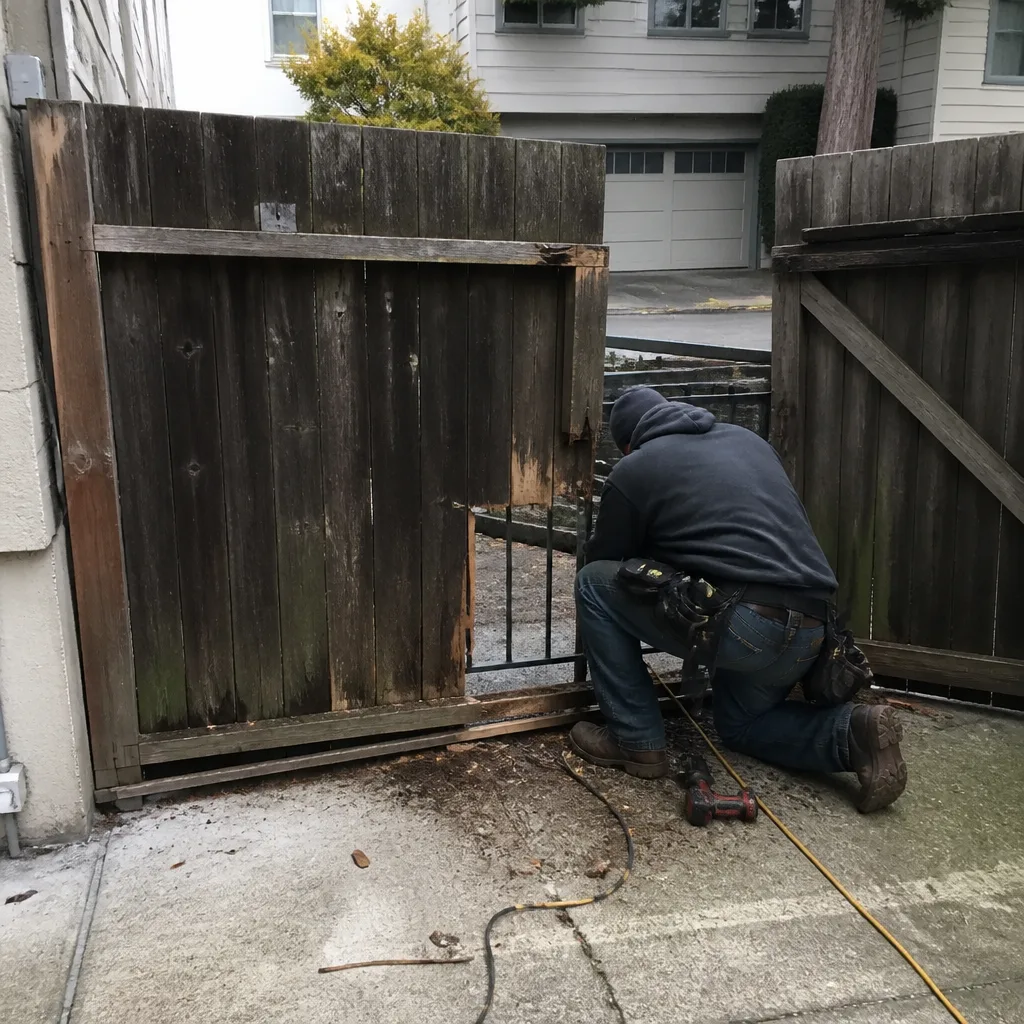 Before
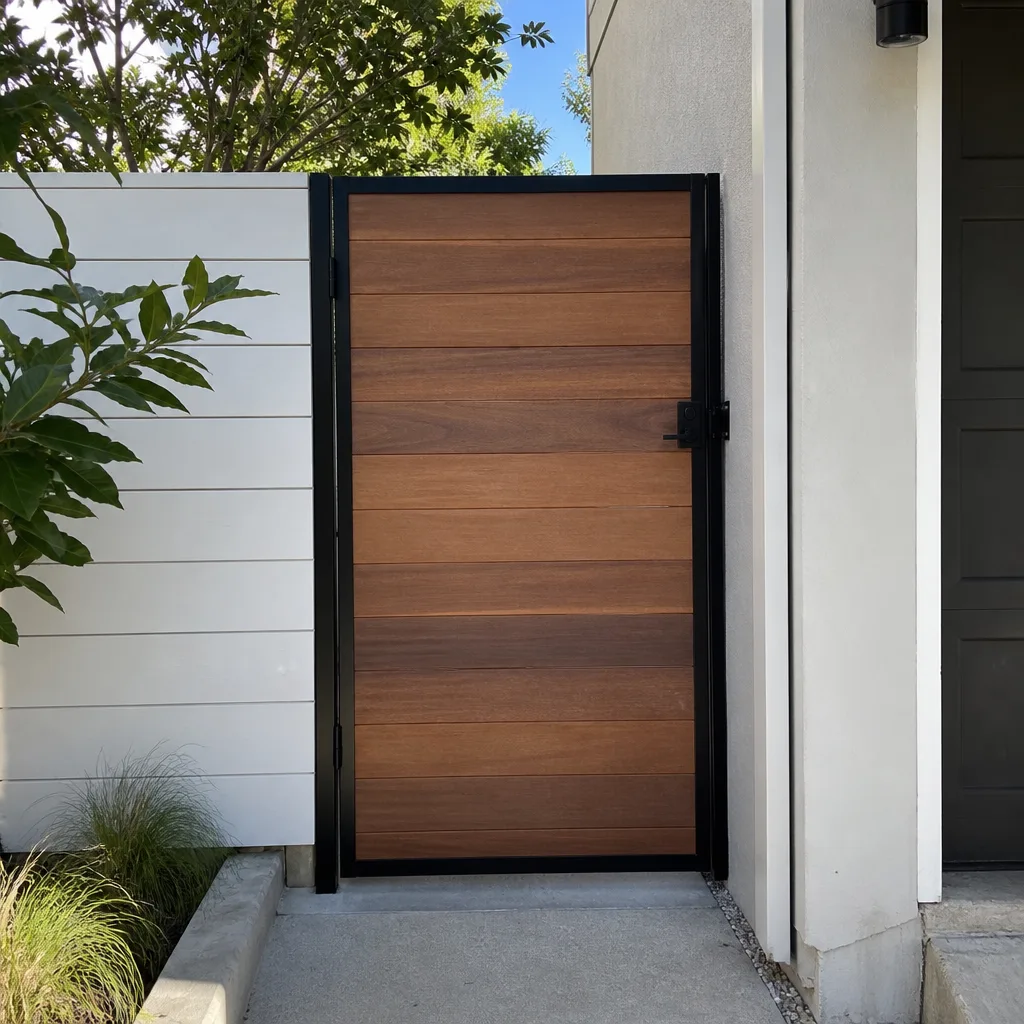 After
After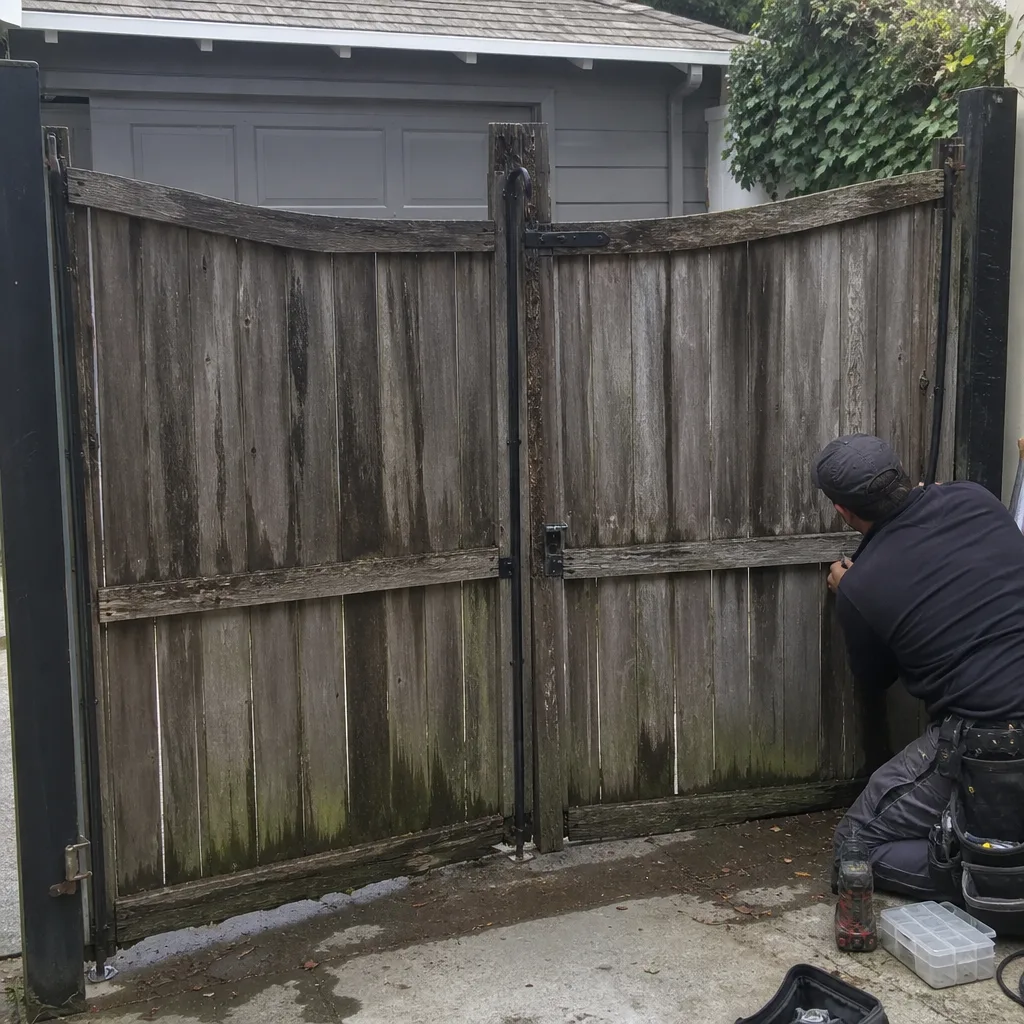 Before
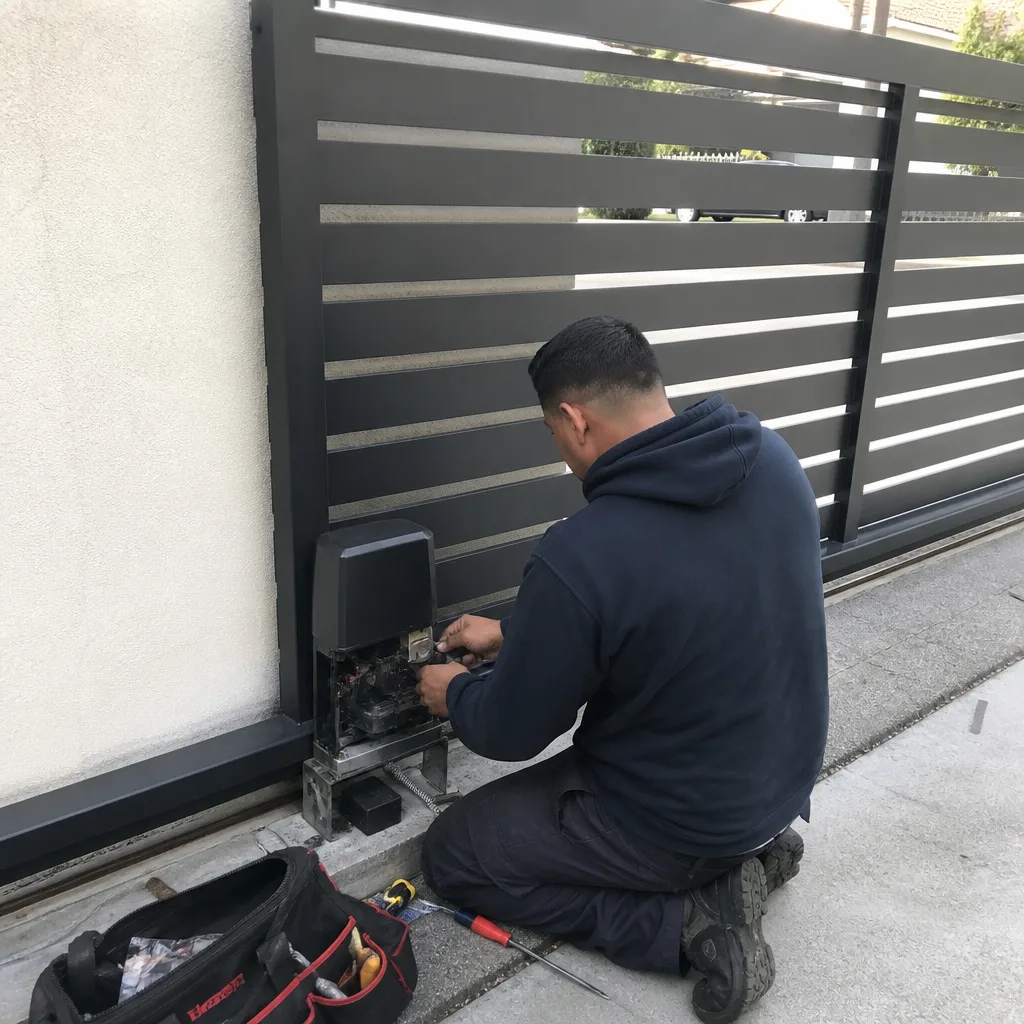 After
After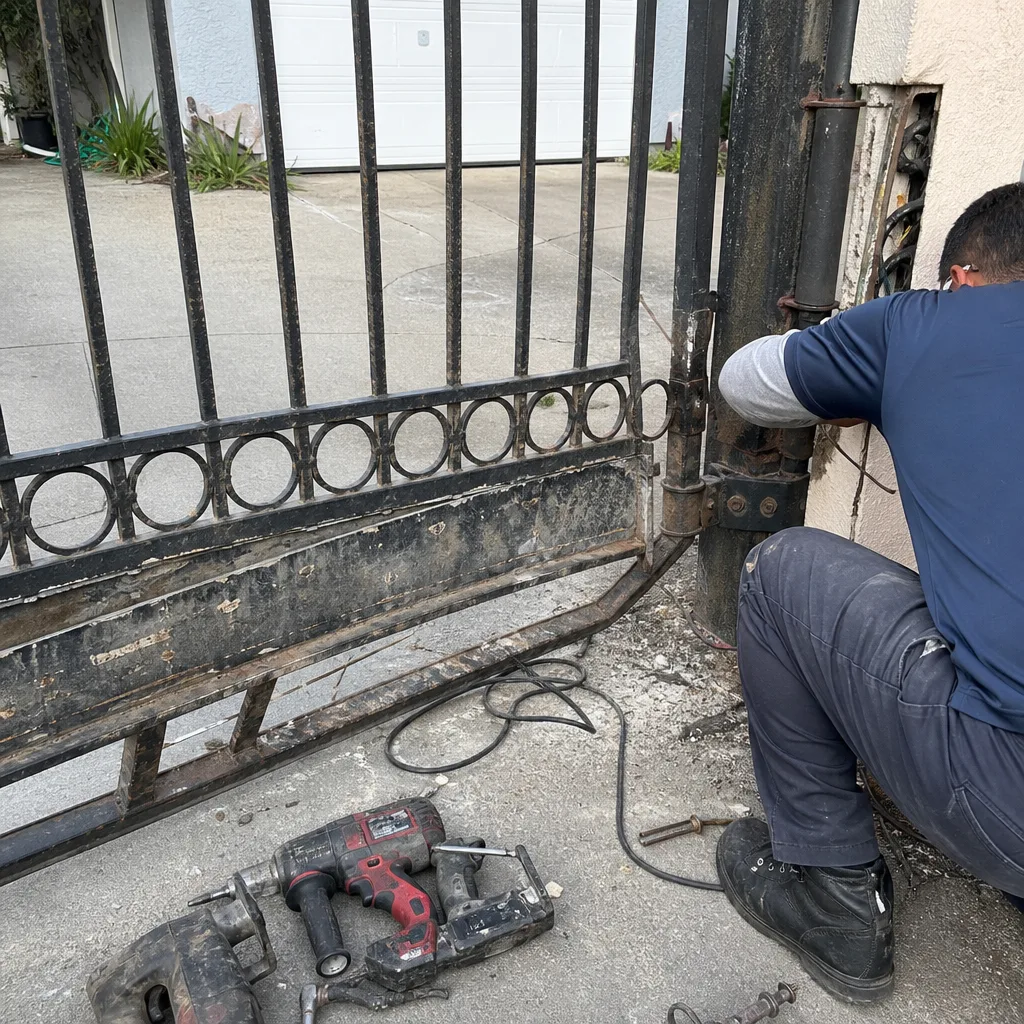 Before
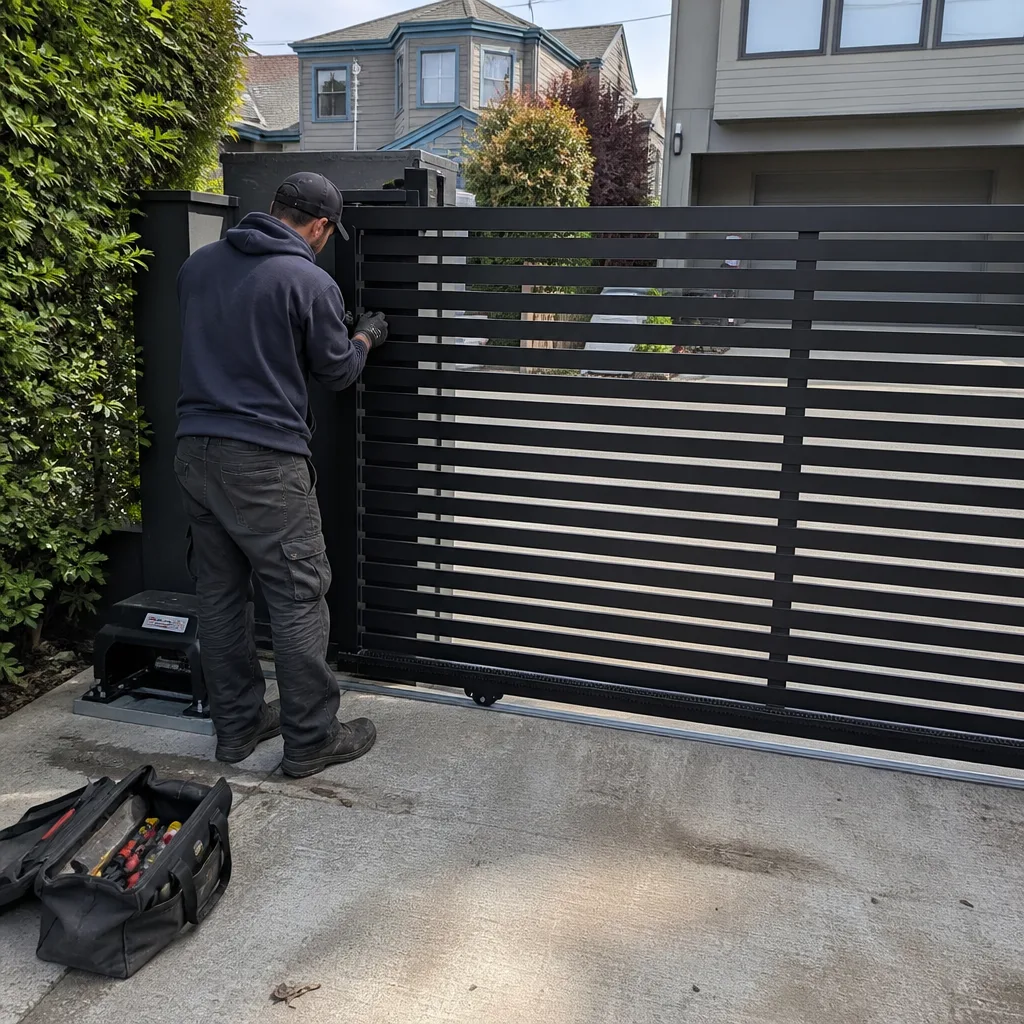 After
AfterWhat Viking Gate Installation Costs in San Francisco
Viking installation pricing in San Francisco moves with a few variables: gate size and weight, whether the posts and rail are reusable, the operator series, and the distance of the wire run from the house. Here are the ranges we see most often.
- Viking swing gate operator installation (single gate, existing posts): $1,800 to $3,400
- Viking slide gate operator installation (existing rail in usable condition): $2,200 to $4,200
- Full double gate installation with two Viking operators or a master-slave setup: $4,500 to $6,800
- New posts, footings, or full rail replacement: add $900 to $3,500 depending on concrete work and site access
- New low-voltage wire run from house to gate: add $400 to $1,200 depending on distance and whether we’re trenching or using existing conduit
Every one of those numbers is a range, not a quote. Your written price comes after we measure and test on site, and it is the number you pay unless we find something structural that no one could have seen before the work started, in which case we stop and talk to you before spending another dollar. Call (628) 227-2771 for a free estimate.
Why San Francisco Homeowners Call Latch and Post Gate Repair San Francisco for Viking Work
We are an independent Viking service provider, not a manufacturer-authorized shop, which means we work for you, not for a warranty claim. Every Viking job we install is covered by the 365-Day Done Right Promise: if the installation is not right, we make it right. No argument, no fine print. We lay drop cloths on the floor and put on shoe covers before we step inside. We use pet-safe lubricants where there’s a choice. We explain the price before the work, and we answer the phone when you call at any hour. We also service LiftMaster, Mighty Mule, Ghost Controls, and DoorKing equipment, so if you have a mixed-property setup or replace a Viking with another brand down the line, the same crew can handle it. Every gate comes down to two parts, the latch that holds it and the post that carries it. That is the job we focus on.
FAQs
An independent installation does not automatically void a Viking operator warranty, but improper installation can, and that’s the part most people don’t think about until a claim is denied. We follow Viking’s published installation specifications for mounting, wiring gauge, grounding, and safety device compatibility, so the work stands up to warranty review. If you’re within the warranty period, we’ll flag any installation step that might affect coverage before we begin.
Most common Viking parts, including control boards, limit switch assemblies, gearbox components, and photo eyes, are available to us within a few business days. Uncommon parts for older Viking series may take longer. We’ll tell you during the estimate whether your job depends on a part with a lead time, so you’re not surprised halfway through the project. Call (628) 227-2771 and we can check your specific model while you’re on the phone.
The deciding factor is usually the gearbox and the control board. If the gearbox is quiet and the board is in good shape, a repair often makes sense even on a ten-year-old Viking. If either has failed, the cost of replacement parts often approaches half the price of a new unit, and a new operator with a fresh warranty starts looking like the better decision. We’ll show you the numbers for both options. We’ll also tell you honestly when we would not put money into an old operator, even though we’d be happy to take the repair job.
If the gate, posts, and rail are in reusable condition and the operator is in stock, most Viking installations are completed one to two days after the estimate. If we need to pull new wire, set footings, or wait on a specific part, the timeline extends accordingly. We don’t promise same-day turnaround on installations because measured, planned work is safer and lasts longer. Call (628) 227-2771 for a free estimate and a straight answer on your specific timeline.
We handle the complete low-voltage installation, from the transformer to the operator, including new wire runs where needed. If your property requires a new dedicated 120-volt circuit or panel work, we’ll coordinate with a licensed electrician and include that scope in your written estimate. You won’t be left in the middle trying to schedule a second contractor without knowing what to tell them.
Written by Cody Beckman, Owner, Latch and Post Gate Repair San Francisco at Latch and Post Gate Repair San Francisco, serving San Francisco and nearby areas.